
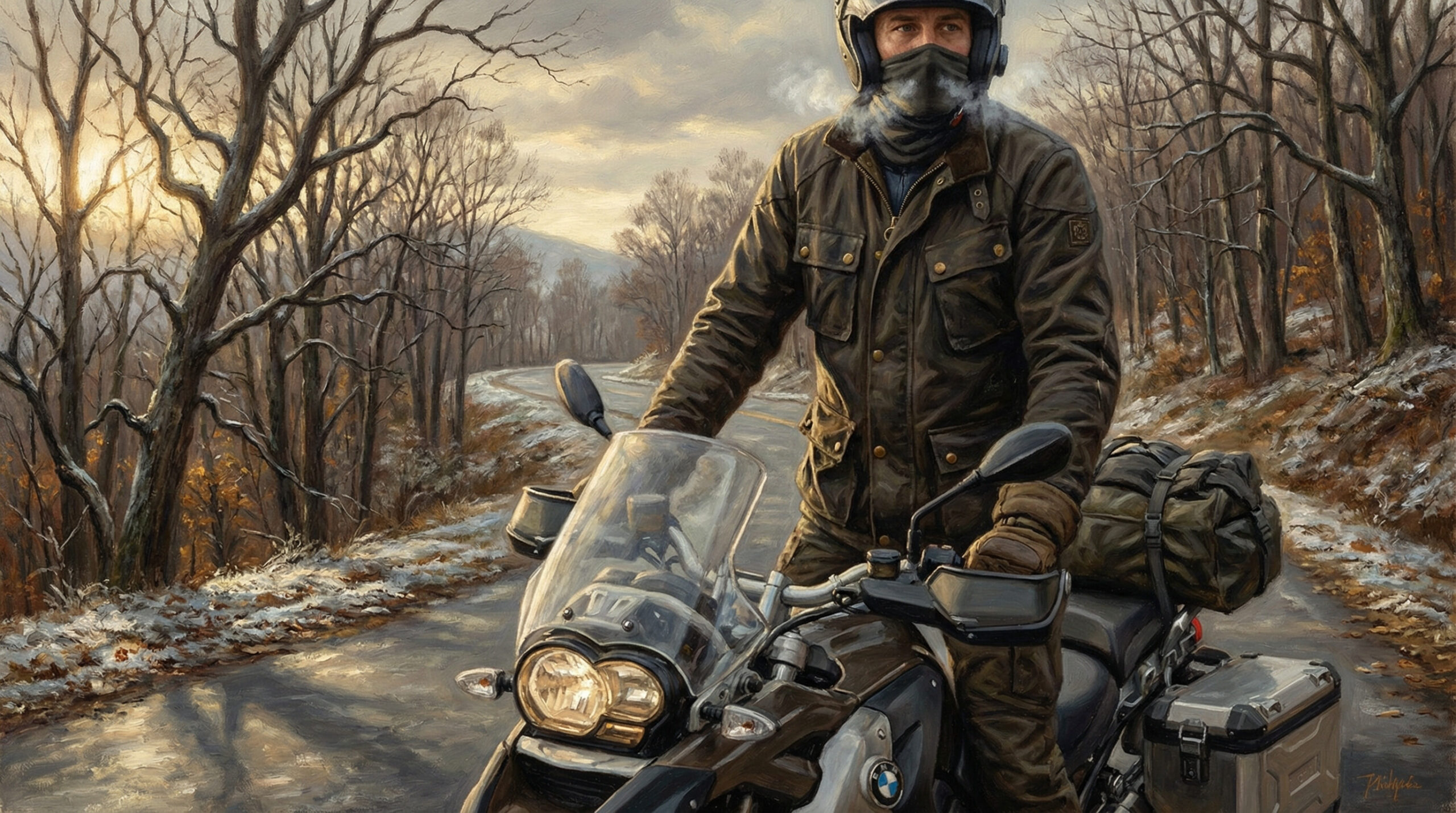
Cold and shoulder-season touring (early spring, late fall, high-elevation routes) is where gear choices matter most. You’re not fighting extreme heat or deep winter — you’re dealing with temperature swings, wind, damp air, and unpredictable weather that can quietly drain comfort and focus.
The right setup isn’t about piling on bulky layers. It’s about adaptability, wind control, and maintaining body heat without overheating as conditions change throughout the day.
What Makes Shoulder-Season Riding Different
Unlike summer or winter extremes, shoulder-season riding typically means:
- Cold mornings → mild afternoons → cold evenings
- Sudden elevation changes
- Wind chill at highway speeds
- Occasional rain or fog
Gear needs to adjust quickly, not lock you into one temperature range.
1. Layering Systems (Not Single Heavy Pieces)
Why it matters:
Layering lets you fine-tune warmth without stopping every hour or sweating through insulation.
Key features to look for:
- Moisture-wicking base layers to keep skin dry
- Lightweight mid-layers that trap heat without bulk
- Easy on/off without removing major gear
2. Insulated & Weather-Resistant Motorcycle Jackets
Why it matters:
Wind is the real enemy in cold touring — even at moderate temps, it strips heat fast.
Key features to look for:
- Windproof outer shell
- Removable thermal liner
- Adjustable vents for changing conditions
3. Heated Gear (Strategic, Not Overkill)
Why it matters:
Heated gear shines in shoulder seasons because you don’t need it all day — just during cold starts, mountain passes, or long stretches.
Key features to look for:
- Heated gloves or glove liners
- Heated jacket liners with adjustable output
- Reliable bike-powered connections
4. Cold-Weather Touring Gloves
Why it matters:
Cold hands reduce reaction time and grip strength long before the rest of your body feels uncomfortable.
Key features to look for:
- Windproof outer shell
- Insulation without bulky fingers
- Compatibility with heated grips (if equipped)
5. Touring Pants & Thermal Liners
Why it matters:
Your legs endure constant wind exposure and are often overlooked until discomfort sets in.
Key features to look for:
- Wind-blocking materials
- Removable thermal liners
- Room to layer underneath
6. Wind Protection Accessories That Make a Big Difference
Why it matters:
Reducing wind exposure can feel like raising the temperature by 10–15°F without changing clothing.
Key features to consider:
- Taller or adjustable windscreen
- Hand guards or wind deflectors
- Neck gaiters or balaclavas
Common Cold-Weather Touring Mistakes
- Overdressing and sweating early in the ride
- Ignoring wind protection
- Waiting until hands are numb to add heat
- Using bulky winter gear instead of adaptable layers
Final Thoughts: Comfort Is About Control
Cold and shoulder-season touring doesn’t require extreme gear — it requires control. When you can adjust warmth, block wind, and stay dry, longer days stay enjoyable instead of exhausting.
Dial in the right setup, and you’ll extend your riding season by months — not just weeks.