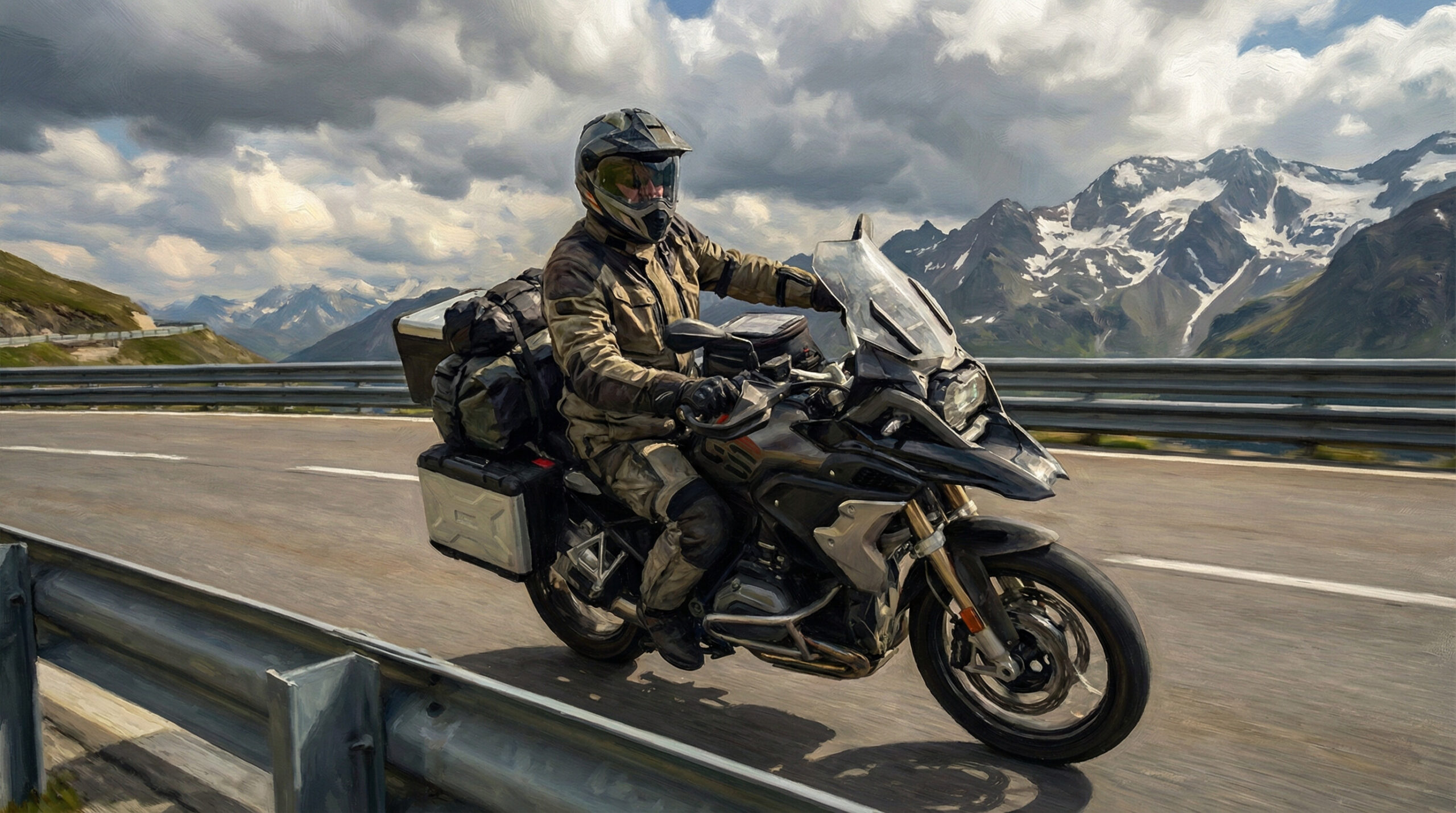
Mountain motorcycle routes are some of the most rewarding rides you’ll ever take — but they’re also some of the most demanding. Rapid elevation changes, unpredictable weather, tight switchbacks, and long descents all punish the wrong gear fast.
This guide focuses on what truly matters for mountain riding, not generic touring advice. If you ride routes like the Blue Ridge Parkway, Beartooth Highway, Cherohala Skyway, or US-12, this is the gear that makes the difference between enjoying the ride and just surviving it.
1. Layer-Friendly Motorcycle Jackets (Non-Negotiable)
Mountain weather changes quickly — sometimes within a single climb. A jacket that only works in one temperature range will leave you freezing at elevation or overheating in the valleys.
What to look for:
- Removable thermal liner
- Effective venting (chest + back)
- Wind-blocking outer shell
- Room for mid-layers without restriction
Textile touring jackets outperform leather here because they adapt better to temperature swings and sudden rain.
👉 Recommended:
2. Gloves That Balance Warmth and Control
Cold fingers kill confidence on mountain roads. At the same time, bulky winter gloves reduce throttle and brake precision — exactly what you don’t want on tight curves.
Mountain-ready gloves should have:
- Wind resistance
- Moderate insulation (not full winter bulk)
- Strong grip feel
- Touchscreen compatibility (for quick stops)
Many riders carry two glove sets on mountain trips: one light, one insulated.
👉 Recommended:
3. Stable, Supportive Touring Boots
Mountain routes involve:
- Frequent stops
- Uneven pull-offs
- Sloped pavement
- Gravel viewpoints
You need boots that support your ankle, grip the ground, and stay comfortable after hours of shifting and braking.
Avoid:
- Soft street shoes
- Minimal-sole casual boots
Look for:
- Reinforced ankle support
- Oil-resistant soles
- Waterproofing for surprise storms
👉 Recommended:
4. Helmets That Reduce Fatigue in Curves
Mountain riding means constant head movement — scanning apexes, checking mirrors, and reading terrain. Poor aerodynamics or heavy helmets amplify fatigue fast.
Helmet features that matter most:
- Lightweight construction
- Excellent ventilation
- Stable airflow at lower speeds
- Clear optics (sun glare is real at elevation)
Modular helmets can be especially useful for scenic pull-offs and quick conversations.
👉 Recommended:
5. Rain Protection You Can Deploy Fast
Mountain storms roll in without warning. If rain gear takes 10 minutes to put on, you’ll be soaked by then.
Best approach:
- Packable rain jacket and pants
- Easy on/off over riding gear
- Wind-blocking material (rain = cold at elevation)
Even if the forecast is clear, rain protection is essential in the mountains.
👉 Recommended:
6. Small Comfort Upgrades That Add Up
These aren’t glamorous, but they make mountain days easier:
- Neck gaiter or wind collar – huge warmth boost
- Earplugs – reduce fatigue on long descents
- Hydration system – high elevation dehydrates faster
- Heated grips (if equipped) – lifesaver in cold climbs
These small items weigh almost nothing but dramatically improve endurance.
👉 Recommended:
Final Thoughts: Gear = Confidence in the Mountains
Mountain routes reward smooth inputs, relaxed posture, and clear focus. The right gear doesn’t just keep you comfortable — it reduces fatigue, sharpens control, and lets you enjoy the ride rather than fight the conditions.
If you regularly ride elevation-heavy routes, dialing in mountain-specific gear is one of the smartest upgrades you can make.