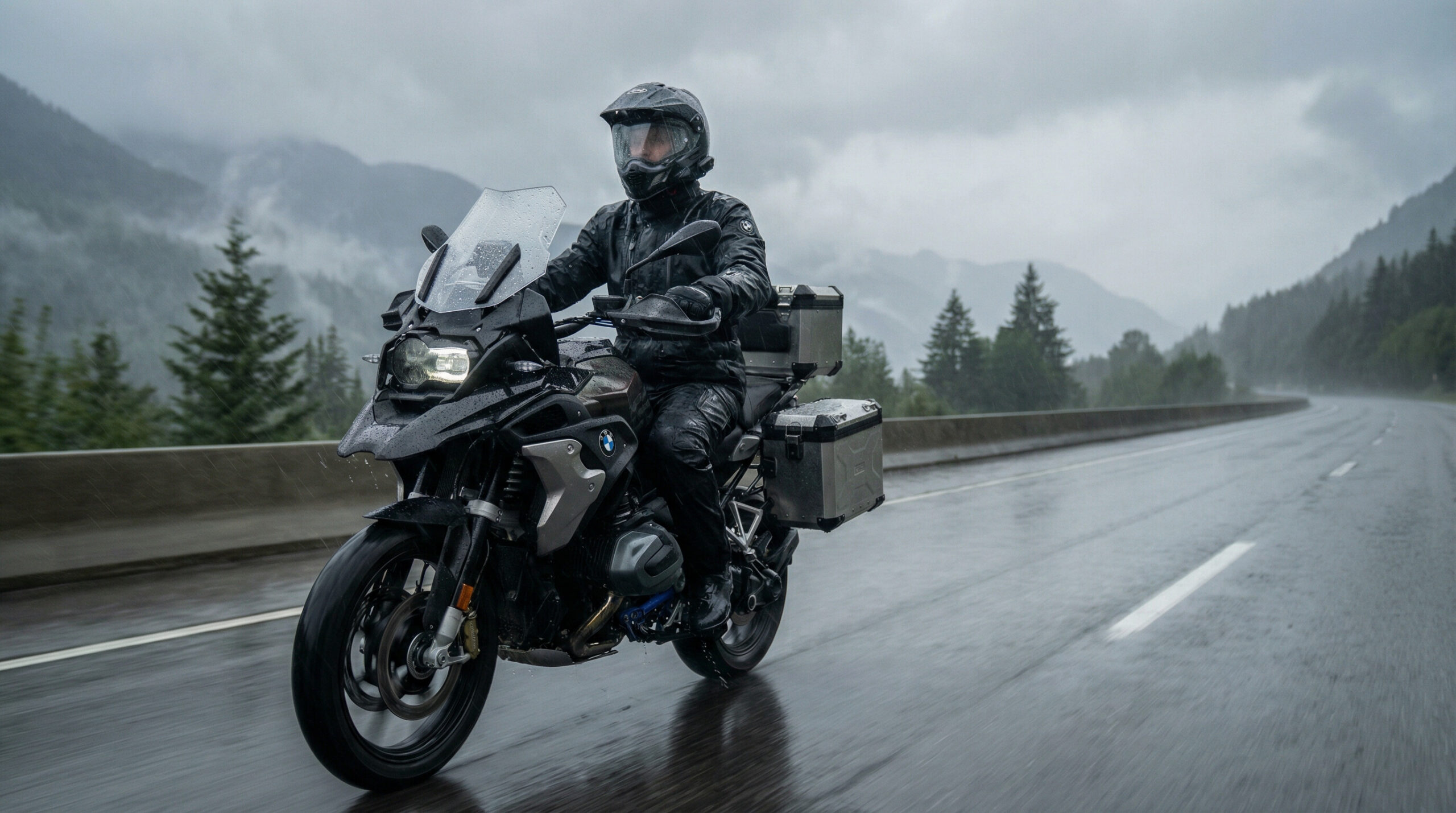
Rain doesn’t have to end a ride — but the wrong gear will.
Water intrusion, poor visibility, cold exposure, and reduced grip can quickly turn a manageable touring day into a draining one.
Rain touring isn’t about hoping you stay dry. It’s about building a setup that keeps you dry, visible, warm, and mentally sharp for hours — not just miles.
Let’s break down what actually matters.
Why Rain Fatigue Is Different
Riding in rain increases:
- Mental workload
- Muscle tension
- Cold exposure risk
- Visibility challenges
When your base layers get wet, or your gloves soak through, fatigue accelerates. The right gear prevents small discomforts from compounding into exhaustion.
1. Waterproof Touring Jackets (Not “Water-Resistant”)
There’s a big difference.
What to Look For:
- Guaranteed waterproof membrane (not just coated fabric)
- Seam-sealed construction
- Storm flaps over zippers
- Adjustable cuffs and collar to prevent water entry
A good rain-ready jacket keeps water out without trapping sweat inside.
2. Rain Pants That Seal at the Ankles
Wet legs drain heat fast — especially at highway speed.
Important Features:
- Full-length side zippers (easy over boots)
- Elastic or adjustable ankle closures
- Reinforced seat area
- Non-slip inner panels
Rain pants should go on quickly and seal completely.
3. Waterproof Gloves or Glove Covers
Hands are usually the first failure point in wet riding.
What Works:
- Waterproof touring gloves with bonded liners
- Long cuffs that go over jacket sleeves
- Optional: compact glove covers for sudden storms
Cold, soaked hands reduce braking and clutch precision. Don’t gamble here.
4. Helmet Visibility Upgrades
Visibility is often the real risk in rain, not traction.
Consider:
- Pinlock or anti-fog inserts
- Hydrophobic visor treatments
- Clear visor option (avoid dark tints in storms)
- Breath deflectors
Fog + rain spray = reduced reaction time.
Clear vision equals safer miles.
5. Waterproof Boot Strategy
Boot failure ruins the day.
Look For:
- Waterproof membrane (Gore-Tex or equivalent)
- Sealed stitching
- Tall cuff height
- Oil- and water-resistant sole
If boots aren’t fully waterproof, consider compact rain covers for long trips.
6. High-Visibility Elements
Rain reduces contrast and depth perception for other drivers.
Smart Additions:
- Reflective piping
- High-vis panels
- Auxiliary lighting
- Brake light modulators (where legal)
Being seen in rain is just as important as staying dry.
7. Luggage Protection
Water intrusion into luggage creates bigger problems later.
Protect Your Gear:
- Waterproof liners
- Roll-top dry bags
- Sealed hard cases
- Electronics stored in inner dry sacks
Wet gear at the hotel stop makes Day 2 miserable.
Common Rain Touring Mistakes
- Waiting too long to put on rain gear
- Assuming “water-resistant” is good enough
- Ignoring glove and boot waterproofing
- Riding with a tinted visor in low light
- Forgetting visibility upgrades
Rain punishes hesitation.
Final Thoughts: Dry Riders Ride Longer
Rain doesn’t have to ruin a tour. With the right gear, it becomes just another condition — not a threat to your comfort or safety.
When you stay dry:
- Focus improves
- Energy lasts longer
- Confidence stays high
Build your rain setup before you need it — not during the storm.