
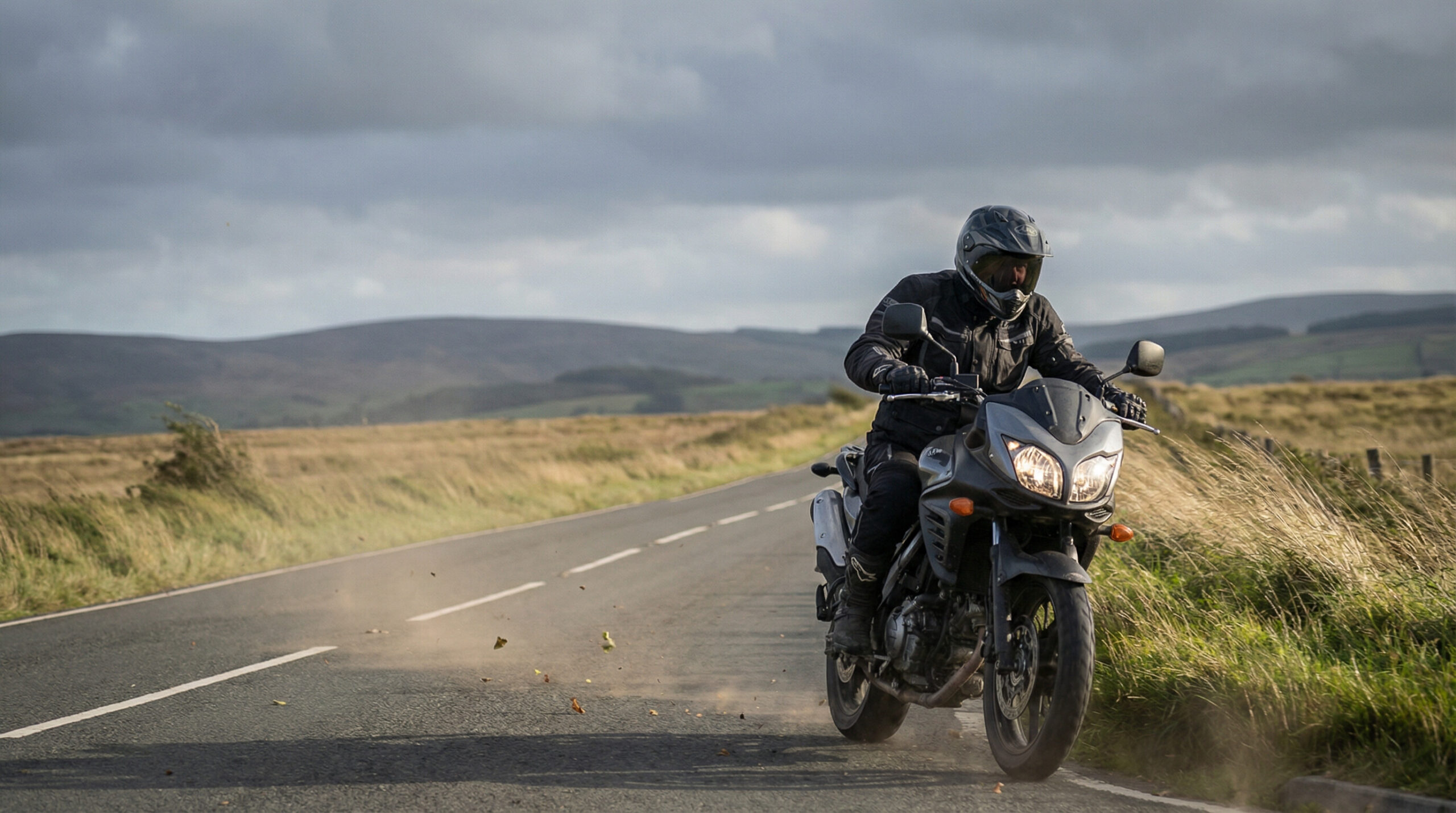
Wind doesn’t just make a ride uncomfortable — it increases fatigue, reduces focus, and quietly drains energy over long miles. Sustained crosswinds, gusty highway stretches, and turbulent air behind traffic can turn a great route into a tiring grind.
The right gear doesn’t eliminate wind — it manages it, reduces strain on your body, and helps you stay relaxed in the saddle.
This post focuses on the gear upgrades that actually make a difference when the wind won’t let up.
Why Wind Fatigue Is a Bigger Problem Than Riders Admit
Wind creates constant micro-adjustments in:
- Core muscles
- Shoulders and neck
- Grip pressure
- Lower back tension
Over hours, this leads to:
- Sore wrists
- Tight traps and shoulders
- Mental fatigue
- Reduced reaction sharpness
The goal isn’t blocking all airflow — it’s smoothing and redirecting it.
1. Windscreens That Reduce Chest Pressure
A proper windscreen is the single biggest upgrade for windy riding.
What to Look For:
- Height that directs airflow over your helmet (not into it)
- Adjustable angle for different speeds
- Stable mounting to prevent vibration
Even a modest increase in wind deflection reduces:
- Core bracing
- Arm fatigue
- Neck strain
2. Wind Deflectors & Hand Guards
Hands and upper torso take direct hits in crosswinds. Small accessories make a big difference.
Smart Add-Ons:
- Fork-mounted wind deflectors
- Hand guards for highway exposure
- Tank side deflectors (on some touring models)
These help reduce wind turbulence around your body, not just frontal blast.
3. Jackets That Block Wind Without Ballooning
Loose jackets catch wind and create drag. Poorly designed gear turns you into a sail.
Features That Matter:
- Windproof outer layer
- Snug but flexible fit
- Waist and sleeve adjusters
- Minimal flapping material
A properly fitted touring jacket reduces strain and improves control in gusts.
4. Aerodynamic Helmets for Highway Stability
Some helmets handle crosswinds better than others.
What Helps:
- Streamlined shell design
- Stable visor system
- Reduced buffeting at highway speeds
- Good neck seal
A stable helmet reduces:
- Neck fatigue
- Head shake
- Long-day discomfort
5. Proper Gloves for Grip in Gusty Conditions
Wind increases steering input corrections. That means more subtle pressure on the bars.
Ideal Glove Traits:
- Secure wrist closure
- Non-slip palm materials
- Enough structure for support
- Wind-resistant outer layer
When gusts hit, you want control — not slipping grips.
6. Luggage Setup That Doesn’t Catch Air
Soft luggage or loosely mounted bags can create drag and instability in crosswinds.
Check Your Setup:
- Tight mounting straps
- Low-profile bags
- Balanced side weight
- No flapping straps
Stability isn’t just about rider gear — it’s about the entire setup.
Common Wind Riding Mistakes
- Riding without a windscreen on long highway stretches
- Wearing loose or flapping outer layers
- Ignoring helmet buffeting issues
- Over-gripping the handlebars instead of fixing airflow
- Running tall luggage in known crosswind regions
Wind magnifies small setup flaws.
Final Thoughts: Stability Equals Endurance
Windy conditions are inevitable — especially on open highways, mountain passes, coastal roads, and desert stretches. The riders who enjoy those routes long-term are the ones who build stability into their setup.
When wind pressure drops, fatigue drops.
When fatigue drops, distance becomes easier.
Dial in your wind management now — and your next long ride will feel dramatically smoother.