
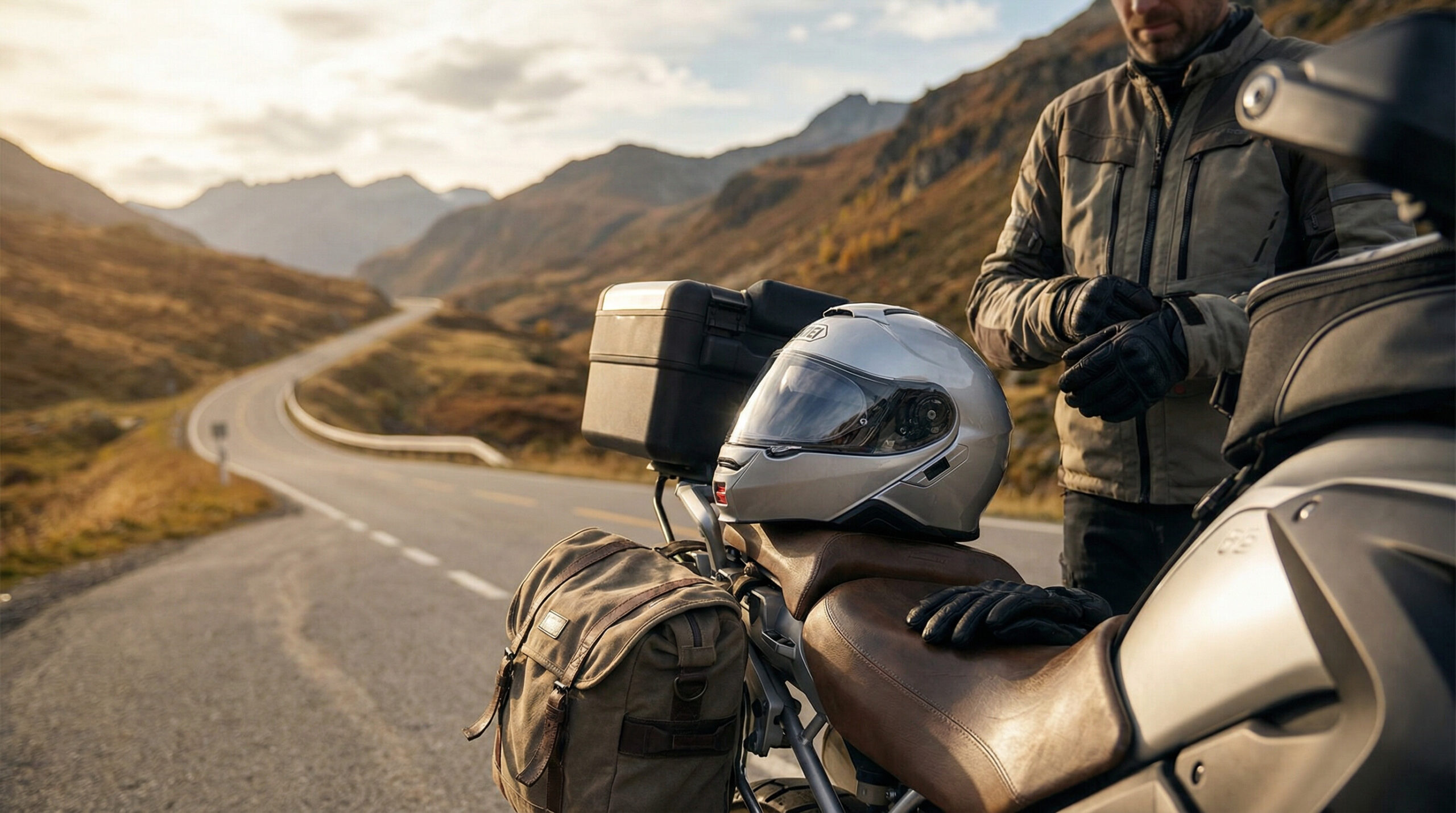
When it comes to long-distance motorcycle riding, few pieces of gear matter more than your helmet. Comfort, noise control, ventilation, and weight all play a major role in how you feel after hours in the saddle.
A helmet that’s fine for short rides can become exhausting on an all-day tour. Choosing the right one makes the difference between enjoying the ride — or counting down the miles.
What Makes a Helmet Good for Long-Distance Riding?
Touring helmets prioritize comfort over time, not just protection.
Key features to look for:
- Effective wind and noise management
- Balanced weight to reduce neck strain
- Ventilation that works at highway speeds
- Interior comfort that doesn’t create pressure points
Full-Face Helmets: Maximum Protection & Noise Control
Full-face helmets remain the top choice for many touring riders.
Why touring riders choose full-face helmets
- Best wind and weather protection
- Generally quieter at highway speeds
- Lighter than modular helmets
They’re ideal for riders who:
- Spend long days on highways
- Ride in cold or variable weather
- Prioritize reduced wind fatigue
Modular Helmets: Convenience for Touring Stops
Modular (flip-up) helmets are popular with touring riders who value flexibility.
Advantages of modular helmets
- Flip-up chin bar for fuel stops and breaks
- Easier communication off the bike
- Great for riders who wear glasses
Trade-offs to consider:
- Slightly heavier than full-face
- Often louder due to hinge mechanisms
Helmets designed for long rides provide safety, comfort, and ventilation for extended touring.
- Impact-resistant shell with reinforced areas
- Ventilation and airflow for long rides
- Comfortable liner for multi-hour wear
Ventilation Matters More Than You Think
Poor airflow increases fatigue fast — especially in warm weather.
Look for:
- Multiple intake and exhaust vents
- Easy-to-adjust vent controls
- Channeling inside the liner
Good ventilation keeps you alert and comfortable on long days.
Helmet Weight and Balance
Even small weight differences add up over hours.
Touring-friendly helmets focus on:
- Lightweight shell materials
- Balanced center of gravity
- Reduced strain on neck and shoulders
If your neck feels tired after a ride, helmet weight may be the culprit.
Noise Reduction = Less Fatigue
Wind noise is one of the biggest contributors to long-ride fatigue.
Features that help reduce noise:
- Tight neck roll seals
- Aerodynamic shell shape
- Compatibility with earplugs or comm systems
A quieter helmet helps you stay focused longer.
Touring Helmet Fit Tips
Fit matters more than brand.
Make sure:
- No pressure points after 10–15 minutes
- Secure fit without hotspots
- Enough room for eyewear or comm systems
Never size up for comfort — proper fit becomes comfortable over time.
Quick Recommendations by Riding Style
- Highway-heavy touring: Full-face, quiet, aerodynamic
- Mixed touring & city: Modular with good ventilation
- Hot climate touring: Strong airflow and moisture-wicking liner
Final Thoughts
The best helmet for long-distance riding is the one that disappears once you’re moving — no pressure, no excessive noise, no constant adjustments.
Comfort equals endurance. Endurance equals safer, more enjoyable rides.
Choose wisely, and your future self will thank you at the end of a long day.