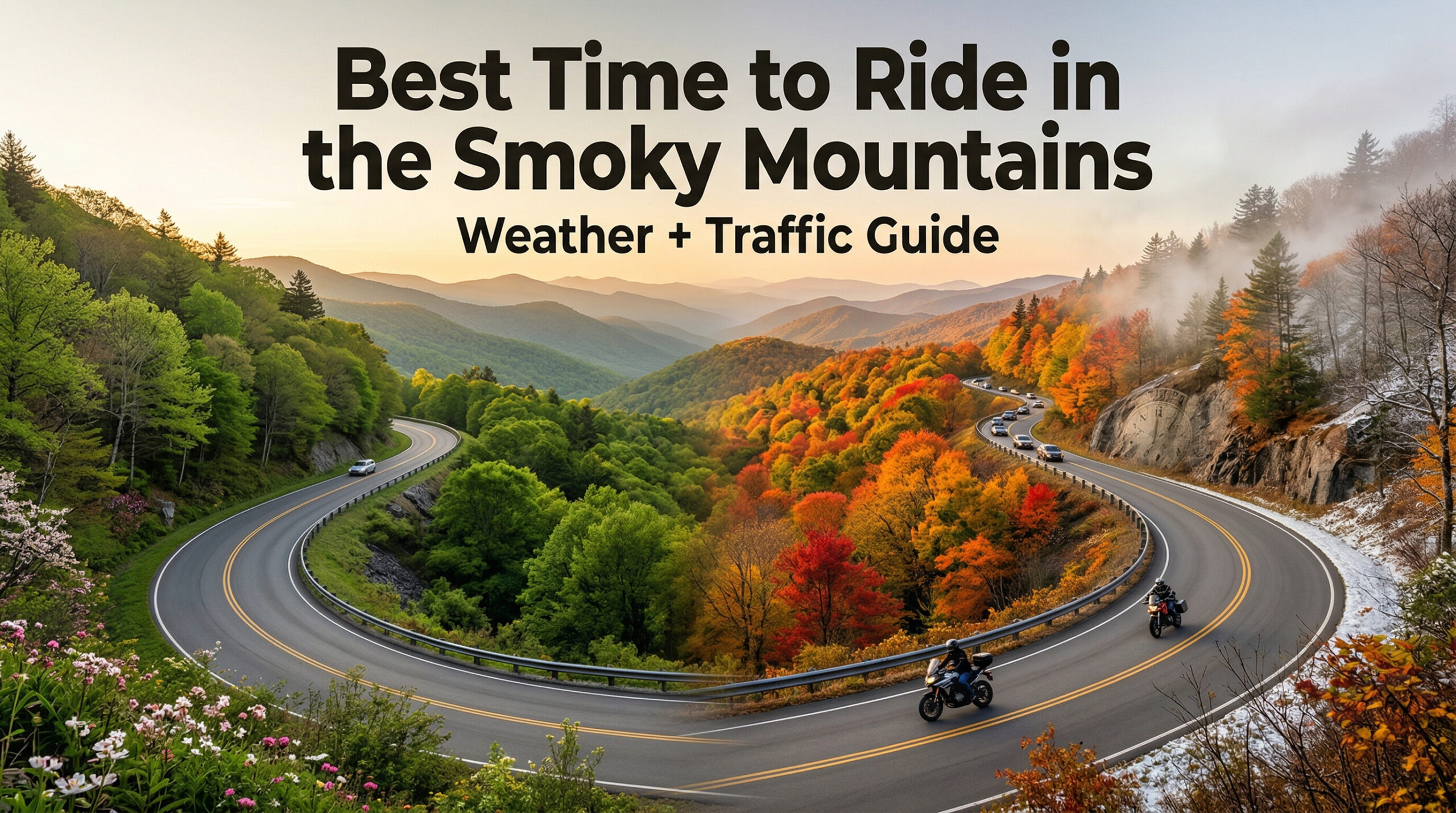
The Smoky Mountains are one of the most popular motorcycle destinations in the eastern United States, but timing your trip can make a significant difference in your overall experience.
Spanning parts of Tennessee and North Carolina, the region experiences seasonal changes that affect weather, traffic, and road conditions. Understanding when to ride can help you avoid crowds, improve safety, and get the most out of your trip.
Quick Answer: Best Time to Ride
- Best Overall: Late spring (May–early June) and early fall (September–October)
- Best for Low Traffic: Weekdays in spring and early fall
- Best for Scenery: Fall (peak foliage season)
- Best for Warm Weather: Summer (with trade-offs)
Spring Riding (March – May)
Spring is one of the best times to ride in the Smoky Mountains.
Pros:
- Mild temperatures
- Blooming landscapes
- Lower traffic compared to summer
Cons:
- Occasional rain showers
- Cooler mornings at higher elevations
Spring is ideal for riding scenic routes like the Cherohala Skyway, where elevation changes can bring cooler air even on warmer days.
Summer Riding (June – August)
Summer offers warm temperatures but comes with increased traffic.
Pros:
- Long daylight hours
- Consistent weather
- Ideal for longer trips
Cons:
- Heavy tourist traffic
- Hot and humid conditions
- More congestion on popular routes
High-traffic roads like the Tail of the Dragon can become crowded, especially on weekends. Planning early morning rides can help avoid peak congestion.
Fall Riding (September – November)
Fall is widely considered the best season for riding in the Smoky Mountains.
Pros:
- Cooler temperatures
- Stunning fall foliage
- Excellent road conditions
Cons:
- Peak tourist season
- Increased traffic during leaf season
Scenic routes like the Blue Ridge Parkway are especially popular during this time, attracting both riders and tourists.
Winter Riding (December – February)
Winter riding is generally not recommended in the Smoky Mountains.
Pros:
- Minimal traffic
Cons:
- Cold temperatures
- Ice and snow at higher elevations
- Road closures on certain routes
Many mountain roads, including sections of the Blue Ridge Parkway, may close due to weather conditions.
Traffic Patterns to Know
Traffic can impact your ride just as much as weather.
Peak Times:
- Weekends (especially Friday–Sunday)
- Holidays
- Fall foliage season
Best Times to Ride:
- Early mornings
- Weekdays
- Shoulder seasons (spring and early fall)
Popular routes like the Tail of the Dragon and the Cherohala Skyway are significantly more enjoyable during off-peak hours.
Elevation and Weather Changes
One of the most important factors in the Smoky Mountains is elevation.
- Temperatures can drop significantly at higher elevations
- Weather can change quickly within short distances
- Fog and reduced visibility are common in certain areas
Riders should be prepared for varying conditions throughout the day.
Best Strategy for Planning Your Trip
For the best overall experience:
- Ride during late spring or early fall
- Plan rides on weekdays whenever possible
- Start early to avoid traffic
- Combine routes strategically (Dragon + Skyway + Parkway)
👉 For a full route breakdown, see the Smoky Mountains Motorcycle Routes guide.
👉 For complete trip planning, see the Smoky Mountains Motorcycle Trip Planning Guide.
Final Thoughts
The best time to ride in the Smoky Mountains depends on your priorities, but for most riders, late spring and early fall offer the best balance of weather, scenery, and manageable traffic.
By planning around seasonal conditions and peak traffic times, you can significantly improve your riding experience and enjoy some of the best motorcycle roads in the country.