
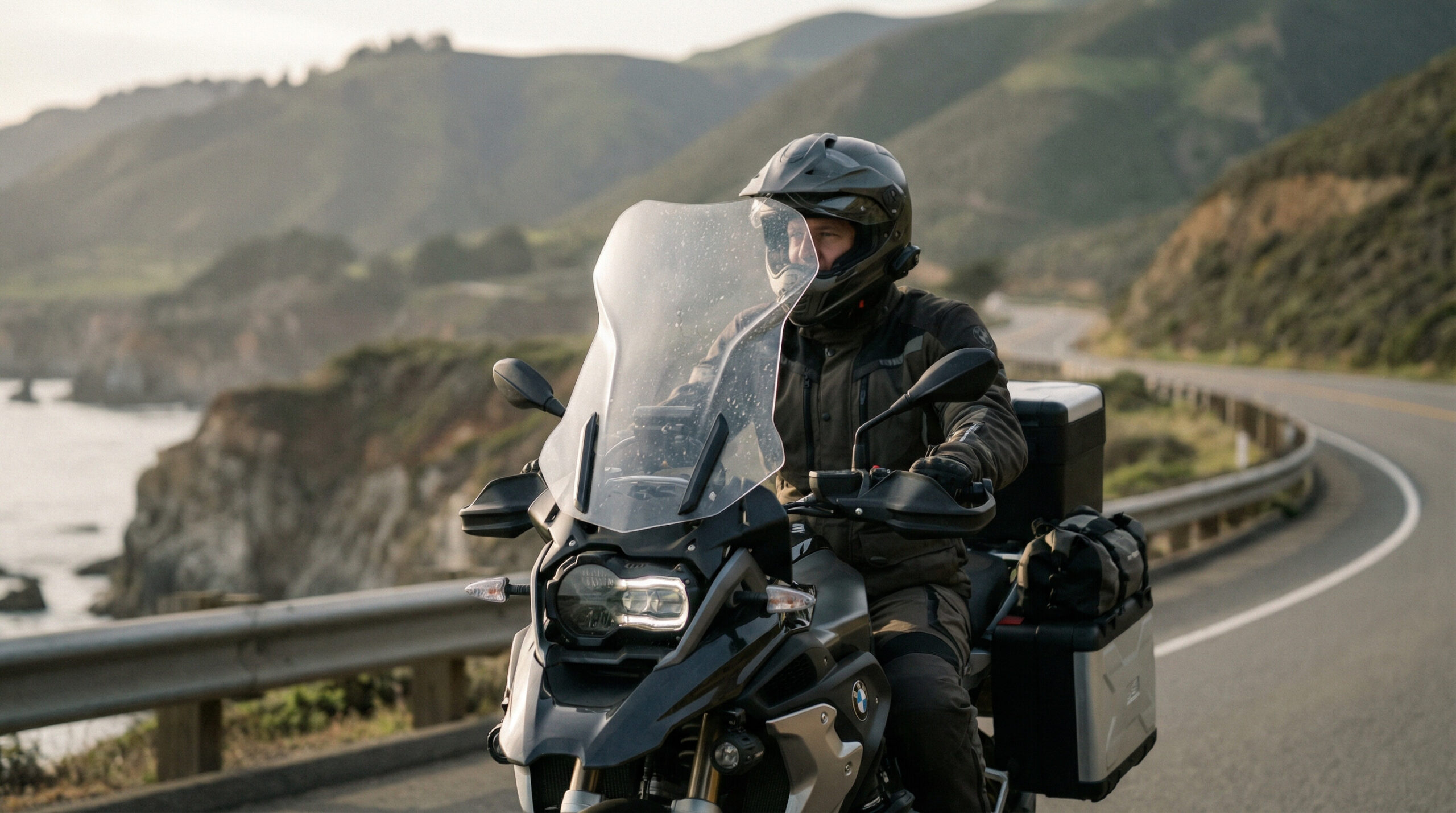
Wind fatigue is one of the most overlooked problems in motorcycle touring. Even a great seat and padded pants can’t save you from the constant push of wind at highway speeds.
A properly designed windscreen reduces fatigue, lowers wind noise, and keeps you focused, making long scenic rides more enjoyable and less draining.
This guide shows how to choose the best windscreens for reducing fatigue, what features actually make a difference, and how to optimize airflow on your bike.
Why Windscreens Matter
Highway wind pushes against your body continuously, which:
- Increases neck, shoulder, and arm fatigue
- Reduces control and reaction time
- Causes constant hand pressure on grips
- Intensifies the effects of heat and cold
Even minor improvements in wind management can extend your riding day significantly.
What Makes a Windshield Effective
Not all windscreens are created equal. Here’s what to prioritize:
1. Height and Width (Coverage Without Blocking Vision)
The right size depends on your height, riding posture, and bike type.
Features to look for:
- Wind deflection above the helmet line
- Side coverage to reduce buffeting
- Adjustable heights if possible
Explore adjustable touring windscreens
2. Shape and Angle (Deflects Air, Reduces Pressure)
Shape determines how the wind hits your body. Effective designs:
- Channel air around the shoulders and torso
- Reduce helmet and chest pressure
- Minimize turbulence at highway speeds
Aerodynamic curves are worth paying attention to — they cut fatigue more than raw size alone.
3. Materials and Vibration Reduction
Cheap or flexible plastics can flex excessively and create annoying vibrations.
Good windscreens:
- Maintain shape under speed
- Reduce rattling and vibration
- Resist scratches that obscure vision
See durable touring windscreen designs
Common Mistakes Riders Make
❌ Choosing purely by style or brand
❌ Installing too low (lets wind hit shoulders)
❌ Ignoring turbulence created by mirrors or fairings
❌ Expecting “any screen” to solve fatigue
The right windscreen works with your bike and body, not against it.
Who Benefits Most From Touring Windscreens
- Riders covering long highway distances
- Riders experiencing arm, shoulder, or neck fatigue
- Those touring in variable weather or high-speed environments
Even a short-term upgrade can dramatically improve focus and comfort.
Bonus Tip: Pair With Seat & Gloves for Maximum Comfort
The three most critical fatigue-reduction gear items on a long ride:
- Comfortable seat or seat pad
- Padded, breathable gloves
- Properly sized and shaped windscreen
When combined, fatigue drops significantly and ride enjoyment skyrockets.
Final Thoughts
Wind fatigue is subtle but cumulative. The best touring windscreens don’t just block air — they manage it intelligently to reduce strain, noise, and fatigue.
Investing in the right windscreen transforms long rides from exhausting to effortless.