
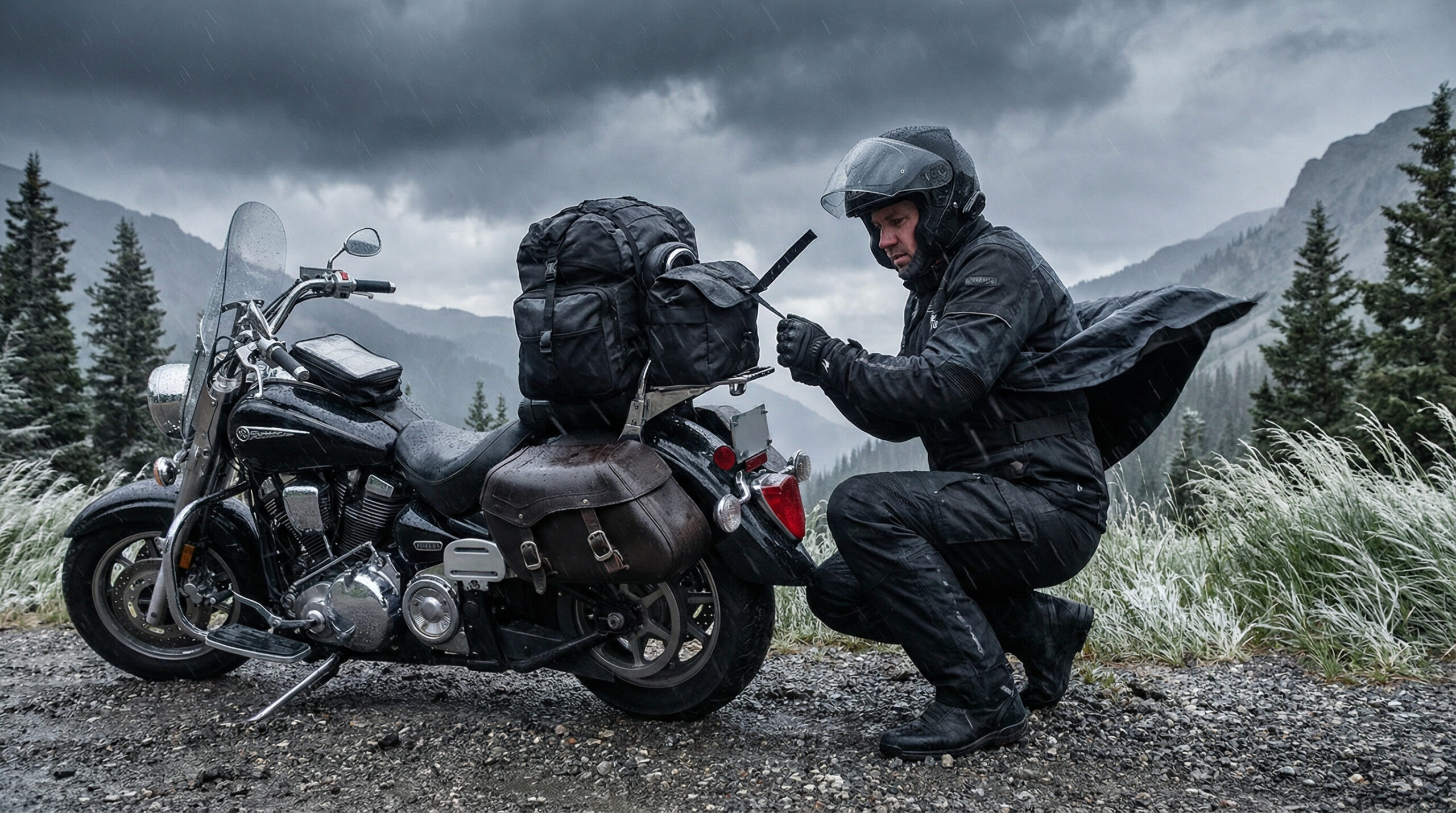
Extreme riding conditions expose weaknesses fast.
Heavy rain. High heat. Freezing mornings. Crosswinds. Long-distance fatigue.
When conditions get serious, your gear setup either works with you—or against you.
Most riders don’t fail because they lack expensive gear.
They fail because they set it up wrong.
Here are the most common gear setup mistakes riders make in extreme conditions—and how to fix them before your next ride.
1. Wearing the Wrong Base Layer
The Mistake:
Cotton shirts under riding gear in heat or cold.
Cotton traps moisture. Once wet (from sweat or rain), it stays wet. In heat, that leads to overheating. In cold, it pulls heat away from your body.
The Fix:
Use moisture-wicking synthetic or merino wool base layers.
- Hot weather → Lightweight, breathable compression or athletic base layer
- Cold weather → Thermal or merino wool base layer
- Long-distance touring → Seamless, anti-chafe fabrics
Your base layer is your temperature foundation. Get it right first.
2. Ignoring Ventilation Management
The Mistake:
Leaving vents fully open—or fully closed—without adjusting as conditions change.
Many riders treat vents like an on/off switch instead of a dynamic system.
The Fix:
Actively manage airflow.
- Open chest vents slightly before you overheat
- Use rear exhaust vents to create airflow channeling
- Close wind-facing vents in heavy rain or crosswinds
- Adjust at fuel stops based on how you actually feel
Pro tip: If you’re already sweating heavily, you adjusted too late.
3. Choosing Waterproof Instead of Layered Protection
The Mistake:
Relying on a permanently waterproof jacket for all conditions.
Waterproof membranes are great—but they trap heat in warm weather and dry slowly once soaked.
The Fix:
Use a layered system when possible:
- Protective outer shell
- Removable waterproof liner or separate rain shell
- Insulating liner (cold weather)
A layered setup adapts better across temperature swings.
4. Wearing the Wrong Gloves for the Conditions
The Mistake:
Using one pair of gloves for everything.
Gloves affect control more than most riders realize.
- Summer gloves in freezing temps → numb fingers
- Thick winter gloves in heat → sweaty palms and poor throttle feel
- Non-waterproof gloves in rain → slippery controls
The Fix:
Have at least two setups:
- Warm weather gloves (vented, flexible)
- Cold/wet gloves (insulated, waterproof)
If you ride long distances, carry a backup pair.
5. Poor Helmet Setup in Rain or Heat
The Mistake:
Riding into rain without anti-fog prep.
Riding in heat with visor cracked too far open.
Fogged visors are dangerous. So is drying out your eyes at highway speed.
The Fix:
- Use a Pinlock insert or anti-fog treatment
- Apply water-repellent coating on the outside
- Use controlled vent opening instead of wide visor gaps
- In heat, rely on top vents—not just visor cracking
Vision equals survival. Treat it seriously.
6. Neglecting Wind Management
The Mistake:
Assuming wind is “just part of riding.”
Crosswinds and sustained highway wind fatigue you fast.
The Fix:
- Adjust windscreen height (if adjustable)
- Tuck cables and loose straps
- Ensure jacket collar seals properly
- Use a neck gaiter in cold wind
Reducing wind strain improves stamina dramatically.
7. Overpacking or Misbalancing Luggage
The Mistake:
Loading weight too high or too far back.
This affects stability—especially in high wind or wet roads.
The Fix:
- Keep heavy items low and centered
- Avoid overloading top cases
- Distribute weight evenly
- Secure all straps tightly
Extreme conditions amplify balance mistakes.
8. Wearing Gear That Doesn’t Actually Fit
The Mistake:
Loose armor. Baggy jackets. Oversized gloves.
In extreme conditions, ill-fitting gear shifts, flaps, and other distractions.
The Fix:
- Ensure armor sits properly over joints
- Adjust straps snugly
- Test fit with base layers on
- Move around while wearing full setup
Your gear should feel secure—not restrictive.
9. Skipping Pre-Ride Gear Checks
The Mistake:
Assuming everything is “fine from last time.”
Extreme weather reveals weak zippers, failing seams, cracked face shields, and worn-out waterproofing.
The Fix:
Quick pre-ride checklist:
- Zippers smooth?
- Velcro gripping?
- Waterproof treatment intact?
- Helmet vents clear?
- Gloves dry?
Five minutes now prevents hours of discomfort later.
10. Waiting Too Long to Adjust
The Biggest Mistake of All:
Ignoring small discomfort until it becomes dangerous fatigue.
Extreme conditions drain focus.
The rider who adjusts early stays sharp.
The rider who “pushes through” pays for it.
The Smart Rider’s Approach
Extreme riding isn’t about being tough.
It’s about being prepared.
A well-set gear system:
- Regulates temperature
- Maintains vision
- Reduces fatigue
- Improves control
- Extends safe riding time
You don’t need the most expensive setup.
You need the right setup for the conditions you’re riding in.
Final Thoughts
Extreme conditions don’t cause most problems.
Poor preparation does.
Refine your gear system. Test it. Adjust it. Learn it.
Because when the weather turns, you won’t have time to rethink your setup.
You’ll be riding it.