
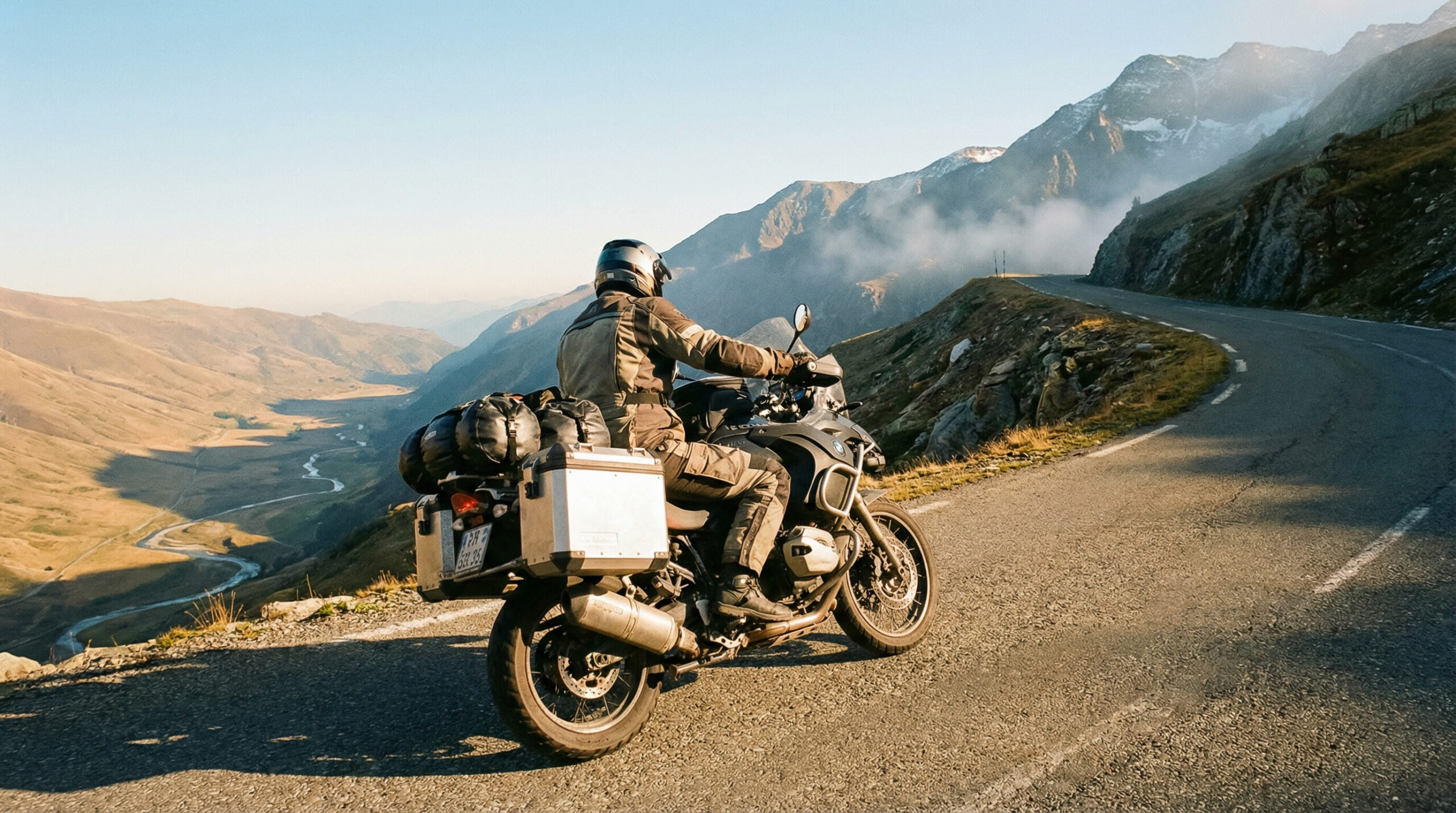
Elevation changes don’t just affect your engine — they affect your body.
Whether you’re riding mountain passes, high desert highways like US-50, or transitioning between valleys and peaks, elevation shifts quietly impact temperature, wind exposure, hydration, fatigue, and focus.
Understanding what’s happening — and preparing for it — can dramatically improve long-distance comfort.
Why Elevation Matters More Than You Think
For every 1,000 feet of elevation gain, temperature typically drops around 3–5°F. Add wind exposure and reduced humidity, and the difference can feel even greater.
That means:
- A comfortable valley ride can become cold at the summit
- Dry desert air can accelerate dehydration
- Crosswinds increase on exposed ridgelines
- Fatigue builds faster than expected
Elevation turns stable conditions into variable ones.
1. Temperature Swings & Layering Strategy
One of the biggest comfort killers at elevation is improper layering.
What Happens
- Cold morning starts at higher altitudes
- Warm valleys mid-day
- Sharp temperature drops on descents
If you overdress early, you sweat.
If you underdress, wind chill drains you.
Smart Solution
- Moisture-wicking base layer
- Lightweight insulating mid-layer
- Wind-blocking outer shell
- Easy-access storage for quick changes
Adaptability always beats bulk.
2. Wind Exposure at Higher Elevations
Mountain passes and high plateaus are often wide open, exposing you to sustained crosswinds.
Effects on the Rider
- Increased core tension
- Neck and shoulder fatigue
- Stronger wind chill
- Mental strain from constant micro-corrections
What Helps
- Proper windscreen setup
- Snug, wind-blocking jacket
- Relaxed grip and posture adjustments
Wind fatigue at elevation feels different — it’s persistent.
3. Dehydration Happens Faster Up High
High-altitude air is typically drier. Combine that with wind and steady riding, and dehydration sets in subtly.
Signs to Watch For
- Headache
- Slower reaction time
- Irritability
- Muscle tightness
Preventative Strategy
- Drink consistently, not just at stops
- Use hydration packs for long stretches
- Add electrolytes on multi-day tours
Dehydration reduces comfort long before it becomes dangerous.
4. Oxygen Levels & Fatigue
At higher elevations, oxygen levels drop slightly. For most riders, this isn’t dramatic — but over long distances it contributes to earlier fatigue.
You may notice:
- Faster breathing
- Increased heart rate
- Reduced endurance late in the day
The solution isn’t special gear — it’s pacing.
Plan:
- Shorter mileage days at higher elevations
- More frequent stretch breaks
- Realistic arrival times
5. Brake & Body Fatigue on Long Descents
Descending mountain routes requires sustained braking and concentration.
What builds up:
- Hand fatigue
- Wrist strain
- Ankle pressure
- Mental tension
Supportive gloves, good boot structure, and controlled pacing reduce cumulative strain.
6. Quick Weather Changes at Elevation
Cloud cover, fog, and sudden showers are more common at higher altitudes.
Be prepared for:
- Rapid visibility reduction
- Temperature drops within minutes
- Slick road surfaces
Keep rain layers accessible — not buried in luggage.
Planning Around Elevation
Before a ride involving significant elevation:
- Check elevation profiles, not just mileage
- Review summit temperatures, not valley forecasts
- Identify fuel stops before remote passes
- Plan buffer time in case weather shifts
Elevation rewards preparation.
Final Thoughts: Comfort Is About Anticipation
Elevation changes don’t ruin rides — lack of anticipation does.
When you expect:
- Temperature swings
- Wind exposure
- Hydration demands
- Increased fatigue
…you ride smoother, longer, and with more confidence.
Mountain routes, high deserts, and alpine highways are some of the most rewarding touring experiences available. With the right mindset and preparation, elevation becomes part of the adventure — not a problem to manage.