
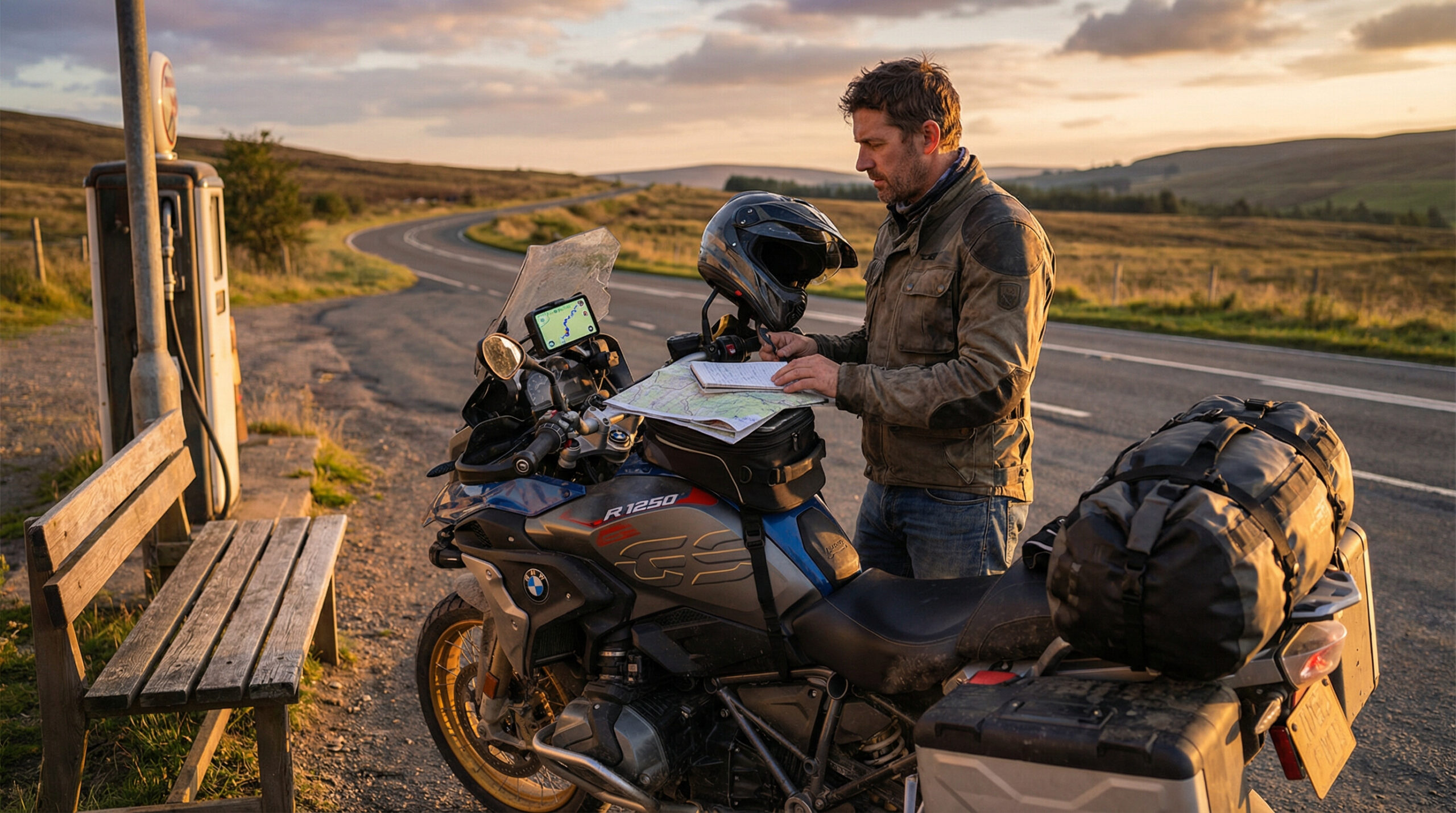
One of the most common mistakes riders make when planning a motorcycle tour is overestimating how many miles they can comfortably ride in a day. Unlike commuting or weekend rides, touring mileage needs to account for fatigue, weather, traffic, road type, and—most importantly—enjoyment.
This guide will help you plan realistic daily mileage so your motorcycle tour stays fun, safe, and sustainable from day one to the last mile.
Why Daily Mileage Matters on Long Rides
Pushing too many miles day after day leads to:
- Mental fatigue and slower reaction times
- Increased soreness and discomfort
- Poor decision-making late in the day
- Less time to enjoy scenic stops and local routes
Smart mileage planning keeps you fresh, alert, and excited to ride the next morning.
🔹 Trip Planning Gear
Tools & Gear for Mileage Planning
👉 [Product Name Placeholder]
Tools and gear that help you plan daily mileage, keep your multi-day tours efficient and enjoyable.
- GPS or mapping tools for route planning
- Fuel & rest stop planning gear
- Lightweight luggage for flexible daily adjustments
Rule of Thumb: Realistic Touring Mileage
While every rider and bike is different, these are solid starting points for most motorcycle tours:
- 300–400 miles/day: Relaxed touring pace (ideal for scenic routes)
- 400–500 miles/day: Moderate touring pace (mix of highways and backroads)
- 500–600 miles/day: Aggressive pace (experienced riders only, limited sightseeing)
If your route includes mountains, coastal highways, or urban traffic, lean toward the lower end.
Factors That Should Adjust Your Mileage
1. Road Type
- Interstates allow higher mileage but cause faster fatigue
- Two-lane scenic roads slow average speed but improve enjoyment
A 300-mile day on twisty roads can feel longer than 500 miles on the highway.
2. Riding Experience & Fitness
Newer touring riders should plan shorter days until they learn how their body reacts to consecutive long rides.
Experienced riders may handle longer distances—but even veterans benefit from rest days.
3. Weather & Season
Heat, cold, wind, and rain all increase fatigue.
Plan shorter days when riding:
- In high heat or humidity
- Through mountain passes
- During early spring or late fall
4. Gear Comfort
Uncomfortable gear shortens your effective riding range.
Proper touring gear—helmets, jackets, gloves, and seating—can add hours of comfortable riding time.
[Affiliate Product Block – Touring Gear Essentials]
Also see, Touring Essentials: Motorcycle Gear For Long Rides.
Planning Breaks (This Is Where Most Plans Fail)
A realistic touring schedule includes:
- Fuel stops every 150–200 miles
- Short stretch breaks every 60–90 minutes
- One longer stop for food or sightseeing
If your route looks doable only if you skip breaks, it’s too aggressive.
See How To Plan Fuel Stops On Long Motorcycle Rides for more tips on planning for fuel stops.
Build in Flex Days
On multi-day tours, plan:
- One lighter day every 3–4 riding days
- Optional rest or exploration days in key locations
Flex days protect the rest of your itinerary when weather or fatigue hits.
Example: Smart Touring Mileage Plan
Day 1: 350 miles (departure + adjustment day)
Day 2: 400 miles (scenic routes)
Day 3: 300 miles (mountains + sightseeing)
Day 4: Flex / rest day
This structure keeps energy high and stress low.
Tools That Help (But Don’t Replace Judgment)
- Google Maps & REVER for route timing
- Weather apps for daily adjustments
- Paper maps for big-picture planning
Always plan conservatively—then adjust on the road.
Final Thoughts
Motorcycle touring isn’t about how far you can ride—it’s about how well you ride day after day.
Plan realistic daily mileage, build in flexibility, and choose comfort over ego. Your body, your bike, and your trip will thank you.
Part of the Long Ride & Touring Guide Series