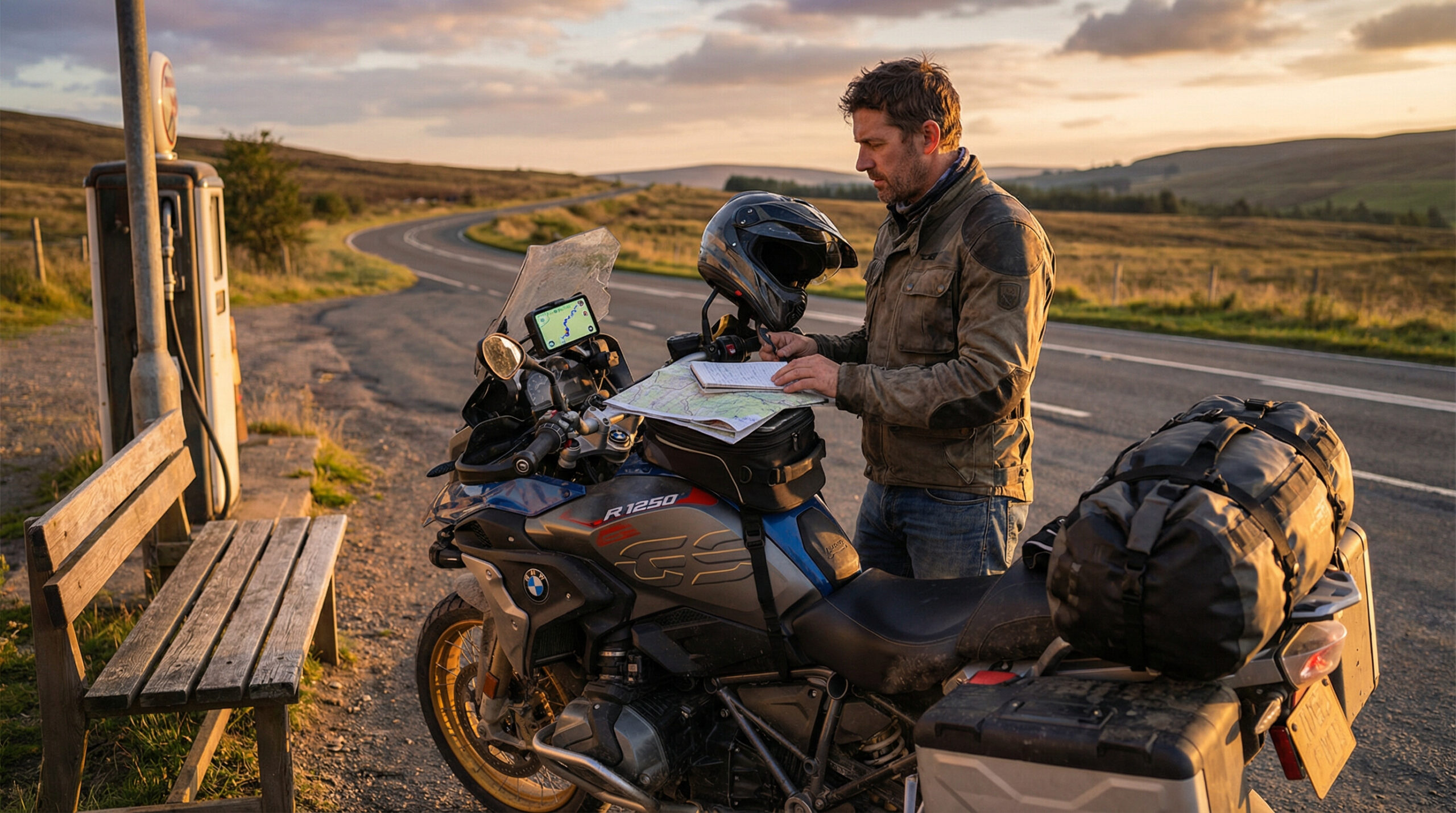
Running low on fuel is more than an inconvenience on a long motorcycle ride—it can become stressful, unsafe, or trip-ending in remote areas. Smart fuel planning keeps your ride smooth, predictable, and enjoyable, especially on long or unfamiliar routes.
This guide explains how to plan fuel stops on long motorcycle rides, how far you can realistically ride between stops, and how to avoid common mistakes that catch touring riders off guard.
Know Your Realistic Fuel Range
Your bike’s advertised range is rarely your real touring range.
Factors that reduce fuel range include:
- Sustained highway speeds
- Strong headwinds
- Mountain riding and elevation changes
- Heavy luggage and added weight
Best practice: Plan fuel stops at 70–80% of your maximum range, not the limit.
Understand the Route Before You Ride
Fuel planning starts before the engine does.
When reviewing a route, note:
- Distance between towns
- Elevation changes
- Remote or rural stretches
- Known fuel deserts
Scenic routes often have fewer fuel options—plan accordingly.
Use Navigation Tools Strategically
Modern navigation makes fuel planning easier—if used correctly.
Helpful tools include:
- GPS units with fuel POI overlays
- Mapping apps with offline maps
- Satellite view to confirm town size
Always verify fuel availability before committing to a long stretch.
Build Fuel Stops Into Your Daily Mileage Plan
Fuel stops should align with rest breaks—not interrupt them.
A good rhythm:
- Fuel every 120–180 miles (depending on range)
- Combine fuel stops with hydration and stretching
- Avoid riding to reserve unless necessary
Fuel planning and fatigue management go hand in hand.
Carrying Extra Fuel: When It Makes Sense
Extra fuel isn’t always necessary—but sometimes it’s smart.
Consider carrying extra fuel if:
- Riding remote routes
- Crossing long stretches without services
- Riding at higher speeds for extended periods
Safe options include:
- Purpose-built fuel bottles
- Secure mounting systems
See Motorcycle Touring Checklist (Pre-ride & Daily) for a full, comprehensive list.
Watch for Fuel Quality and Availability Issues
Not all fuel stops are equal.
Be cautious of:
- Very old or rarely used pumps
- Limited fuel grades
- Stations with restricted hours
When in doubt, top off earlier rather than later.
Riding With Others? Plan as a Group
Group rides introduce new fuel variables.
Tips for group fuel planning:
- Base stops on the shortest range bike
- Communicate fuel needs early
- Refuel together when possible
This avoids unnecessary stress and delays.
🔹 Fuel & Gear Planning
Fuel & Gear Planning
👉 [Product Name Placeholder]
Proper fuel and gear planning ensures your long rides go smoothly without unexpected stops or delays.
- Identify reliable fuel stops along the route
- Pack essential tools and emergency supplies
- Optimize stop timing for efficiency and comfort
Common Fuel Planning Mistakes
- Assuming fuel will be available
- Riding past open stations “just to push it”
- Ignoring wind and elevation
- Forgetting the reduced range with luggage
Fuel anxiety is avoidable with basic planning.
Check out Long Ride and Touring Guides for Motorcycle Riders.
Final Thoughts
Planning fuel stops on long motorcycle rides isn’t about overthinking—it’s about riding with confidence.
Know your range, understand your route, and plan fuel stops before you need them. When fuel is predictable, the ride becomes easier, safer, and far more enjoyable.
Related Touring Guides: