
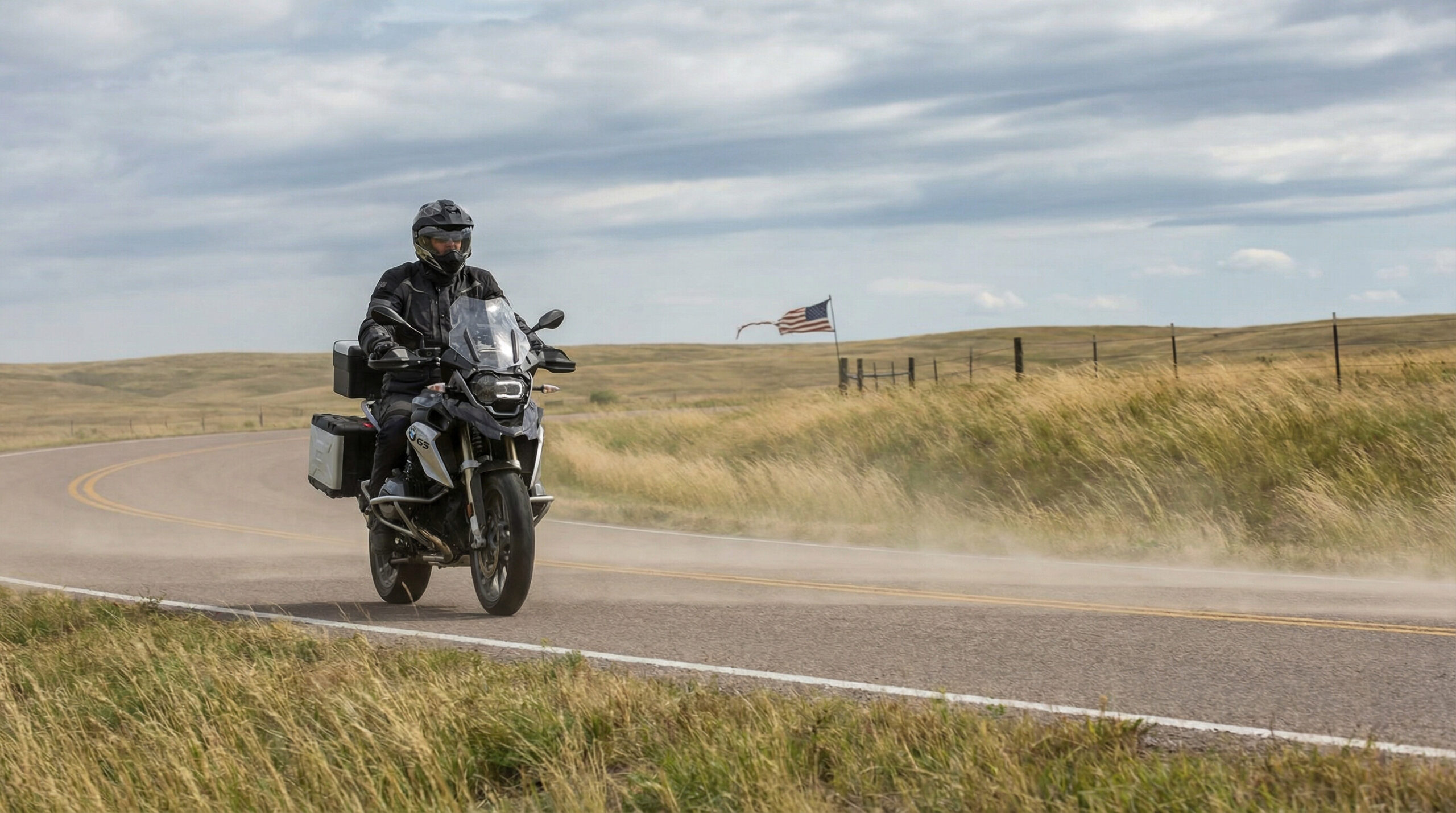
Wind is one of the most underrated sources of rider fatigue. Even moderate crosswinds can drain your energy, strain your neck, and make a long ride feel twice as long.
The good news? Riding comfortably in windy conditions is mostly about technique, setup, and the right gear choices — not brute strength.
Why Wind Causes So Much Fatigue
Wind doesn’t just push the bike — it forces your body to constantly correct and stabilize.
Common fatigue triggers include:
- Neck and shoulder tension from head buffeting
- Core fatigue from fighting crosswinds
- Mental fatigue from constant corrections
- Increased noise and turbulence
Over hours, this adds up fast.
Adjust Your Riding Position First
Your body position is your first line of defense.
Wind-friendly riding posture
- Keep your arms relaxed, not locked
- Grip the tank lightly with your knees
- Slightly lean into steady crosswinds
- Stay loose through your shoulders and neck
A tense rider gets blown around more than a relaxed one.
Use Your Lower Body, Not Your Arms
Many riders fight the wind with the handlebars, which actually makes things worse.
Instead:
- Stabilize yourself with your legs
- Let the bike move slightly beneath you
- Make small, smooth steering inputs
This reduces upper-body fatigue and improves control.
Helmet Choice Makes a Bigger Difference Than You Think
Poor helmet aerodynamics amplify wind fatigue.
Look for helmets with:
- Stable shell shape at highway speeds
- Reduced lift and side pull
- Effective neck roll sealing
A helmet that cuts cleanly through the air reduces neck strain dramatically.
Windscreens: Height and Shape Matter
A poorly sized windscreen can create more turbulence than no screen at all.
What helps in the wind
- The screen height that directs air to the chest, not the helmet
- Rounded or vented designs to reduce buffeting
- Adjustable screens for changing conditions
Small adjustments can make a huge difference.
Clothing That Reduces Wind Fatigue
Loose, flapping gear increases drag and fatigue.
Choose:
- Well-fitted jackets with adjustable cuffs
- Tightened collar and waist closures
- Touring pants that don’t balloon at speed
Streamlined gear keeps wind pressure predictable.
Manage Speed and Lane Position
Sometimes comfort comes from strategy, not equipment.
Tips:
- Reduce speed slightly in heavy crosswinds
- Use lane position to minimize gust exposure
- Be cautious when passing trucks or gaps in terrain
Anticipation saves energy.
Core Strength Helps More Than You Expect
You don’t need a gym routine — just awareness.
A lightly engaged core:
- Stabilizes your upper body
- Reduces reliance on arms
- Improves balance in gusts
Think “supported, not stiff.”
When Wind Means It’s Time to Take a Break
Even with perfect technique, wind is tiring.
Take breaks when:
- Your shoulders feel tight
- You’re gripping harder than usual
- Mental focus starts slipping
Short stops prevent long-term fatigue.
Final Thoughts
Windy conditions don’t have to ruin a ride — but ignoring them will.
By relaxing your posture, choosing aerodynamic gear, and riding strategically, you can stay comfortable and in control even when the weather isn’t cooperating.
Wind is part of touring. Learning to work with it makes you a better long-distance rider.