
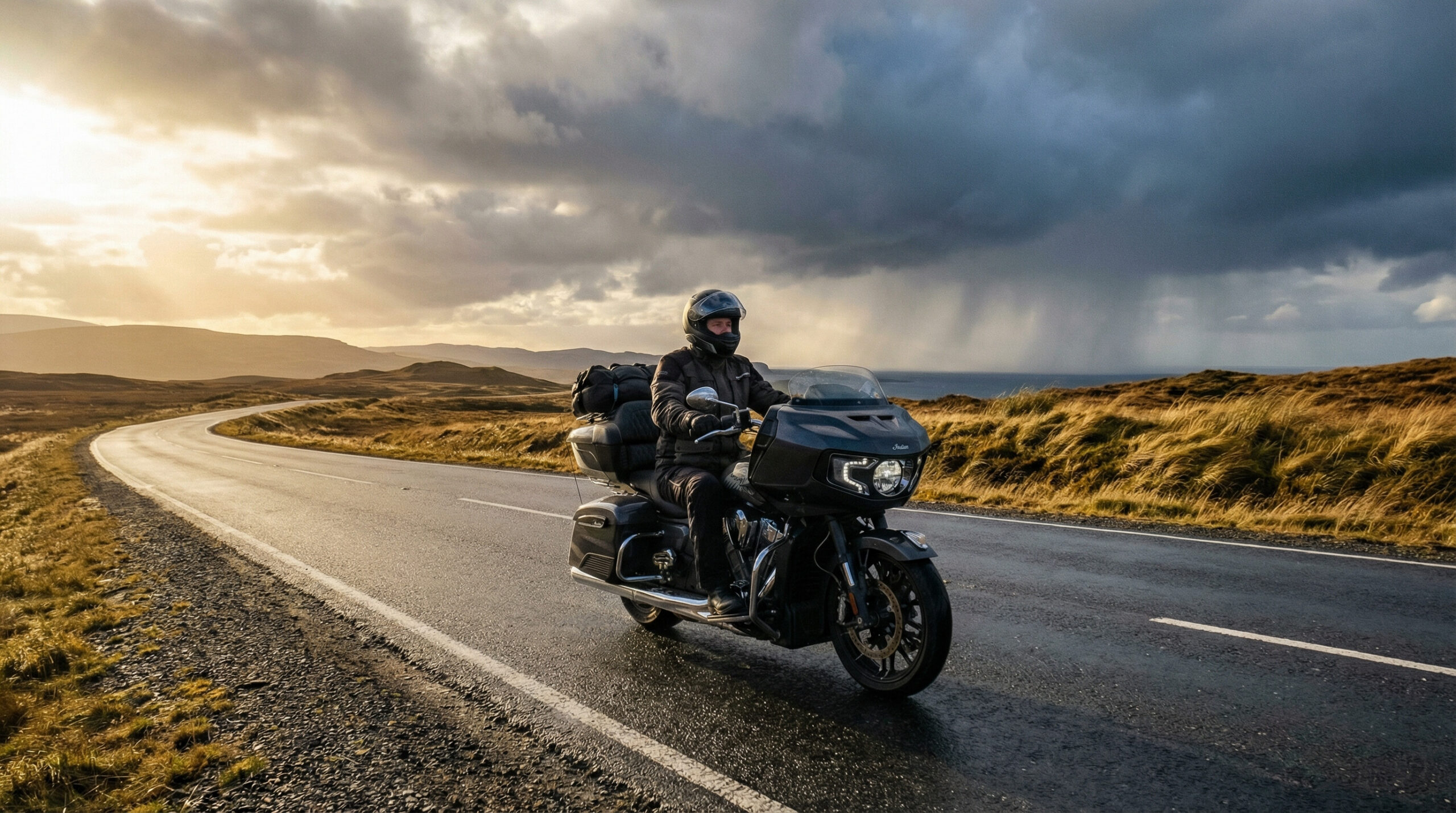
Weather doesn’t just change road conditions — it changes rider performance.
Over a short ride, shifting temperatures or gusty wind might be an inconvenience. Over a full touring day, those same variables become fatigue multipliers.
Heat, cold, wind, rain, humidity, and elevation shifts all impact:
- Energy levels
- Hydration needs
- Muscle tension
- Mental sharpness
- Decision-making speed
Long-distance comfort isn’t about toughness — it’s about preparation.
Let’s break down how weather affects long ride days, and what experienced touring riders do differently.
1. Heat: The Silent Energy Drain
Hot weather riding isn’t just uncomfortable — it steadily reduces focus.
What Happens in Heat
- Increased dehydration
- Slower reaction time
- Elevated heart rate
- Irritability and poor pacing decisions
Heat fatigue often feels like “just being tired,” but it compounds quickly over 300–400 miles.
Smart Preparation
- Aggressive hydration strategy
- Ventilated gear that actually flows air
- Light-colored outer layers
- Planned rest stops in shade
Heat management is endurance management.
2. Cold: Reduced Dexterity & Reaction Speed
Cold weather doesn’t just chill you — it reduces control.
What Happens in Cold
- Numb fingers
- Stiff wrists
- Reduced grip strength
- Slower braking response
Cold-related fatigue builds differently than heat fatigue. It tightens muscles and increases tension.
Smart Preparation
- Layering systems, not bulky single pieces
- Wind-blocking outer layers
- Heated gloves or liners for long days
- Early adjustments before numbness starts
Cold comfort equals control.
3. Wind: Constant Micro-Stress
Wind creates continuous micro-adjustments in posture and grip.
What Sustained Wind Does
- Core fatigue
- Shoulder and neck tension
- Increased fuel consumption
- Mental strain from constant corrections
Over hours, wind becomes one of the most exhausting conditions.
Smart Preparation
- Proper windscreen setup
- Snug, aerodynamic gear fit
- Balanced luggage system
- Relaxed riding posture
Wind fatigue is cumulative.
4. Rain: Mental Load Increases
Rain increases cognitive demand more than physical strain.
What Happens in Wet Conditions
- Increased scanning for hazards
- Reduced visibility
- Heightened focus on traction
- Muscle tension from caution
Even if you stay dry, rain raises your mental workload.
Smart Preparation
- Waterproof gear ready before storms hit
- Anti-fog visor setup
- High-visibility elements
- Smooth throttle and brake discipline
Rain preparedness reduces stress dramatically.
5. Elevation: Variable Conditions in One Day
Mountain routes combine all of the above.
You might encounter:
- Morning cold
- Midday heat
- Summit wind
- Afternoon rain
Elevation compresses weather diversity into short distances.
Smart Preparation
- Flexible layering
- Quick-access rain gear
- Conservative mileage planning
- Hydration consistency
Elevation rewards anticipation.
6. Weather Compounding Over Multi-Day Tours
The real issue isn’t one day — it’s recovery.
Poor weather preparation:
- Reduces sleep quality
- Increases soreness
- Extends recovery time
- Lowers next-day performance
Experienced touring riders prepare not just for the ride — but for the next morning.
Planning Strategies for Long Weather-Exposed Days
Before long rides:
- Check hourly forecasts, not just daily summaries
- Review elevation-specific forecasts
- Identify bailout stops in case of storms
- Build buffer time into your schedule
- Adjust daily mileage based on conditions
The more variable the weather, the more conservative your planning should be.
Final Thoughts: Comfort Extends Distance
Weather is inevitable. Fatigue is optional — if you prepare correctly.
When your gear adapts:
- Focus stays sharp
- Energy lasts longer
- Confidence remains steady
Long motorcycle days aren’t about pushing harder.
They’re about managing conditions intelligently.
Master that, and your touring range expands naturally.