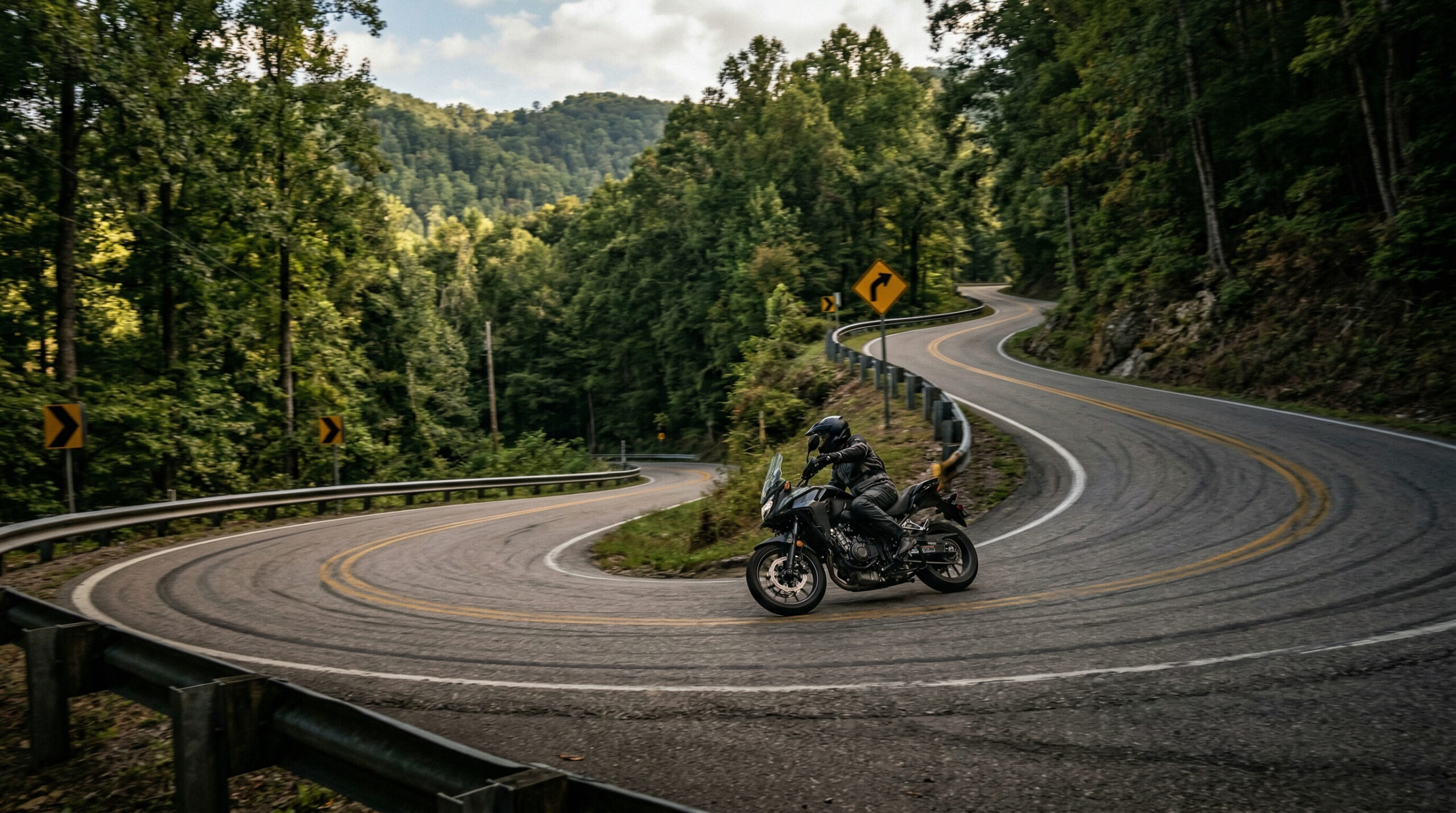
The Tail of the Dragon is one of the most famous motorcycle roads in the United States—and also one of the most talked about when it comes to safety.
Located on U.S. Route 129 near the Tennessee-North Carolina border, this 11-mile stretch features 318 curves, making it a highly technical ride that demands focus, skill, and respect.
So, is it dangerous?
The honest answer: it can be—but it depends on how you ride it.
Why the Tail of the Dragon Has a Dangerous Reputation
The Tail of the Dragon has earned its reputation due to a combination of factors:
- Extremely tight and continuous curves
- Elevation changes that affect visibility
- No intersecting roads (meaning constant riding focus)
- High rider traffic, especially on weekends
Unlike scenic routes like the Cherohala Skyway or a little less technical route like the Blue Ridge Parkway, the Dragon is designed for more technical riding rather than relaxed cruising.
Common Causes of Accidents
Most incidents on the Tail of the Dragon are preventable. The most common causes include:
1. Riding Beyond Skill Level
Many riders underestimate how technical the road is and attempt speeds or maneuvers they’re not prepared for.
2. Crossing the Center Line
This is one of the biggest risks, especially in blind corners where oncoming traffic may be present.
3. Target Fixation
Riders may focus on obstacles instead of looking through the turn, which can lead to loss of control.
4. Traffic and Congestion
On busy days, riders may feel pressured to keep up with faster traffic or make risky moves.
Is It More Dangerous Than Other Roads?
Compared to other popular routes in the region:
- The Tail of the Dragon is more technical than the Cherohala Skyway
- It is more intense per mile than the Blue Ridge Parkway
- It has more concentrated curves than most Appalachian routes
However, roads like the Back of the Dragon in Virginia also offer technical riding, often with less traffic.
👉 See: Tail of the Dragon vs Cherohala Skyway (Which Ride Is Better?)
Safety Tips for Riding the Tail of the Dragon
If you ride within your limits and stay focused, the Tail of the Dragon can be a safe and enjoyable experience.
Ride Within Your Skill Level
Take it slow, especially if it’s your first time. There’s no need to rush.
Stay in Your Lane
Never cross the center line—this is critical for avoiding head-on collisions.
Ride During Off-Peak Times
Early mornings and weekdays offer lighter traffic and a safer environment.
Avoid Group Pressure
Ride your own ride. Don’t try to keep up with more experienced riders.
Check Your Bike
Make sure your tires, brakes, and suspension are in good condition before riding.
When Is It Most Dangerous?
Certain conditions increase risk:
- Weekends and holidays (heavy traffic)
- Peak tourist seasons (spring and fall)
- Wet or cold conditions (reduced traction)
- Night riding (limited visibility)
Planning your ride during quieter times can significantly reduce risk.
Should Beginners Ride the Tail of the Dragon?
Beginners can ride the Tail of the Dragon—but caution is essential.
If you’re new to mountain riding, consider starting with a more forgiving route like the Cherohala Skyway before attempting the Dragon.
This allows you to build confidence and skills in a less demanding environment.
Final Thoughts
The Tail of the Dragon is not inherently dangerous—but it is unforgiving.
For riders who respect the road, ride within their limits, and plan carefully, it can be one of the most rewarding motorcycle experiences in the country.
For those who underestimate it, the risks increase significantly.
Ultimately, the safety of your ride comes down to preparation, awareness, and discipline.