
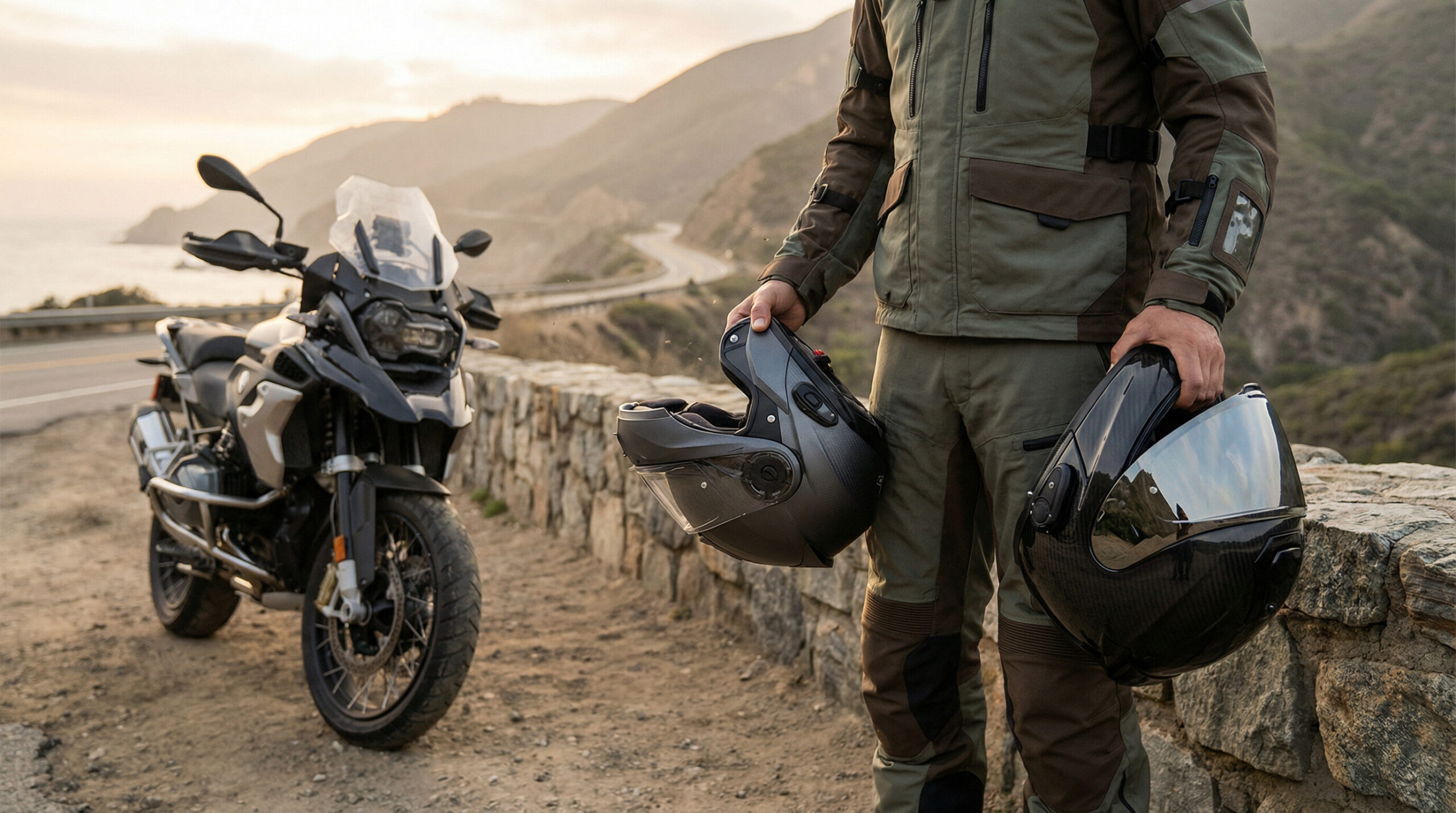
Choosing the right helmet for motorcycle touring isn’t just about protection — it’s about comfort, fatigue reduction, and how your helmet fits into long, real-world riding days.
For touring riders, the debate usually comes down to modular vs full-face helmets. Both offer advantages, but the right choice depends on how you ride, where you ride, and what drains your energy over time.
This guide breaks down the real differences, the tradeoffs that matter on long rides, and how to choose the best touring helmet for your needs.
Why Helmet Choice Matters More on Long Rides
On extended rides, your helmet affects:
- Neck and shoulder fatigue
- Wind noise and mental exhaustion
- Ventilation and heat management
- Ease of communication and stops
A helmet that feels fine for an hour can become exhausting after six.
Full-Face Helmets for Touring
Strengths of Full-Face Helmets
Full-face helmets are known for:
- Maximum structural protection
- Lower wind noise potential
- Lighter overall weight
- Better aerodynamics at highway speeds
For long highway days, reduced wind noise and stability matter more than convenience.
Explore full-face touring helmets
Considerations for Touring Riders
Potential downsides:
- Less convenient at fuel or photo stops
- Harder to communicate without removing the helmet
- Less airflow flexibility when stopped
For riders who prioritize ride-time efficiency, these tradeoffs may be worth it.
Modular Helmets for Touring
Strengths of Modular Helmets
Modular helmets shine in real-world touring scenarios:
- Flip-up convenience at stops
- Easier hydration and communication
- Improved comfort during frequent breaks
They’re especially popular with:
- Scenic route riders
- Riders who stop often
- Riders wearing glasses
Explore modular touring helmets
Considerations for Touring Riders
Modular helmets often:
- Weigh slightly more
- Have more wind noise potential
- Cost more for comparable quality
Quality matters more with modular helmets — poor designs amplify fatigue.
Key Touring Factors to Compare
1. Weight and Neck Fatigue
Over long days, helmet weight adds up.
- Full-face helmets usually weigh less
- Modular helmets vary widely in balance
Even small weight differences can affect neck comfort after hours in the saddle.
2. Wind Noise and Aerodynamics
Wind noise contributes to mental fatigue.
- Full-face helmets typically seal better
- Modular helmets depend heavily on design and fit
Ear protection helps — but helmet design still matters.
3. Ventilation and Heat Management
Hot weather amplifies helmet discomfort.
- Modular helmets allow airflow at stops
- Full-face helmets often manage airflow better while moving
Your climate plays a big role here.
Which Helmet Is Best for Touring?
Choose a Full-Face Helmet if you:
- Ride long highway stretches
- Prioritize quiet and stability
- Want the lightest possible setup
Choose a Modular Helmet if you:
- Stop frequently on scenic routes
- Value convenience and communication
- Ride in mixed environments
Neither option is “better” — only better for how you tour.
Common Touring Helmet Mistakes
❌ Choosing based on brand alone
❌ Ignoring helmet weight
❌ Underestimating wind noise fatigue
❌ Buying for short rides instead of long days
Comfort issues don’t show up immediately — they build slowly.
Final Thoughts: Match the Helmet to the Ride
The best touring helmet supports long hours, frequent stops, and sustained focus. Whether modular or full-face, the right choice is the one that reduces fatigue, fits properly, and matches your riding style.
Choose wisely — your neck, ears, and energy level will thank you.