
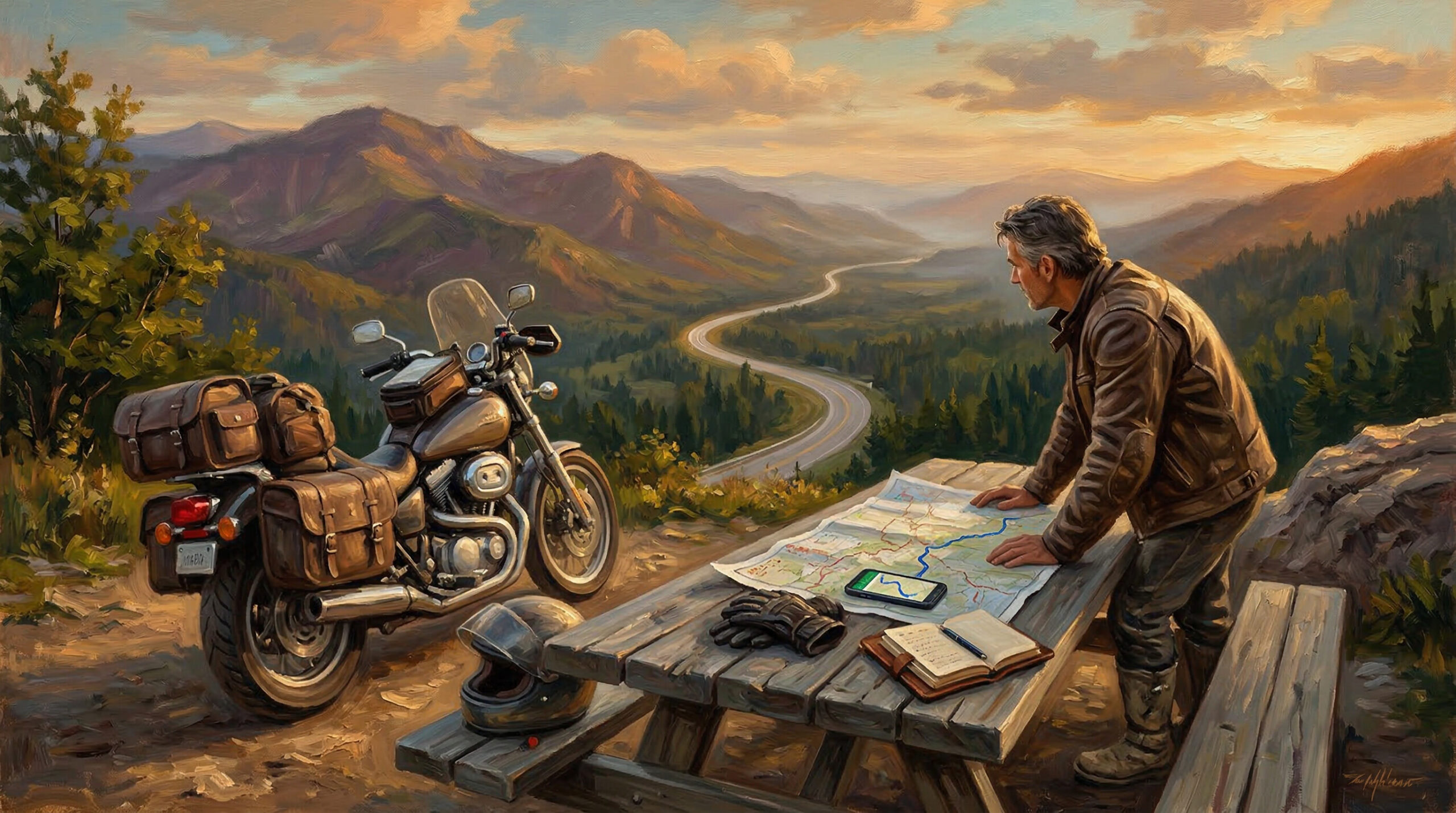
Planning a motorcycle ride can turn an ordinary trip into a memorable adventure. Whether you’re preparing for a short day ride or a multi-day touring trip, taking time to plan your route, gear, and schedule can help make the journey safer and more enjoyable.
Motorcycle trip planning involves several key steps, including choosing a destination, mapping your route, preparing your motorcycle, and packing the right gear. With the right preparation, riders can focus on enjoying the road rather than worrying about unexpected problems.
This guide covers the essential steps riders often follow when planning a motorcycle trip.
Choose Your Destination
The first step in planning a motorcycle ride is deciding where you want to go. Some riders choose destinations based on scenic routes, national parks, or well-known motorcycle roads.
For example, many riders plan trips around famous routes like:
- Blue Ridge Parkway
- Pacific Coast Highway
- Beartooth Highway
Planning around a specific road or region can help you build an enjoyable route that highlights the scenery and riding experience you’re looking for.
Plan Your Route
Once you’ve selected a destination, the next step is mapping out your route. Many riders use navigation apps or online maps to find scenic roads, fuel stops, and lodging along the way.
When planning your route, consider:
- Distance between stops
- Road conditions and terrain
- Weather patterns
- Fuel availability
Breaking a longer ride into manageable segments can help reduce fatigue and make the trip more enjoyable.
Decide How Many Miles to Ride Per Day
Daily riding distance depends on several factors, including road type, weather conditions, and personal comfort.
Highways may allow riders to travel longer distances in a day, while mountain roads with frequent curves require more time and attention.
Many touring riders prefer daily distances that allow time to stop for sightseeing, meals, and rest breaks.
Prepare Your Motorcycle
Before leaving on a longer ride, it’s important to check the condition of your motorcycle.
Basic pre-ride checks typically include:
- Tire pressure and tread condition
- Oil and fluid levels
- Brake function
- Chain or belt condition
- Lights and signals
Routine maintenance can help reduce the risk of mechanical problems during a trip.
Pack the Right Gear
Packing efficiently helps keep your motorcycle balanced and comfortable to ride. Riders often choose gear that provides both protection and convenience during long rides.
Common items riders bring on longer trips include:
- protective riding gear
- rain gear
- basic tools
- first-aid supplies
- navigation devices or smartphone mounts
Weather conditions can change quickly in mountainous regions, so additional layers may also be useful.
Check the Weather
Weather conditions can significantly affect motorcycle travel. Rain, wind, or sudden temperature changes can make riding more challenging.
Checking weather forecasts before departure and during multi-day trips helps riders adjust plans if needed.
Plan Fuel and Rest Stops
Some scenic routes pass through remote areas with limited services. Planning fuel stops ahead of time can prevent unnecessary stress during the ride.
Rest breaks also help reduce fatigue and allow riders to enjoy the scenery along the way.
Consider Lodging for Multi-Day Trips
For longer motorcycle tours, riders often plan overnight stops in advance. Options may include:
- hotels or motels
- campgrounds
- motorcycle-friendly lodging
Planning overnight stops along scenic routes can make the journey more enjoyable.
Stay Flexible
Even the best motorcycle trip plans may need adjustments. Weather, road closures, or unexpected discoveries along the route can change the course of a ride.
Many riders find that staying flexible allows them to enjoy the journey rather than focusing strictly on a schedule.
Final Thoughts
Planning a motorcycle ride helps create a smoother and more enjoyable travel experience. By choosing a destination, mapping a route, preparing your motorcycle, and packing the right gear, riders can focus on what matters most — enjoying the road.
With thoughtful preparation, a simple ride can become an unforgettable motorcycle adventure.