
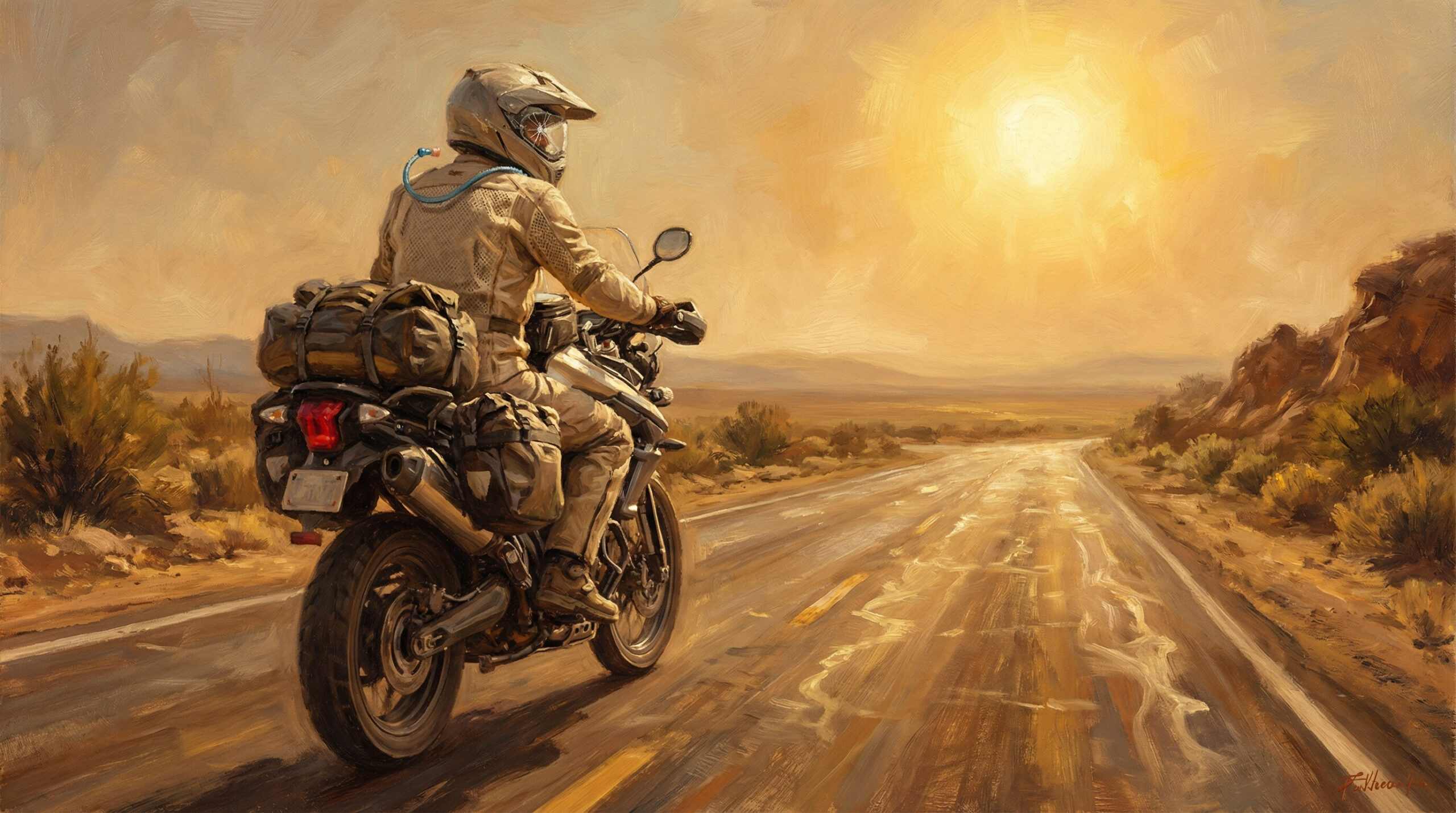
Riding in hot weather is one of the biggest challenges in motorcycle touring — and it’s where bad advice does the most damage. “Just drink more water” and “open your vents” only scratch the surface.
If you’ve ever finished a summer ride feeling drained, foggy, or overheated, this guide breaks down what actually helps when temperatures climb — based on fatigue reduction, heat management, and real-world touring conditions.
Why Heat Is More Draining Than You Think
Heat doesn’t just make you uncomfortable — it:
- Accelerates dehydration
- Increases fatigue and reaction time
- Reduces focus late in the day
- Makes minor discomforts feel exhausting
Managing heat is about controlling airflow, moisture, and energy loss, not just surviving the temperature.
What Actually Helps in Hot Weather Touring
1. Proper Airflow (Not Just “More Vents”)
More airflow isn’t always better. At highway speeds, uncontrolled airflow can actually dry you out faster and increase fatigue.
What works best:
- Controlled intake vents
- Exhaust vents that pull hot air out
- Gear designed for moving air, not static airflow
Mesh-only gear works in some climates, but hybrid designs often perform better on long rides.
Explore hot-weather touring jackets
2. Moisture Management (The Missing Piece)
Sweat cools you — but only if it stays where it can evaporate properly. Cotton traps moisture and increases heat stress.
What helps:
- Moisture-wicking base layers
- Lightweight cooling fabrics
- Evaporative cooling gear in dry climates
Even a simple technical base layer can reduce perceived heat dramatically.
See cooling base layer options
3. Hydration Strategy (Not Just Water)
Drinking water is critical — but long rides require electrolyte balance, not just volume.
Effective hydration strategies:
- Frequent small sips, not infrequent chugging
- Electrolyte supplementation on long days
- Easy access without stopping
If hydration requires effort, it won’t happen enough.
Explore hydration-friendly touring setups
4. Gloves That Breathe Without Fatigue
Hands are often overlooked in hot weather. Poor glove ventilation leads to sweat buildup, numbness, and reduced grip control.
Look for gloves that offer:
- Breathable panels without sacrificing protection
- Minimal padding bulk in hot conditions
- Good airflow across fingers and palms
See summer touring glove recommendations
5. Smart Ride Timing and Mileage Planning
Sometimes the best heat management tool is your schedule.
What helps:
- Early morning departures
- Longer midday breaks
- Shorter afternoon mileage goals
Heat fatigue compounds — planning around it preserves energy and focus.
What Doesn’t Help (Despite Popular Advice)
Let’s clear a few myths:
❌ Riding without proper gear
❌ Dark cotton shirts under jackets
❌ Waiting until you feel thirsty
❌ Removing protection instead of managing airflow
These usually make things worse, not better.
Hot Weather Touring Checklist (Quick Reference)
Before a hot-weather ride, prioritize:
- Controlled airflow gear
- Moisture-wicking base layers
- Hydration access on the bike
- Breathable gloves
- Realistic mileage goals
Small changes add up fast in high heat.
Final Thoughts: Ride Smarter, Not Tougher
Hot-weather touring doesn’t require suffering through it. With the right gear choices, hydration strategy, and pacing, summer rides can be just as enjoyable — and often more scenic — than cooler seasons.
Heat management is about efficiency, not endurance.