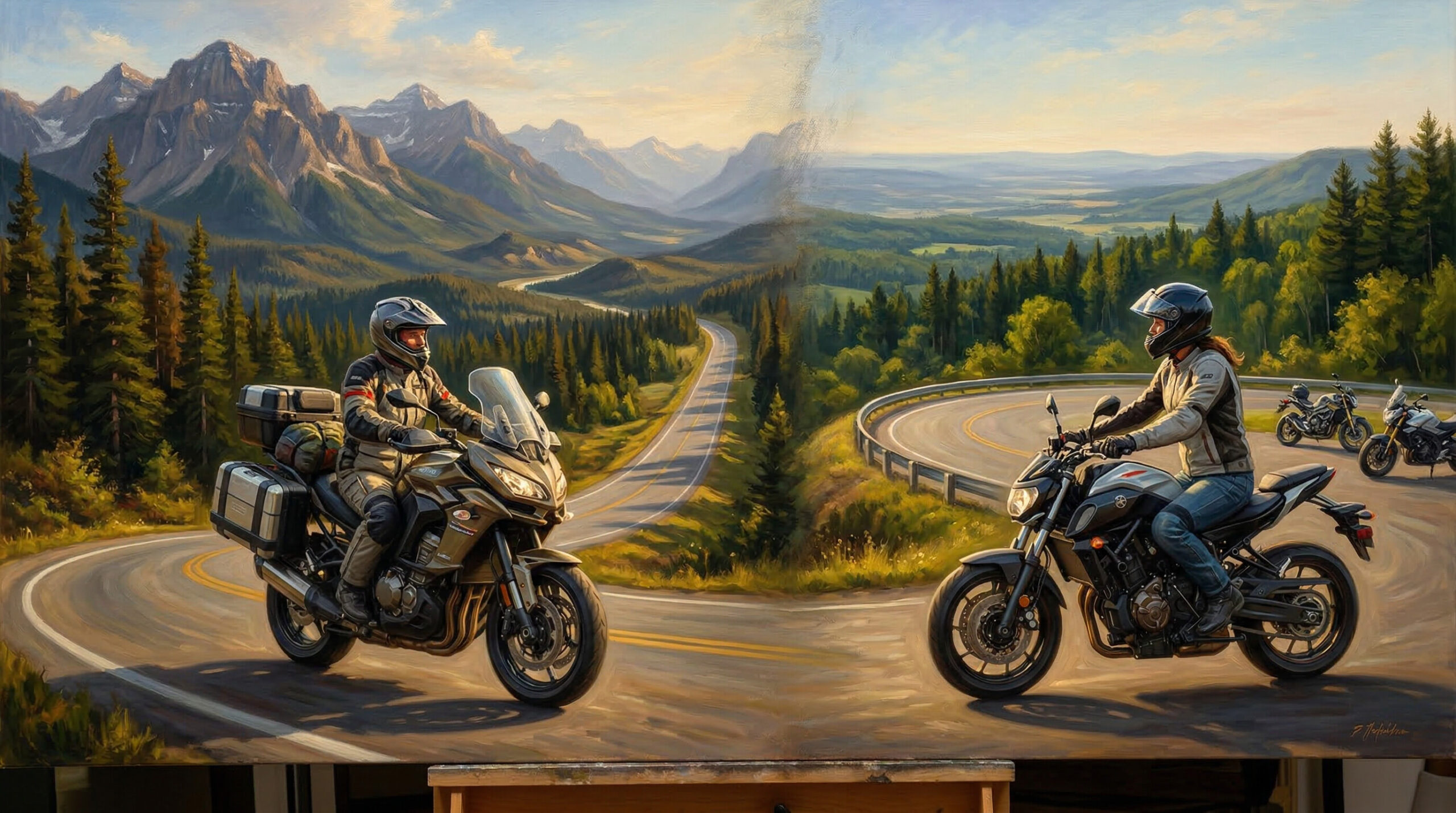
Motorcycle rides come in many shapes and lengths. Some riders enjoy short day rides, while others prefer multi-day touring trips. Understanding the differences between the two can help you plan trips that match your experience, goals, and available time.
This guide breaks down the key distinctions between day rides and touring, including mileage, planning, gear, and overall experience.
Daily Distance and Duration
The most obvious difference between day rides and touring trips is distance and duration:
- Day Rides: Typically last a few hours to a full day, covering 50–200 miles, depending on the rider and route.
- Touring Trips: Often involve multiple days or weeks, covering 200–400+ miles per day. Touring trips may include overnight stays, longer rest breaks, and planned sightseeing stops.
Planning and Preparation
Day Rides
- Minimal planning needed
- Basic gear and essentials are sufficient
- Shorter routes often closer to home
- Fuel stops are easy to schedule
Touring Trips
- Requires detailed trip planning (routes, lodging, fuel, weather)
- More gear and packing required (clothing, tools, rain gear)
- Routes may include remote areas or scenic highways
- Daily mileage must balance comfort and fatigue
Touring trips are generally more complex and benefit from using apps and guides like our Motorcycle Ride Planning Guide.
Gear Requirements
Day rides typically require only basic riding gear, such as:
- Helmet
- Jacket
- Gloves
- Boots
Touring trips require additional items for longer time on the bike, including:
- Rain gear and layers
- Navigation devices or smartphone mounts
- Tools and first-aid kit
- Overnight luggage and personal items
Road Selection
- Day Rides: Riders often choose shorter, familiar routes, local scenic roads, or areas with lighter traffic.
- Touring Trips: Riders often select long-distance scenic highways, national park routes, or iconic roads such as:
- Blue Ridge Parkway
- Pacific Coast Highway
- Natchez Trace Parkway
These roads allow for multi-day exploration and offer more extensive scenic experiences.
Fatigue and Riding Pace
- Day Rides: Riders can maintain a comfortable pace without worrying about long-term fatigue.
- Touring Trips: Daily mileage and longer riding sessions require careful pacing and regular rest stops. Riders must manage fatigue over consecutive days.
Experience Level Considerations
- Beginner riders often start with day rides to develop confidence in handling curves, traffic, and longer durations on the motorcycle.
- Once comfortable, riders can progress to multi-day touring trips, gradually increasing daily mileage and route complexity.
Flexibility and Itinerary
- Day rides are generally spontaneous and flexible; plans can change easily.
- Touring trips benefit from structured itineraries including lodging, fuel stops, and sightseeing plans, though flexibility is still valuable for unexpected opportunities or weather changes.
Final Thoughts
Day rides and touring trips each offer unique experiences. Day rides are ideal for short, casual adventures, while multi-day touring allows riders to explore scenic routes, national parks, and iconic highways in depth.
Riders can enjoy both styles depending on their goals, skill level, and available time. Planning carefully, understanding mileage, and choosing appropriate routes are key to a safe and enjoyable experience.
For comprehensive planning tips, see our Motorcycle Ride Planning: The Complete Guide, and for scenic route ideas, check our Best Motorcycle Roads in America post.