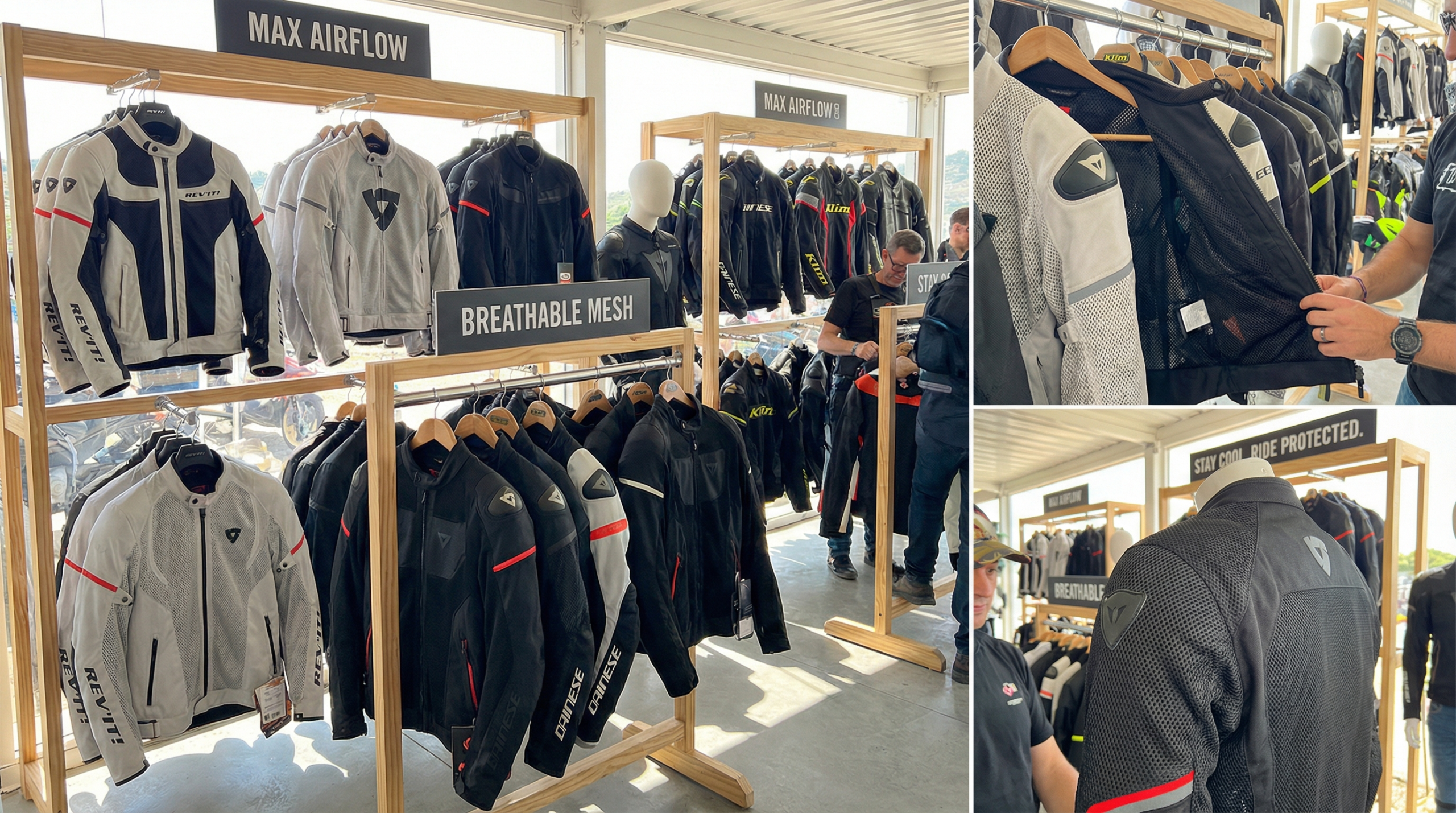
Riding a motorcycle in summer can be an incredible experience, but the heat can make wearing protective gear uncomfortable. Choosing the right summer motorcycle jacket helps you stay comfortable without overlooking the protection you need on the road.
Unlike heavier jackets designed for cooler weather, summer motorcycle jackets emphasize airflow, ventilation, and lightweight construction. However, not every jacket offers the same level of protection, and choosing the lightest option isn’t always the smartest decision.
A good summer riding jacket should balance several important features:
- Ventilation: Mesh panels and airflow systems help reduce heat buildup while riding.
- Protection: Abrasion-resistant materials and properly fitted impact armor help protect vulnerable areas.
- Comfort and fit: A jacket should allow natural movement while keeping protective armor securely positioned.
- Weather conditions: Your riding environment, including humidity, temperature, and occasional rain, can influence which jacket works best.
- Budget: A well-chosen jacket should provide practical protection and comfort without spending more than necessary.
Whether you’re commuting around town, enjoying weekend rides, or planning longer motorcycle trips, understanding these features will help you make a more informed decision.
In this guide, we’ll explain what to look for in a summer motorcycle jacket, compare common materials and protective features, discuss fit and comfort, and share practical tips for choosing a jacket that matches your riding needs.
For a broader look at protective equipment and riding essentials, explore our Riding Gear Guide, which covers additional gear considerations for motorcycle riders.
What to Look for in a Summer Motorcycle Jacket
Choosing a summer motorcycle jacket involves more than finding something lightweight and comfortable. The right jacket should provide adequate protection while allowing enough airflow to make riding in warm weather manageable.
Before choosing a jacket, consider the temperatures you typically ride in, your riding style, and how much time you spend on the road.
Ventilation and Airflow
Ventilation is one of the most important features of a summer motorcycle jacket. Mesh panels allow air to circulate through the jacket, helping reduce heat buildup while the motorcycle is moving.
Full-mesh jackets often provide excellent airflow, while textile jackets with strategically placed ventilation panels can offer a balance between cooling and weather versatility.
Keep in mind that airflow depends on riding speed, motorcycle wind protection, and the jacket’s construction. A highly ventilated jacket may still feel warm when you’re stopped in traffic.
Protective Materials and Armor
A summer jacket should provide more than basic coverage. Look for abrasion-resistant materials, reinforced impact areas, and protective armor designed for motorcycle use.
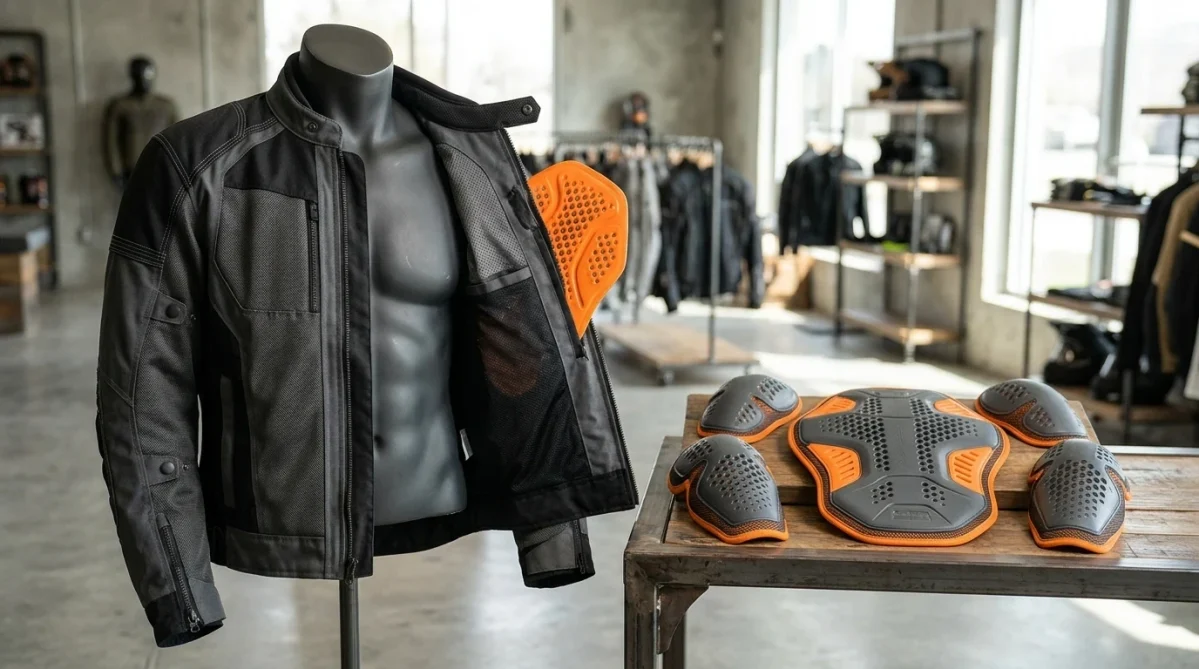
CE-certified impact protectors are commonly used in the shoulders and elbows. Some jackets also include a back protector, while others provide a pocket for an optional upgrade.
When comparing jackets, pay attention to the protective garment’s certification as well as the armor. EN 17092 classifications can help you understand the jacket’s tested protective performance.
Proper Fit and Comfort
A motorcycle jacket should fit securely without restricting your ability to operate the motorcycle.
The sleeves should remain long enough when your arms are extended toward the handlebars, and the shoulder and elbow armor should stay positioned over the areas they’re designed to protect.
Adjustable waist closures, sleeve adjustments, and stretch panels can help improve comfort and reduce unwanted movement.
Always consult the manufacturer’s sizing chart, and whenever possible, try the jacket on while sitting in a riding position.
Riding Conditions and Weather
Think about where and when you ride most often.
Riders in hot, humid climates may prioritize maximum ventilation, while those who regularly encounter cooler mornings, mountain elevations, or changing weather may prefer a more versatile textile jacket.
Highly ventilated mesh jackets generally provide limited protection from rain and cold wind. Carrying a separate waterproof outer layer can be a practical solution when conditions change.
Budget and Long-Term Value
Summer motorcycle jackets are available in a wide range of prices, but a higher price doesn’t automatically mean a jacket is the best choice for your needs.
Focus on protective performance, fit, material quality, ventilation, and practical features before considering appearance or brand reputation.
A properly fitting jacket with appropriate protective features is generally a better investment than a more expensive jacket that doesn’t suit your riding conditions.
Summer Motorcycle Jacket Materials: Mesh vs. Textile vs. Leather
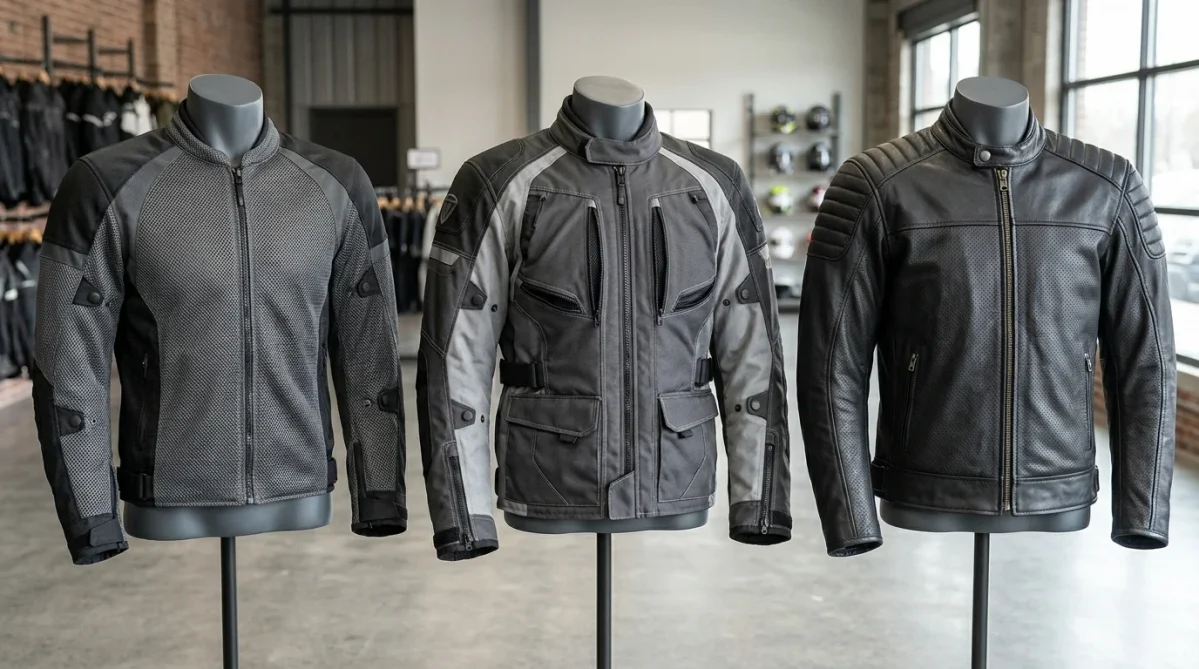
The material used in a motorcycle jacket plays a major role in how comfortable and protective it feels during summer riding.
Mesh, textile, and leather jackets each have advantages, but no single material is automatically the best choice for every rider. Construction quality, protective certification, fit, and riding conditions are just as important as the material itself.
Mesh Motorcycle Jackets
Mesh jackets are popular for warm-weather riding because their open-weave panels allow sufficient airflow for the rider.
Many designs combine large mesh sections with more abrasion-resistant materials in areas such as the shoulders and elbows.
Advantages:
- Excellent airflow while moving.
- Often lightweight and comfortable in hot weather.
- Available in a variety of styles and protective configurations.
Things to consider:
- Abrasion resistance varies significantly between models.
- Limited protection from wind, rain, and cooler temperatures.
- Airflow becomes less effective when stopped in traffic.
Best for: Riders who regularly encounter hot weather and prioritize ventilation while maintaining appropriate protective features.
Textile Motorcycle Jackets
Textile jackets use materials such as polyester, nylon, and specialized abrasion-resistant fabrics. Their construction varies widely, from lightweight summer designs to heavier touring jackets.
Some textile jackets incorporate mesh panels or adjustable vents to improve airflow.
Advantages:
- Available in a wide range of protective designs.
- Often include adjustable ventilation and useful storage pockets.
- Some models offer removable waterproof or thermal layers.
Things to consider:
- Ventilation varies considerably between jackets.
- Waterproof membranes and additional layers may reduce airflow.
- Heavier textile designs can become uncomfortable in extreme heat.
Best for: Riders who want a balance of ventilation, protection, and versatility across changing riding conditions.
Leather Motorcycle Jackets
Leather remains popular for motorcycle jackets because properly constructed motorcycle-grade leather offers strong abrasion resistance.
However, traditional leather jackets generally provide less airflow than heavily ventilated mesh designs.
Advantages:
- Can provide substantial abrasion resistance when appropriately constructed.
- Often offers a secure, close-fitting design.
- Available in classic and sport-oriented styles.
Things to consider:
- Typically heavier and warmer than mesh alternatives.
- Perforated leather improves airflow but may still feel hot in humid conditions.
- Requires appropriate cleaning and conditioning.
Best for: Riders who prefer leather construction and want more warmth, particularly during moderate summer temperatures.
Which Material Should You Choose?
For consistently hot weather, a well-constructed mesh jacket with appropriate protective certification may be the most comfortable option.
For touring or riding in changing weather, a ventilated textile jacket may provide greater versatility.
Leather can also be a practical choice, especially for riders who prioritize its fit and construction, but ventilation deserves careful consideration.
Regardless of material, look for a jacket that fits, keeps its armor in place, and provides tested protection appropriate for your riding needs.
Want to explore more options? Visit our Motorcycle Jacket Guides page for additional information about riding jackets, protective features, and choosing the right gear for different conditions.
Understanding Motorcycle Jacket Protection and Safety Ratings
Staying cool during summer rides is important, but ventilation should never come at the expense of appropriate protective gear.
A motorcycle jacket is designed to help reduce certain injuries during a crash. However, the level of protection varies depending on the materials, construction, impact armor, and safety certifications.
Understanding these features can help you compare jackets more confidently.
CE-Rated Motorcycle Armor
Many motorcycle jackets include removable impact protectors in the shoulders and elbows. These components are designed to absorb and distribute some of the force from an impact.
When comparing jackets, look for armor certified to the appropriate European standards.
- EN 1621-1: Covers impact protectors for areas such as the shoulders and elbows.
- EN 1621-2: Covers motorcycle back protectors.
These standards include different performance levels. Level 2 protectors generally meet stricter impact-force transmission limits than Level 1 protectors.
Keep in mind that CE-rated armor does not automatically mean the entire jacket has been tested or certified for abrasion resistance.
Understanding EN 17092 Jacket Ratings
EN 17092 is a European standard series used to evaluate protective clothing for motorcycle riders.
Jackets may carry classifications that indicate different levels of tested protective performance.
| Classification | General Meaning |
|---|---|
| AAA | Highest protection classification within EN 17092 |
| AA | Intermediate protection classification |
| A | Lower protection classification intended for lighter-duty riding applications |
| B | Abrasion-focused classification without required impact protectors |
| C | Classification for garments primarily designed to hold impact protectors |
For most riders comparing complete motorcycle jackets, AAA, AA, and A are the classifications they’re most likely to encounter.
A higher classification can indicate stronger performance under the standard’s testing requirements, but fit, comfort, and the ability to wear the jacket consistently also matter.
Abrasion Resistance and Reinforced Areas
During a slide, the outer material of a motorcycle jacket may contact the pavement.
Abrasion-resistant fabrics, reinforced stitching, and appropriately constructed impact zones can help reduce the risk of the jacket wearing through.
However, appearance alone cannot reliably tell you how protective a jacket will be.
A lightweight mesh jacket may offer meaningful protection when properly engineered and certified, while another jacket that looks substantial may have limited documented protective performance.
Check the manufacturer’s specifications and certification information rather than relying solely on material thickness or marketing claims.
Back Protectors and Optional Upgrades
Some summer motorcycle jackets include a certified back protector, while others provide only a foam insert or an empty pocket.
If back protection is important to you, verify whether a certified protector is included or must be purchased separately.
Also confirm that any replacement protector is compatible with the jacket and fits correctly.
Why Proper Fit Matters for Protection
Even high-quality protective armor may be less effective if it moves out of position during a crash.
Shoulder and elbow protectors should remain aligned with the areas they’re intended to cover when you’re sitting on your motorcycle.
A jacket that’s excessively loose may allow unwanted movement, while one that’s too tight can restrict mobility and become uncomfortable during longer rides.
The goal is a secure, comfortable fit that keeps protective components properly positioned.
Choosing Protection for Summer Riding
When comparing summer motorcycle jackets, consider the complete package:
- Verified garment certification, where available.
- Certified shoulder and elbow impact protection.
- Back protector availability and compatibility.
- Abrasion-resistant construction.
- Secure fit and appropriate ventilation.
No motorcycle jacket can eliminate the risk of injury, but choosing properly designed protective gear can help reduce certain risks while keeping summer riding more comfortable.
How to Choose the Right Fit for a Summer Motorcycle Jacket
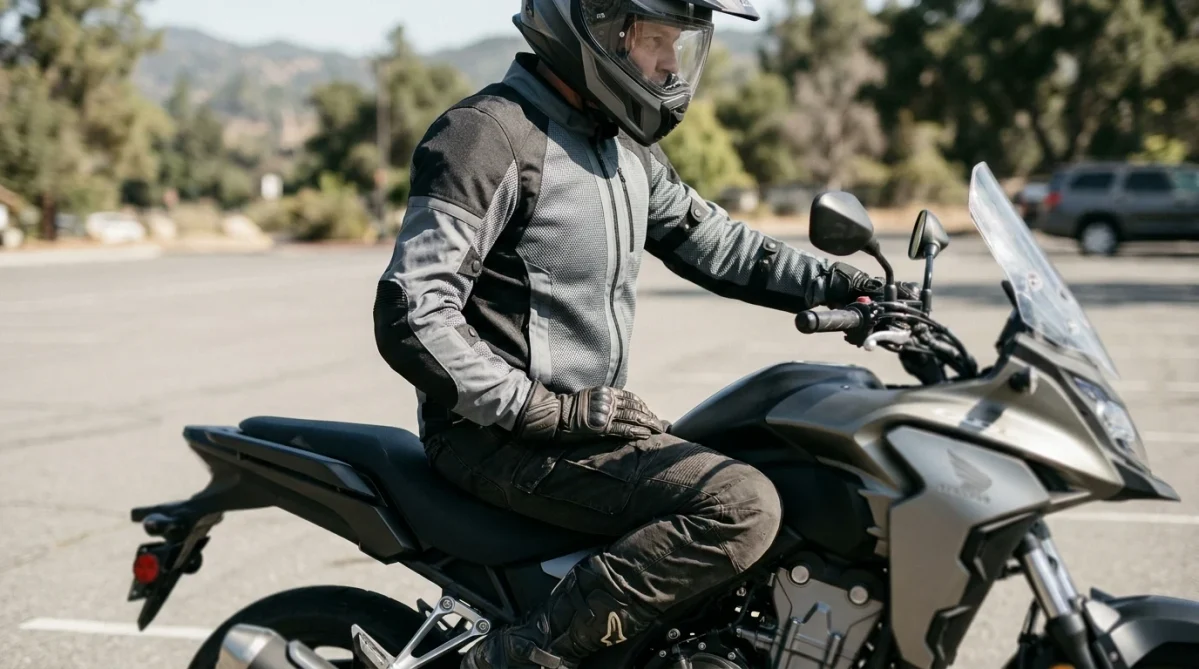
Even a well-designed motorcycle jacket can become uncomfortable or less protective if it doesn’t fit correctly. Summer riding adds another consideration: finding a secure fit without restricting airflow or movement.
The goal is to choose a jacket that feels comfortable in your normal riding position while keeping its protective features properly positioned.
Take Accurate Measurements
Before ordering a motorcycle jacket, consult the manufacturer’s sizing chart. Motorcycle apparel sizing can vary considerably between brands and models.
Common measurements include:
- Chest: Measure around the fullest part of your chest while keeping the measuring tape level.
- Waist: Measure around your natural waistline or the area specified by the manufacturer.
- Sleeve length: Follow the manufacturer’s instructions for measuring your arms.
- Height and body proportions: Consider whether you need a regular, short, or tall fit.
Don’t assume that your usual shirt or casual jacket size will translate directly to motorcycle riding gear.
Check the Fit in Your Riding Position
A motorcycle jacket may feel comfortable while standing but fit differently when you’re seated on your bike.
When trying on a jacket, reach forward as though you’re holding the handlebars.
Check that:
- The sleeves provide adequate wrist coverage.
- The jacket doesn’t pull excessively across your shoulders or upper back.
- The collar doesn’t press uncomfortably against your neck.
- The jacket stays around your waist without riding up excessively.
- You can turn your head and move your arms comfortably.
If possible, evaluate the fit while sitting on your motorcycle or a similar riding position.
Make Sure the Armor Stays in Place
Protective armor should remain aligned with the areas it’s designed to cover.
Check that the shoulder protectors sit correctly and that the elbow protectors stay positioned when you bend your arms.
A jacket that’s too loose may allow armor to shift, while an overly tight jacket can restrict movement.
Adjustable sleeves, waist closures, and well-designed stretch panels can help keep a secure fit.
Consider Summer Base Layers
What you wear underneath your jacket can affect comfort during hot-weather riding.
Lightweight, moisture-wicking base layers can help manage perspiration and reduce irritation against the jacket’s interior.
Synthetic performance fabrics and lightweight merino wool are common options.
Avoid bulky clothing that interferes with the jacket’s fit or pushes protective armor out of position.
Understand the Limits of Ventilation
Even highly ventilated jackets can become uncomfortable in extreme heat.
Airflow is usually more noticeable when the motorcycle is moving, and large windshields or fairings can reduce the amount of air reaching your jacket.
In very hot, dry conditions, strong airflow can also increase moisture loss. Staying hydrated and taking appropriate breaks remain important.
Ventilation helps manage heat, but it doesn’t eliminate the risk of heat-related illness.
Prioritize Comfort Without Sacrificing Protection
An uncomfortable jacket may tempt a rider to leave it behind, particularly during short summer trips.
Look for a balance of secure fit, protective construction, airflow, and practical comfort.
The best summer motorcycle jacket for your needs should fit well, provide suitable protection, and stay comfortable enough to wear consistently.
Choosing a Summer Motorcycle Jacket for Your Riding Style
The best summer motorcycle jacket isn’t necessarily the lightest, most expensive, or most heavily ventilated option. It’s the one that provides appropriate protection and comfort for the conditions you regularly encounter.
Your motorcycle, riding position, typical routes, and trip duration can all influence which features matter most.
City Riding and Daily Commuting
Summer commuting often involves stop-and-go traffic, frequent stops, and limited airflow at lower speeds.
A well-ventilated mesh or lightweight textile jacket can be a practical choice, particularly in warm climates.
What to prioritize:
- Ventilation that helps manage heat during slower riding.
- Protective armor that stays securely positioned.
- Comfortable movement when turning and maneuvering.
- Convenient pockets for everyday essentials.
- A fit that works comfortably in your normal riding position.
Remember that even highly ventilated jackets provide limited cooling when you’re stopped in traffic.
Weekend and Recreational Riding
Weekend rides can involve highways, winding backroads, and changing temperatures.
For these trips, a ventilated textile jacket or a protective mesh jacket paired with a suitable outer layer may offer useful flexibility.
What to prioritize:
- Comfortable airflow at typical riding speeds.
- Abrasion-resistant construction and certified armor.
- Adjustable closures that help keep a secure fit.
- Enough flexibility for changing riding positions.
- Practical options for unexpected weather.
Choose a jacket that will stay comfortable while riding, not just how it feels during a short fitting session.
Long-Distance Motorcycle Touring
Touring riders may encounter significant temperature changes during a single day.
A morning ride through the mountains can feel cool, while lower elevations and afternoon traffic may become considerably warmer.
A ventilated touring jacket with adjustable vents is helpful, although some riders prefer a protective mesh jacket combined with separate rain and wind protection.
What to prioritize:
- Comfortable fit for extended riding.
- Reliable protective construction.
- Adjustable ventilation.
- Compatibility with rain protection or additional layers.
- Secure pockets and practical storage.
- Comfort around the neck, shoulders, and wrists.
Choosing the right jacket is just one part of preparing for a motorcycle trip. Our Motorcycle Packing List for Smoky Mountains Rides covers additional riding gear and essentials worth considering before heading into the mountains.
For riders exploring destinations such as the Smoky Mountains, preparing for changing weather can be just as important as choosing a jacket for summer heat.
Planning a mountain riding adventure? My Smoky Mountains Motorcycle Trip Planning Guide covers practical considerations for preparing for a ride through this scenic region, including changing weather and essential trip preparation.
Sport and Performance-Oriented Riding
Sport motorcycle riders often use a more forward-leaning riding position, which can affect how a jacket fits across the shoulders, back, and arms.
Sport-oriented jackets may feature a close-fitting cut, pre-curved sleeves, and additional protective construction.
What to prioritize:
- A secure fit in a forward-leaning riding position.
- Certified impact protectors.
- Documented abrasion protection.
- Sleeves and closures that remain comfortable while reaching the handlebars.
- Ventilation appropriate for the riding conditions.
For track riding, always check the organizer’s protective equipment requirements. A summer street jacket may not meet those requirements.
Cruiser and Relaxed Touring Riding
Cruiser riders often sit more upright, sometimes with their arms extended toward higher handlebars.
This riding position can change how a jacket fits around the shoulders and sleeves.
A ventilated textile or mesh jacket may work well, depending on the motorcycle’s windshield fairing and the rider’s preferences.
What to prioritize:
- Comfortable shoulder movement.
- Appropriate sleeve length with arms extended.
- Secure waist and sleeve adjustments.
- Adequate protective armor and abrasion resistance.
- Airflow that works with the motorcycle’s wind protection.
A large windshield can reduce direct airflow to the rider’s torso, making jacket ventilation and overall heat management especially important.
Match the Jacket to Your Actual Riding Needs
Before purchasing a summer motorcycle jacket, think about the type of riding you do most often.
A jacket designed primarily for hot-weather commuting may not offer the same weather versatility as a touring jacket, while a heavily constructed sport jacket may feel unnecessarily warm for relaxed summer rides.
Prioritize protective performance, proper fit, and realistic comfort for your typical riding conditions.
If you regularly ride in different environments, layering or owning more than one type of protective jacket may provide greater flexibility.
Summer Motorcycle Jacket Brands and What to Consider
Several established motorcycle apparel manufacturers offer jackets designed for warm-weather riding. However, choosing a recognizable brand is only one part of finding the right jacket.
Ventilation, protective certification, fit, and construction can vary significantly between models from the same manufacturer.
Here are three motorcycle apparel brands worth considering when researching summer riding jackets.
Alpinestars
Alpinestars offers motorcycle apparel for a variety of riding styles, including sport riding, commuting, and touring.
Its product range includes ventilated textile and mesh jackets designed for warmer conditions.
What to look for:
- Mesh panels and ventilation placement.
- Shoulder and elbow protector specifications.
- Overall garment certification.
- Fit and sleeve construction for your riding position.
- Compatibility with optional protective equipment.
Alpinestars jackets can differ considerably in their intended use, so compare individual models rather than assuming every jacket offers the same features.
Dainese
Dainese manufactures motorcycle protective clothing across several categories, including sport-oriented and everyday riding apparel.
Its warm-weather jacket options may incorporate mesh construction, ventilated textile materials, and removable protective components.
What to look for:
- Protective garment classification.
- Included armor and optional back protection.
- Ventilation coverage.
- Fit around the shoulders, arms, and waist.
- Comfort in your normal riding position.
Dainese sizing and jacket construction vary between models. Review the manufacturer’s measurements, and try the jacket on to help avoid fit problems.
ICON
ICON is known for motorcycle apparel with distinctive styling, including jackets intended for street riding.
Depending on the model, its jackets may combine textile construction, mesh ventilation, and removable impact protectors.
What to look for:
- Abrasion-resistant materials and reinforced areas.
- Protective armor specifications.
- Mesh coverage and airflow.
- Secure fit and adjustment options.
- Overall jacket certification, where provided.
Appearance is personal preference, but protective performance and comfort should remain the primary considerations.
How to Compare Motorcycle Jacket Brands
Instead of choosing a jacket based solely on brand reputation, compare features and specifications.
A practical comparison should include:
- Protection: What protective certification does the jacket carry, and which impact protectors are included?
- Ventilation: How much airflow does the jacket provide, and where are its ventilation panels located?
- Fit: Does the jacket fit securely in your normal riding position?
- Weather versatility: Is it intended primarily for hot weather, or can it accommodate changing conditions?
- Value: Do its protective features, materials, and construction justify the price for your needs?
Manufacturer specifications are a useful starting point, but they don’t always reveal how comfortable a jacket will feel during extended riding.
Independent reviews, detailed sizing feedback, and trying on a jacket can provide additional perspective.
Brand Reputation Isn’t a Substitute for Proper Fit
Alpinestars, Dainese, and ICON are examples of established motorcycle apparel manufacturers, not an exhaustive list of suitable options.
Other brands may offer jackets that better match your budget, body shape, or riding conditions.
The most important decision is choosing a properly fitting jacket with protective features and ventilation for the riding you actually do.
How to Care for and Maintain Your Summer Motorcycle Jacket
A quality summer motorcycle jacket is an investment in comfort and protection. Proper maintenance helps preserve its materials, ventilation features, and protective components over time.
Mesh, textile, and leather jackets require different care methods, so always follow the manufacturer’s cleaning and maintenance instructions.
Clean Your Jacket Regularly
Summer riding exposes your jacket to perspiration, dust, road grime, and insects. Over time, these contaminants can accumulate in the fabric and ventilation panels.
For mesh and textile jackets:
- Check the manufacturer’s care label before cleaning.
- Remove protective armor and detachable liners if the instructions require it.
- Use an approved mild cleaning product.
- Gently clean mesh panels without pulling or stretching the material.
- Rinse thoroughly when required and allow the jacket to air-dry.
Avoid harsh detergents, bleach, fabric softeners, and excessive heat unless the manufacturer specifically permits their use.
Leather jackets require products and cleaning methods suitable for motorcycle-grade leather. Do not machine-wash leather unless the manufacturer explicitly approves it.
Inspect Protective Armor and Jacket Construction
Before riding, take a moment to check your jacket’s condition.
Pay particular attention to:
- Shoulder and elbow armor positioning.
- Back protector condition, if equipped.
- Seams and stitching in high-stress areas.
- Zippers, fasteners, and adjustment straps.
- Mesh panels and abrasion-resistant fabric.
- Areas showing excessive wear, tearing, or deterioration.
Protective components should stay securely in place and free from visible damage.
If armor is cracked, permanently deformed, or otherwise damaged, consult the manufacturer about replacement.
Check Your Jacket After a Crash
A motorcycle jacket can sustain damage during a crash even when the problems aren’t immediately obvious.
Carefully inspect the outer materials, seams, closures, and protective components carefully.
Some impact protectors may require replacement after a significant impact, even if visible damage is limited.
Follow the manufacturer’s post-impact inspection and replacement guidance. If you’re unsure about a jacket’s protective integrity, contact the manufacturer or replace the damaged equipment.
Store Your Jacket Properly
Proper storage helps preserve the jacket’s shape and materials between rides.
Before putting your jacket away:
- Make sure it is clean and completely dry.
- Hang it on a suitable hanger that supports the shoulders.
- Store it in a cool, dry, ventilated location.
- Avoid prolonged exposure to direct sunlight.
- Keep it away from excessive heat, moisture, and chemicals.
Avoid leaving a damp jacket inside a closed motorcycle luggage compartment for extended periods.
Maintain Zippers and Closures
Zippers, snaps, hook-and-loop fasteners, and adjustment straps wear with regular use.
Keep these components clean and inspect them for damage.
If a zipper becomes difficult to operate, check for trapped fabric or debris before applying force. Use only a lubricant or maintenance product recommended for that zipper and jacket.
Damaged closures can affect both comfort and how securely the jacket stays in place.
Know When to Repair or Replace Your Jacket
Minor cosmetic wear doesn’t always mean you need to replace your motorcycle jacket.
However, damage to protective materials, structural seams, armor pockets, or critical closures deserves closer attention.
Consider replacing your jacket when:
- Protective materials are torn or severely abraded.
- Important seams or closures are damaged.
- Armor no longer stays correctly positioned.
- The jacket has sustained crash damage that compromises its protective function.
- The manufacturer recommends replacement because of age, damage, or deterioration.
Repairs that involve protection components should be evaluated or performed by the manufacturer or a qualified motorcycle apparel repair specialist.
Make Jacket Maintenance Part of Your Riding Routine
Regular inspection and appropriate cleaning can help extend your jacket’s useful life.
More importantly, they help you address problems before those problems affect fit, comfort, or protective performance.
A pre-ride inspection and proper care can help keep your summer motorcycle jacket ready for the road.
Common Mistakes to Avoid When Buying a Summer Motorcycle Jacket
Choosing a summer motorcycle jacket can be challenging, especially when you’re trying to balance comfort, ventilation, protection, and price.
Knowing which mistakes to avoid can help you make a better purchasing decision.
1. Choosing Ventilation Over Protection
A jacket with extensive mesh panels may feel comfortable in hot weather, but airflow alone doesn’t indicate how protective it will be.
Look for abrasion-resistant construction, certified impact protectors, and documented garment protection ratings.
A well-designed summer jacket should balance ventilation with appropriate protective performance.
2. Assuming All Motorcycle Jackets Offer the Same Protection
Two jackets may look similar while providing very different levels of tested protection.
Some include certified shoulder and elbow armor, while others use basic padding or require an additional purchase for protective inserts.
Check the manufacturer’s specifications and relevant certifications rather than relying on appearance or marketing descriptions.
3. Buying the Wrong Size
A jacket that’s too loose may allow protective armor to shift out of position.
A jacket that’s too tight can restrict movement and become uncomfortable during longer rides.
Always consult the manufacturer’s sizing chart and test the fit in your normal riding position.
4. Overlooking Weather Conditions
A heavily ventilated mesh jacket may work well on hot afternoons but be uncomfortable on cooler mornings, mountain rides, or unexpected rain.
Consider your typical riding conditions before choosing a jacket.
For changing weather, a ventilated textile jacket or a suitable layering system may provide greater versatility.
5. Assuming Waterproof Jackets Are Always Comfortable in Summer
Waterproof membranes can help keep rain out, but they may also reduce airflow and increase heat buildup.
A jacket advertised as waterproof isn’t necessarily the most comfortable choice for consistently hot conditions.
Consider whether a separate rain layer would better suit your riding needs.
6. Choosing Based on Appearance Alone
Style is a reasonable consideration, but it shouldn’t outweigh protective performance, fit, or comfort.
A jacket that looks impressive in photographs may not fit properly or provide the ventilation you need.
Prioritize practical riding requirements before choosing a color or design.
7. Ignoring Back Protection
Not every motorcycle jacket includes a certified back protector.
Some models provide only a foam insert or an empty compartment designed for an optional protector.
Check what’s included and whether a compatible certified back protector is available.
8. Focusing Only on Price
An expensive jacket isn’t automatically the best option, and a lower-priced jacket isn’t necessarily inadequate.
Compare protective certification, construction, fit, ventilation, and included armor.
The goal is to find a jacket that meets your needs and budget without compromising essential protective features.
Make an Informed Decision
The best way to avoid these mistakes is to evaluate a summer motorcycle jacket as a complete piece of protective equipment.
Consider the fit, ventilation, protection, and whether it suits your actual riding conditions.
Taking the time to compare these factors can help you choose a jacket you’ll feel comfortable wearing during the summer riding season.
Frequently Asked Questions About Summer Motorcycle Jackets
Mesh motorcycle jackets can provide meaningful protection when they’re properly designed and constructed with appropriate abrasion-resistant materials and certified impact armor.
However, protection varies significantly between models. Look for documented garment certification, such as EN 17092, rather than assuming every mesh jacket offers the same level of protection.
A well-ventilated mesh motorcycle jacket is often a practical choice for consistently hot weather.
However, riders who encounter changing temperatures or occasional rain may prefer a ventilated textile jacket.
The best option depends on your riding conditions, protective requirements, and personal comfort.
A summer motorcycle jacket should fit securely without restricting movement.
The shoulder and elbow armor should remain properly positioned when you’re seated on your motorcycle.
An excessively loose jacket may allow protective components to shift, while an overly tight jacket can become uncomfortable and restrict mobility.
Back protection is worth considering when choosing motorcycle riding gear.
Some jackets include a certified back protector, while others provide a pocket for an optional insert.
If your jacket doesn’t include one, check whether the manufacturer offers a compatible protector certified to EN 1621-2.
You can wear a summer motorcycle jacket in the rain, but heavily ventilated mesh jackets generally provide little water resistance.
Some textile jackets include waterproof membranes or removable liners.
For riders who prioritize maximum summer ventilation, carrying a compatible waterproof outer layer may be a more flexible solution.
Traditional leather motorcycle jackets can become uncomfortable in high temperatures, particularly when they have limited ventilation.
Perforated leather jackets can improve airflow, but they may still feel warmer than highly ventilated mesh alternatives.
Your local climate, riding speed, and motorcycle’s wind protection can influence comfort.
There is no universal replacement interval for every motorcycle jacket.
Its useful life depends on material quality, frequency of use, environmental exposure, maintenance, and any damage sustained.
Inspect your jacket regularly and follow the manufacturer’s recommendations. Replace protective components or the entire jacket when damage or deterioration compromises its intended function.
Not necessarily.
Higher-priced jackets may offer additional features, materials, or construction details, but price alone doesn’t establish protective performance.
Compare certification, included armor, abrasion-resistant construction, ventilation, and fit before deciding which jacket offers the best value for your needs.
Final Thoughts: Choosing the Right Summer Motorcycle Jacket
Finding the right summer motorcycle jacket comes down to protection, ventilation, comfort, and fit.
While lightweight materials and generous airflow can make hot-weather riding more enjoyable, protective performance should remain a priority. Look for abrasion-resistant construction, certified impact armor, and documented garment safety ratings whenever available.
Remember that the best jacket for one rider may not be the best choice for another.
A commuter dealing with summer traffic may prefer a highly ventilated mesh jacket, while a touring rider traveling through changing temperatures may benefit from a more versatile textile design.
Before making your final decision, consider these essentials:
- Protection: Choose a jacket with appropriate protective features and verified safety certifications.
- Ventilation: Match the jacket’s airflow to the temperatures and conditions you typically encounter.
- Fit: Make sure the jacket feels secure and comfortable in your normal riding position.
- Versatility: Consider whether you’ll need additional layers for cooler temperatures or unexpected rain.
- Value: Focus on protective performance, construction quality, and practical features rather than price or brand reputation alone.
Whenever possible, try on several jackets before purchasing. Pay attention to how the armor fits, how freely you can move, and whether the jacket feels comfortable when reaching for the handlebars.
Most importantly, choose protective gear that you’re comfortable wearing consistently.
At RiderWorx, my goal is to help riders make informed decisions about motorcycle gear, accessories, and travel preparation.
Whether you’re commuting, exploring scenic backroads, or planning your next motorcycle adventure, the right summer jacket can help you stay more comfortable while maintaining appropriate protection.
Ride prepared, stay comfortable, and enjoy the road ahead.
Key Features and Technologies in Modern Motorcycle Summer Jackets
Motorcycle summer jackets have evolved into highly advanced pieces of technology, all while ensuring comfort and a cool experience. Ventilation systems top the list, letting air flow so you don’t roast alive while catching the wind. Look for jackets with zippered vents or full mesh panels to feel like you’ve got a personal AC unit.
Safety doesn’t take a back seat, even when it’s hot. Modern jackets come loaded with armor in all the right places—elbows, shoulders, and back. High-tech padding materials ensure that protection is top-notch without turning your jacket into a medieval suit of armor.
Riders gotta deal with those random summer showers too. Waterproof yet breathable fabrics are a must, so you don’t end up drenched. Think of laminated membranes or moisture-wicking liners—these guys are game-changers!
Visibility is your best friend out on the road, especially at night. Innovative reflective materials ensure that you do not merge with the darkness. Jackets now incorporate strategically placed reflective strips and logos, ensuring that you remain visible when it is most crucial.
And because bikers are always on the go, storage options in jackets have to be decent. Handy pockets for your phone, wallet, or even snacks—some even have hydration packs for when you’re out on those longer rides. They’re thinking of everything these days!
Top Summer Motorcycle Jacket Brands and Models
When selecting a summer motorcycle jacket, certain brands distinctly differentiate themselves from the competition. Alpinestars, Dainese, and Icon have been designing high-quality features into their jackets, catering to various riding styles and preferences.
Alpinestars, for instance, is known for designs that marry hardcore durability with style. Their jackets are often featured with extensive ventilation and protective armor, making them a rider’s favorite.
Dainese attracts attention through its innovative approach to safety and ergonomic comfort. Those slick reflective details and built-in protective systems aren’t just hype—they’re designed to keep you upright and unscathed.
Icon, on the other hand, channels urban chic with robust functionality. Renowned for its striking design, Icon prioritizes safety and frequently incorporates heavily armored components along with durable textile materials.
Riders appreciate it when they can share insights and reviews, and the reader’s choice often highlights real-life favorites. It’s worth checking out what fellow bikers have to say, especially about newer models that have undergone the test of time and distance.
For individuals who possess a strong inclination towards sustainability, numerous brands are introducing environmentally friendly alternatives into the market. This includes using recycled materials or adopting processes that reduce environmental impact, proving that style and conscience can ride hand in hand.
Deciphering between a durable jacket and one that’s lightweight for summer isn’t as tough as it sounds. Look for a balance—something that gives you protection but doesn’t weigh you down, making summer rides a breezy affair.
Tips and Tricks for Maintaining Your Motorcycle Summer Jacket
Keeping your summer jacket in top shape requires some TLC, starting with regular cleaning. Occasionally, a simple wipe or a gentle wash can significantly enhance both cleanliness and durability. Use mild detergents that won’t irritate the sensitive fabrics or compromise waterproofing.
When it comes to protection elements like armor or padding, ensure they’re intact and properly positioned before every ride. Inspect for any indications of wear and tear, as these safety features are not tolerant of misuse.
Storing your jacket properly during the off-season is crucial. Hang it in a cool, dry place away from direct sunlight. If you’re packing it away, ensure it’s fully dry to prevent mold and mildew.
Jacket zippers acting up, or noticing some pilling on those fabric areas? Don’t fret! Most issues can be fixed with a little DIY know-how. Lubricate zippers with graphite pencils and carefully snip off any pilled fabric to refresh its look.
Finally, consider whether it’s time for repair or time to let it go. In the event of significant damage, consider the expenses associated with repairs in comparison to purchasing a new model—particularly if technological advancements indicate that new models provide substantially improved safety and comfort.
Expert Reviews and Personal Insights: Voices from the Riding Community
The wisdom of the riding community is unmatched when it comes to picking the perfect summer motorcycle jacket. Riders from all walks of life share their experiences with different styles and brands, offering insights that can’t be found on a product tag.
Safety is always a top priority, and hearing firsthand accounts of how protective features perform in real-life scenarios is gold. Riders frequently emphasize the significance of strategically positioned armor and breathable fabrics that do not compromise on safety.
The advancements in jacket design are also recognized. From advanced cooling systems to eco-friendly production, bikers are taking note and sharing their experiences on what really makes a difference during those hot summer months.
Engage with fellow riders through forums and community polls where the latest gear is discussed. These spots are treasure troves of honest feedback, and are packed with real stories that speak to what’s valued most in a summer jacket.
Bikers often form emotional connections with their gear. A jacket isn’t just for protection—it can be part of milestone trips or serve as a symbol of achievement. Anecdotes range from jackets that saved the day to those that became a cherished part of the ride, enriching each journey with personal significance.