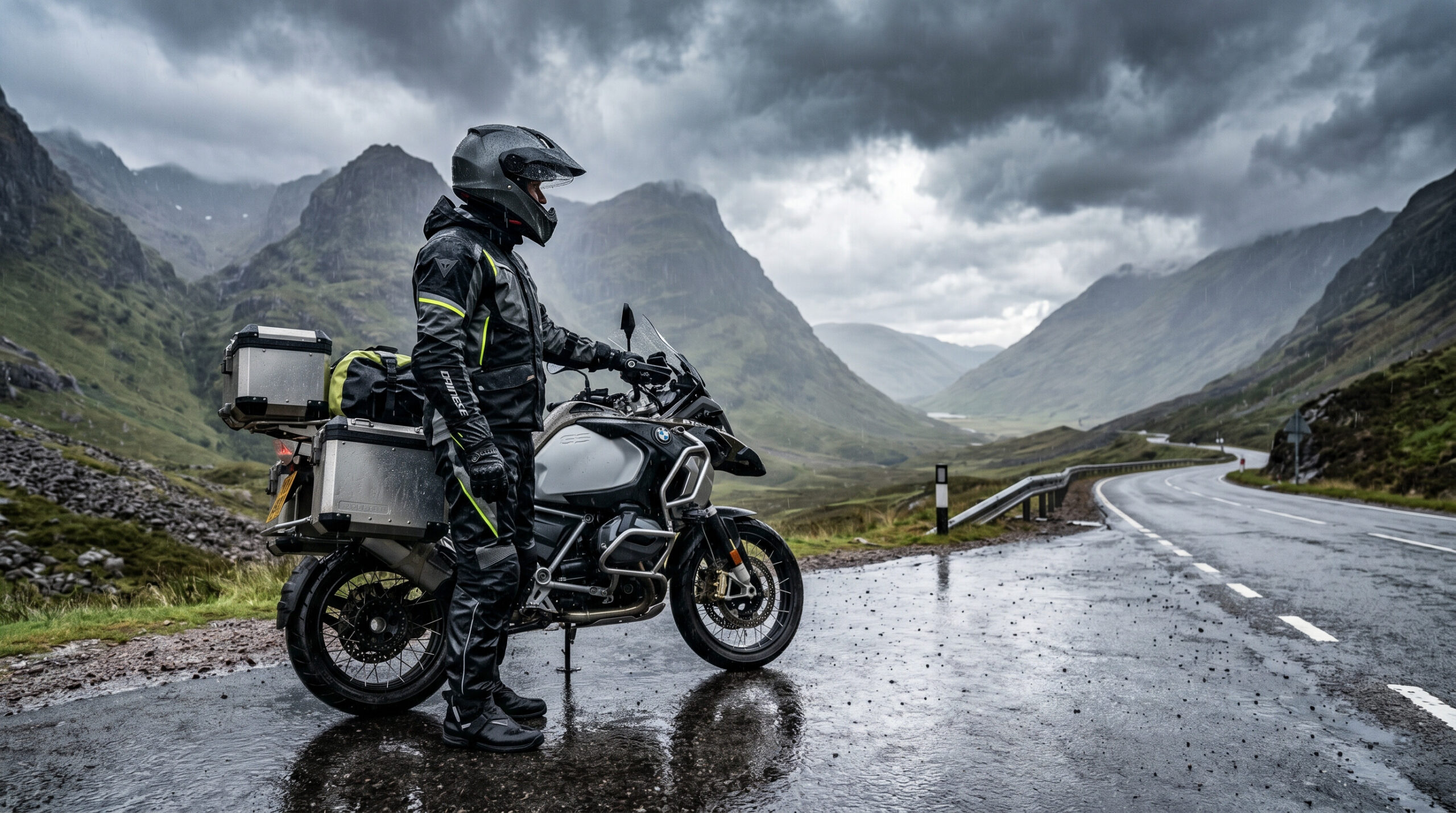
Every touring rider eventually faces the same reality: rain happens.
You can carefully plan a route, monitor forecasts, and choose the perfect riding season, but weather conditions can change quickly—especially in mountainous regions and on multi-day trips.
The difference between a miserable ride and a manageable one often comes down to preparation.
Quality motorcycle rain gear helps keep you dry, comfortable, and focused on the road when conditions deteriorate. Whether you’re crossing several states or riding a scenic mountain route for the day, the right gear can turn an unpleasant situation into a minor inconvenience.
This guide covers what touring riders should look for in rain gear and the essential pieces worth carrying on every trip.
Why Rain Gear Matters
Getting wet on a motorcycle is more than just uncomfortable.
Wet clothing can contribute to:
- Reduced concentration
- Rider fatigue
- Lower body temperature
- Reduced visibility
- Slower reaction times
Even during warmer months, prolonged exposure to rain and wind can quickly become exhausting.
Good rain gear helps maintain comfort and safety while allowing you to continue riding when conditions permit.
What Touring Riders Should Look For
Not all rain gear is created equal.
Before purchasing a rain suit or waterproof accessories, consider the following factors.
Waterproof Performance
The primary purpose of rain gear is to keep water out.
Look for:
- Waterproof materials
- Sealed seams
- Storm flaps over zippers
- Adjustable closures
Ease of Packing
Touring riders often have limited storage space.
Compact gear is easier to carry and more likely to be packed on every ride.
Visibility
Rain often reduces visibility for both riders and motorists.
Bright colors and reflective materials can improve conspicuity in poor weather.
Ease of Use
If rain begins suddenly, you want gear that can be put on quickly at a roadside stop.
Essential Motorcycle Rain Gear
1. Rain Suit
A dedicated motorcycle rain suit remains the most effective way to stay dry.
Most touring riders choose either:
One-Piece Rain Suits
Benefits:
- Excellent weather protection
- Fewer leak points
- Fast to put on
Drawbacks:
- Bulkier storage
- Less flexibility
Two-Piece Rain Suits
Benefits:
- Easier sizing
- More versatile
- Better ventilation options
Drawbacks:
- Additional seams may allow water intrusion
Best For
Every touring rider.
A quality rain suit should be considered mandatory touring equipment.
2. Waterproof Gloves
Wet hands quickly become cold and uncomfortable.
Waterproof gloves help:
- Maintain grip
- Improve comfort
- Reduce fatigue
Some riders carry dedicated rain gloves, while others use waterproof touring gloves year-round.
3. Boot Covers
Many riders discover that boots are often the first place water enters.
Waterproof boot covers provide:
- Additional protection
- Improved warmth
- Compact storage
They can be especially useful during extended highway riding.
4. Neck Gaiter or Balaclava
Rain often finds its way through gaps around the neck and collar area.
A waterproof or water-resistant neck gaiter can significantly improve comfort during wet-weather riding.
5. Waterproof Luggage Protection
Keeping yourself dry is only part of the challenge.
Protect:
- Electronics
- Cameras
- Clothing
- Important documents
Use:
- Waterproof luggage
- Dry bags
- Waterproof packing cubes
Touring Gear with Built-In Waterproofing
Many riders eventually invest in waterproof touring apparel.
Benefits include:
- Fewer layers
- Faster transitions
- Improved convenience
However, dedicated rain gear often provides better weather protection and can be more affordable.
Many experienced touring riders carry both.
Rain Riding Safety Tips
Proper gear is only part of the equation.
When riding in the rain:
Increase Following Distance
Road surfaces become more slippery.
Allow additional space between vehicles.
Smooth Inputs
Avoid sudden:
- Braking
- Acceleration
- Steering movements
Smooth control improves traction.
Watch for Road Hazards
Pay special attention to:
- Painted lines
- Metal bridge grates
- Fuel spills
- Standing water
Improve Visibility
Use high-visibility gear whenever possible and ensure your lights are functioning properly.
Packing Rain Gear for Touring
Rain gear is most useful when it’s easy to access.
Many riders store rain equipment:
- At the top of a saddlebag
- In a trunk compartment
- In an exterior luggage pocket
Avoid burying it underneath clothing and camping gear.
When rain arrives, time matters.
Common Rain Gear Mistakes
Waiting Until It Starts Raining
Stopping early is far easier than trying to gear up while already soaked.
Choosing Gear That’s Too Tight
Rain gear should fit comfortably over normal riding apparel.
Ignoring Gloves and Boots
Even if your body stays dry, wet hands and feet can make for a miserable day.
Never Testing Your Setup
Verify that your rain gear works before depending on it during a trip.
Essential Rain Gear Checklist
Before a long ride, consider carrying:
- Rain jacket
- Rain pants
- Waterproof gloves
- Boot covers
- Neck gaiter
- Dry bags
- Waterproof phone protection
A complete setup takes surprisingly little space but can dramatically improve comfort.
Final Thoughts
Rain is part of motorcycle touring. While no rider hopes for wet weather, proper preparation can make a tremendous difference when conditions change unexpectedly.
For most touring riders, a quality rain suit, waterproof gloves, and boot covers provide the best combination of protection, comfort, and packability. Combined with smart riding habits and proper planning, good rain gear helps ensure that a little bad weather doesn’t ruin a great adventure.
The goal isn’t to avoid every rainstorm—it’s to be prepared when one finds you.