
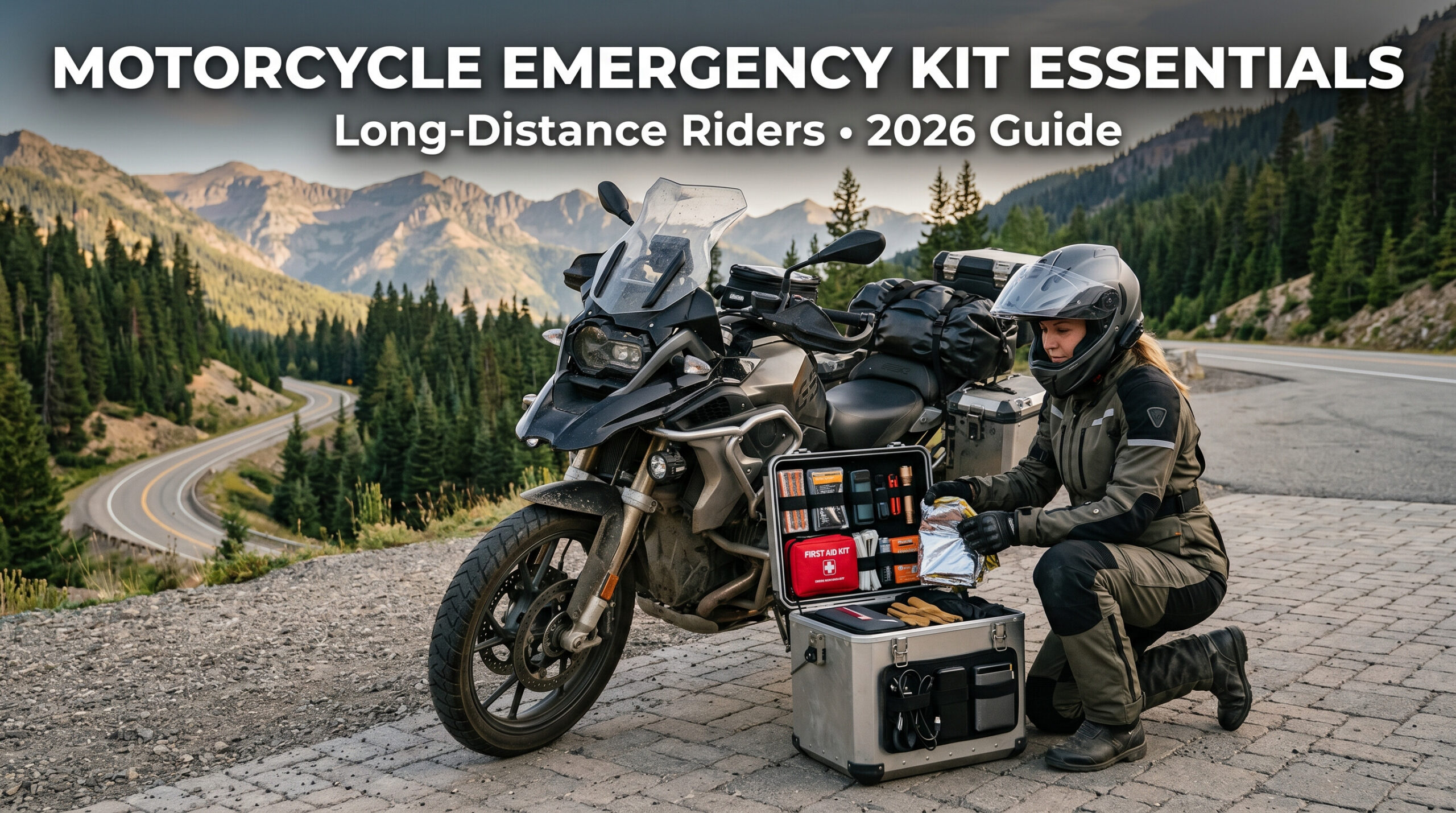
Every motorcycle rider hopes for an uneventful trip, but long-distance travel has a way of introducing unexpected challenges. Flat tires, dead batteries, changing weather, minor injuries, and mechanical issues can quickly turn a great ride into a stressful situation.
A well-equipped emergency kit won’t solve every problem, but it can help you handle many common roadside issues safely and get back on the road faster.
Whether you’re riding through the Smoky Mountains, crossing several states on a touring adventure, or exploring remote backroads, these are the emergency kit essentials every rider should consider carrying.
Why Every Touring Rider Needs an Emergency Kit
Motorcycles offer freedom and adventure, but they also provide fewer backup options than cars.
When something goes wrong, riders often find themselves:
- Far from service stations
- Outside cell coverage areas
- Riding in changing weather
- Traveling unfamiliar roads
- Carrying limited supplies
A compact emergency kit helps reduce risk and improves self-sufficiency.
Essential Tire Repair Equipment
Tire problems remain one of the most common roadside issues riders face.
Tire Plug Kit
A quality tire plug kit can temporarily repair many punctures in tubeless motorcycle tires.
Look for:
- Durable plugs
- Insertion tools
- Compact storage case
Portable Air Compressor
After plugging a tire, you’ll need a way to reinflate it.
Benefits:
- Compact size
- Quick inflation
- Useful for routine pressure checks
Tire Pressure Gauge
Accurate tire pressure improves:
- Safety
- Tire life
- Fuel economy
- Handling
Basic Motorcycle Tool Kit
Many motorcycles include a factory tool kit, but most riders benefit from carrying additional tools.
Consider packing:
- Combination wrenches
- Allen keys
- Screwdrivers
- Adjustable wrench
- Multi-tool
- Small flashlight
Focus on tools specific to your motorcycle.
First Aid Supplies
Minor injuries can happen during fuel stops, campsite setup, or roadside repairs.
A compact first aid kit should include:
- Adhesive bandages
- Gauze pads
- Antiseptic wipes
- Medical tape
- Pain relievers
- Nitrile gloves
Keep supplies in a waterproof pouch.
Battery and Electrical Essentials
Electrical problems can occur without warning.
Useful items include:
Battery Tender Lead
Provides convenient access to battery power.
Spare Fuses
A blown fuse can disable important systems.
Carry multiple sizes used by your motorcycle.
USB Charging Cable
Modern riders often rely heavily on electronics.
A spare cable weighs almost nothing but can be invaluable.
Visibility and Safety Gear
If you’re stopped on the roadside, visibility becomes critical.
Consider carrying:
Reflective Vest
Helps improve visibility in low-light conditions.
Emergency Flashlight
Useful for:
- Nighttime repairs
- Campsites
- Emergencies
LED Warning Light
Provides additional visibility when stopped near traffic.
Weather Emergency Supplies
Conditions can change quickly, especially in mountainous regions.
Useful items include:
- Compact rain gear
- Emergency thermal blanket
- Hand warmers
- Waterproof gloves
Even summer rides can encounter unexpected weather.
Communication and Navigation Backup
Technology is incredibly useful until batteries fail or signals disappear.
Carry:
- Printed emergency contacts
- Backup charging solution
- Paper map of your route
- Portable power bank
Redundancy matters.
Personal Emergency Items
Every rider should consider carrying:
- Identification
- Medical information
- Insurance information
- Emergency contact details
- Small amount of cash
Store important information in a waterproof container.
Emergency Kit Storage Tips
Your emergency gear should be:
- Easy to access
- Organized
- Weather protected
- Regularly inspected
Many riders dedicate one saddlebag compartment specifically to emergency supplies.
Recommended Emergency Kit Checklist
Before every major trip, verify that you have:
Tire Repair
- Tire plug kit
- Air compressor
- Pressure gauge
Tools
- Motorcycle-specific tool kit
- Multi-tool
- Flashlight
Medical
- First aid kit
- Pain relievers
- Gloves
Electrical
- Spare fuses
- Charging cable
- Power bank
Safety
- Reflective vest
- Emergency blanket
- Rain gear
Documents
- License
- Registration
- Insurance
- Emergency contacts
Final Thoughts
No rider can prepare for every situation, but a thoughtfully assembled emergency kit can make a significant difference when problems arise. The goal isn’t to carry everything—it’s to carry the items most likely to help you handle common roadside issues safely and efficiently.
The best emergency kit is compact, organized, and tailored to your motorcycle and riding style. A few extra pounds of preparedness can provide a great deal of confidence when the next adventure takes you far from home.