
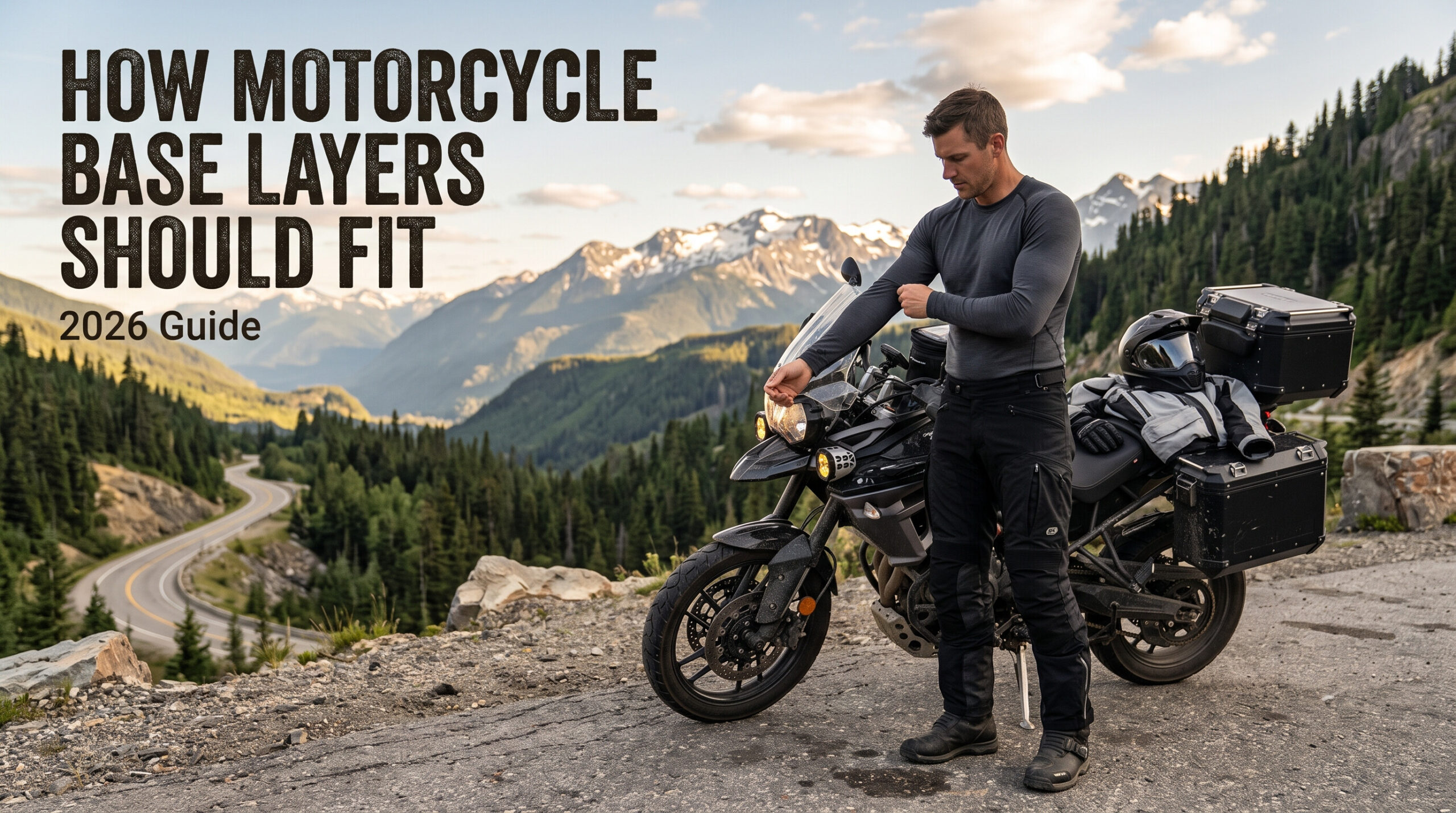
A motorcycle base layer is designed to work as a second skin, helping regulate body temperature, manage moisture, and improve comfort beneath your riding gear. Even the highest-quality materials won’t perform as intended if the fit isn’t right.
A base layer that’s too loose can bunch up and reduce its ability to move moisture away from your skin. One that’s too tight may restrict movement and become uncomfortable during long rides.
This guide explains how motorcycle base layers should fit so you can stay comfortable on every ride.
Why Proper Fit Matters
The purpose of a base layer is to work with your body—not against it.
A properly fitted base layer helps:
- Improve moisture management
- Regulate body temperature
- Reduce chafing
- Prevent bunching beneath riding gear
- Increase long-distance comfort
The better the fit, the more effectively the fabric can do its job.
A Close Fit Is Best
Unlike casual clothing, motorcycle base layers should fit close to your body.
A proper fit should:
- Feel snug without being restrictive
- Stay in place while riding
- Allow a full range of motion
- Avoid loose folds of fabric
Think of it as a comfortable athletic compression shirt rather than a loose T-shirt.
Freedom of Movement
Although a base layer should fit closely, it should never limit your movement.
You should be able to:
- Reach comfortably to the handlebars
- Turn your head freely
- Bend your arms and knees naturally
- Walk comfortably off the motorcycle
If movement feels restricted, try a different size or fabric with more stretch.
Sleeve and Leg Length
Base layers should provide full coverage while you’re in a riding position.
Look for:
- Sleeves that stay at your wrists when reaching forward
- Pants that extend to your ankles without riding up
- No exposed skin between garments
Motorcycle-specific base layers are often designed with this riding posture in mind.
Avoid Excess Fabric
Loose material can create pressure points beneath your protective gear.
Watch for:
- Fabric bunching behind the knees
- Wrinkles around the elbows
- Extra material at the waist
- Loose folds under your jacket
A smooth fit improves both comfort and moisture management.
Layering Properly
Your base layer should be the first layer against your skin.
Depending on the weather, you can add:
- A moisture-wicking base layer
- An insulating mid-layer (if needed)
- Your protective motorcycle jacket and riding pants
This system allows each layer to perform its specific role.
Summer vs. Cold Weather Fit
Summer Base Layers
For warm-weather riding, choose lightweight base layers that fit close to the body to maximize moisture-wicking and airflow.
Cold Weather Base Layers
Cold-weather base layers should also fit snugly, but with enough flexibility to accommodate an insulating mid-layer if needed.
The fit should remain comfortable even after adding your outer riding gear.
Common Fit Mistakes
Choosing a Size That’s Too Large
A loose base layer can’t efficiently move moisture away from your skin.
Wearing Cotton Beneath Your Base Layer
Cotton holds moisture and reduces the effectiveness of your layering system.
Buying Compression Gear That’s Too Tight
Not every athletic compression garment is suitable for motorcycle riding. Your base layer should be supportive, not restrictive.
Forgetting to Try It With Riding Gear
Always check the fit while wearing your jacket and riding pants.
What feels comfortable on its own should also remain comfortable once fully geared up.
Signs Your Base Layer Fits Correctly
Your base layer likely fits well if it:
- Lies smoothly against your skin
- Doesn’t bunch or wrinkle
- Allows unrestricted movement
- Keeps you comfortable throughout the ride
- Works comfortably beneath your riding gear
When you hardly notice you’re wearing it, the fit is probably right.
What to Prioritize Before Buying
Focus on:
- A close but comfortable fit
- Stretch and flexibility
- Breathable materials
- Proper sleeve and leg length
- Compatibility with your riding gear
The best motorcycle base layer should feel natural while helping your riding gear perform at its best.
Related Guides
Continue exploring motorcycle base layer guides:
- Motorcycle Base Layer Guides: Stay Comfortable in Every Season
- Choosing the Right Motorcycle Base Layers
- Best Summer Motorcycle Base Layers
- Best Cold Weather Motorcycle Base Layers
- Merino Wool vs Synthetic Base Layers
- Best Budget Motorcycle Base Layers
- Long Ride Preparation Guide
Final Thoughts
Motorcycle base layers should fit close to your body without restricting movement. The right fit improves moisture management, temperature regulation, and all-day comfort, allowing you to enjoy your ride in a wide range of weather conditions.
Taking a few extra minutes to choose the proper size can make a noticeable difference on every ride.