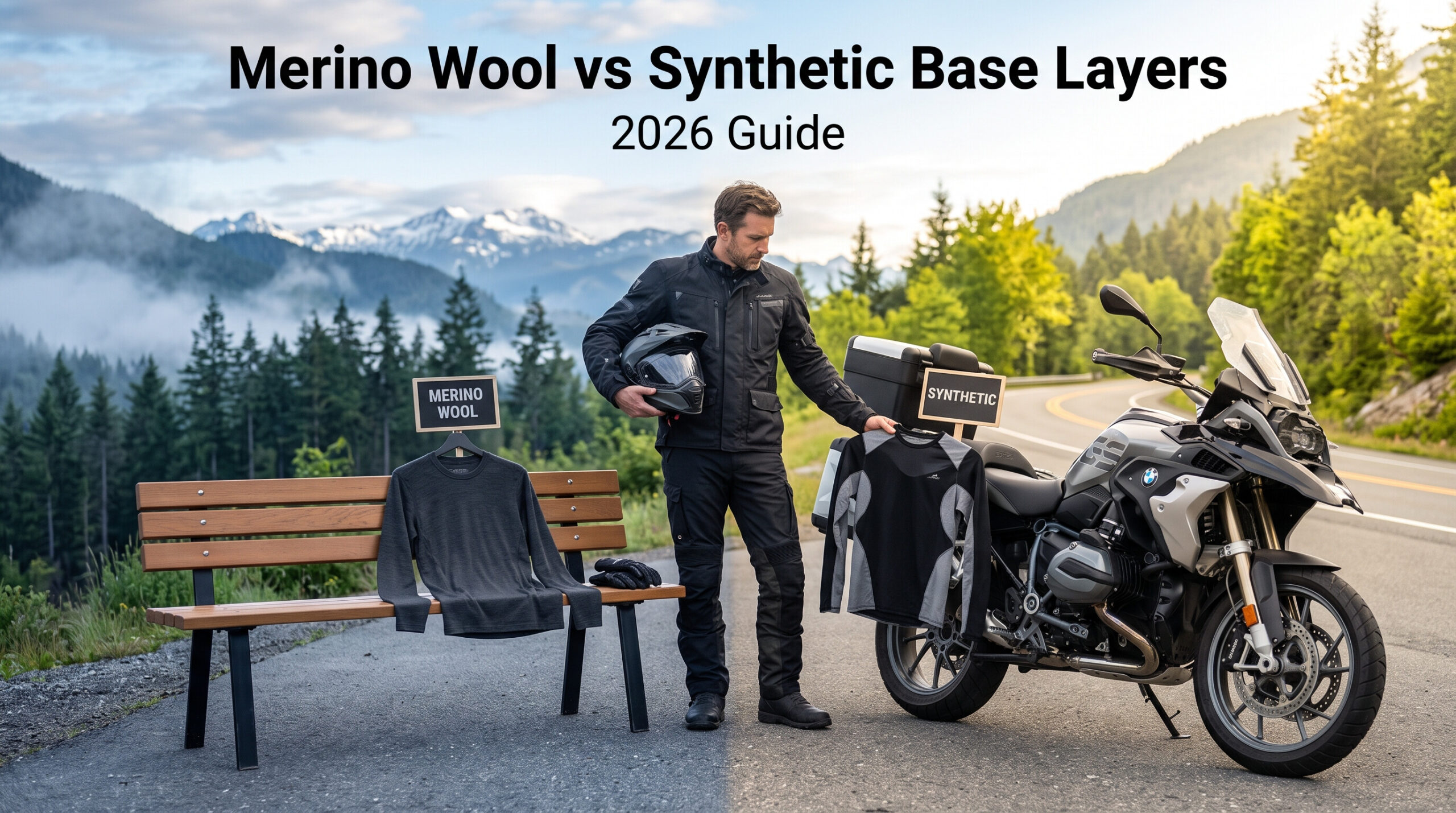
Choosing the right material is one of the biggest decisions when shopping for motorcycle base layers.
Merino wool and synthetic fabrics are the two most popular options, and each offers distinct advantages depending on your riding style, climate, and personal preferences. Neither material is universally better—the best choice depends on how and where you ride.
This guide compares merino wool and synthetic base layers to help you decide which is the better fit for your next ride.
Why Material Matters
Your base layer sits directly against your skin, making its material a major comfort factor.
The right fabric helps:
- Regulate body temperature
- Move moisture away from your skin
- Reduce chafing
- Improve long-distance comfort
- Support effective layering
Choosing the right material can make hours in the saddle far more enjoyable.
Merino Wool Base Layers
Merino wool comes from Merino sheep and has become a favorite among many touring and adventure riders.
Advantages
Merino wool is known for:
- Excellent temperature regulation
- Natural moisture management
- Odor resistance
- Soft feel against the skin
- Comfort across a wide range of temperatures
It performs well in both cool mornings and warmer afternoons, making it a versatile choice for changing conditions.
Considerations
Merino wool can:
- Cost more than synthetic options
- Require gentler washing
- Take longer to dry after becoming saturated
Synthetic Base Layers
Synthetic base layers are commonly made from polyester, nylon, or blended performance fabrics.
Advantages
Synthetic materials typically offer:
- Fast moisture-wicking
- Quick drying
- Lightweight construction
- Excellent durability
- Lower purchase cost
These qualities make them especially popular for warm-weather riding and daily commuting.
Considerations
Some synthetic fabrics may:
- Retain odors more quickly
- Feel warmer during extended wear
- Require more frequent washing
Many modern performance fabrics include odor-control treatments to help address this.
Temperature Regulation
Both materials help regulate temperature, but they do so differently.
Merino Wool
- Excellent in cool and changing conditions
- Helps maintain comfort across a wide temperature range
- Performs well during multi-day trips
Synthetic
- Excels in consistently warm weather
- Dries quickly after heavy perspiration
- Often feels cooler during high temperatures
Moisture Management
Keeping moisture away from your skin is essential for comfort.
Merino Wool
Merino absorbs moisture while still feeling relatively dry, helping maintain comfort over long rides.
Synthetic
Synthetic fabrics move moisture to the outer surface quickly, where it can evaporate faster.
Both approaches work well, but the riding conditions often determine which performs better for you.
Comfort on Long Rides
Long-distance comfort depends on more than softness alone.
Merino wool often provides:
- Reduced odor buildup
- Excellent all-day comfort
- Fewer temperature swings
Synthetic fabrics often provide:
- Lightweight feel
- Faster drying
- Consistent performance during hot rides
Durability and Care
Synthetic base layers generally tolerate frequent washing and everyday use with little special care.
Merino wool is durable but benefits from following the manufacturer’s care instructions to help preserve its performance over time.
Which Material Is Best?
Choose Merino Wool if you:
- Ride in changing weather
- Take long-distance tours
- Value natural odor resistance
- Prefer versatile, all-season performance
Choose Synthetic if you:
- Ride mostly in hot weather
- Want quick-drying performance
- Commute daily
- Are shopping on a tighter budget
Many experienced riders eventually own both and choose the one that best matches the day’s conditions.
Common Mistakes Riders Make
Assuming One Material Is Always Better
Both merino wool and synthetic fabrics perform exceptionally well when matched to the right riding conditions.
Choosing Based Only on Price
Comfort over hundreds of miles is often worth considering alongside initial cost.
Ignoring Climate
Think about where and when you ride most often before making your choice.
Forgetting the Rest of Your Layering System
Your base layer works best when paired with appropriate jackets, gloves, and other riding gear.
Related Guides
Continue exploring motorcycle base layer guides:
- Motorcycle Base Layer Guides: Stay Comfortable in Every Season
- Choosing the Right Motorcycle Base Layers
- Best Summer Motorcycle Base Layers
- Best Cold Weather Motorcycle Base Layers
- How Motorcycle Base Layers Should Fit
- Best Budget Motorcycle Base Layers
Final Thoughts
Both merino wool and synthetic motorcycle base layers offer excellent performance, but they shine in different situations.
Merino wool is a versatile choice for riders who encounter changing weather and value natural comfort, while synthetic fabrics excel in hot conditions where quick drying and lightweight performance are priorities.
By matching the material to your riding style and environment, you’ll enjoy greater comfort on every ride.