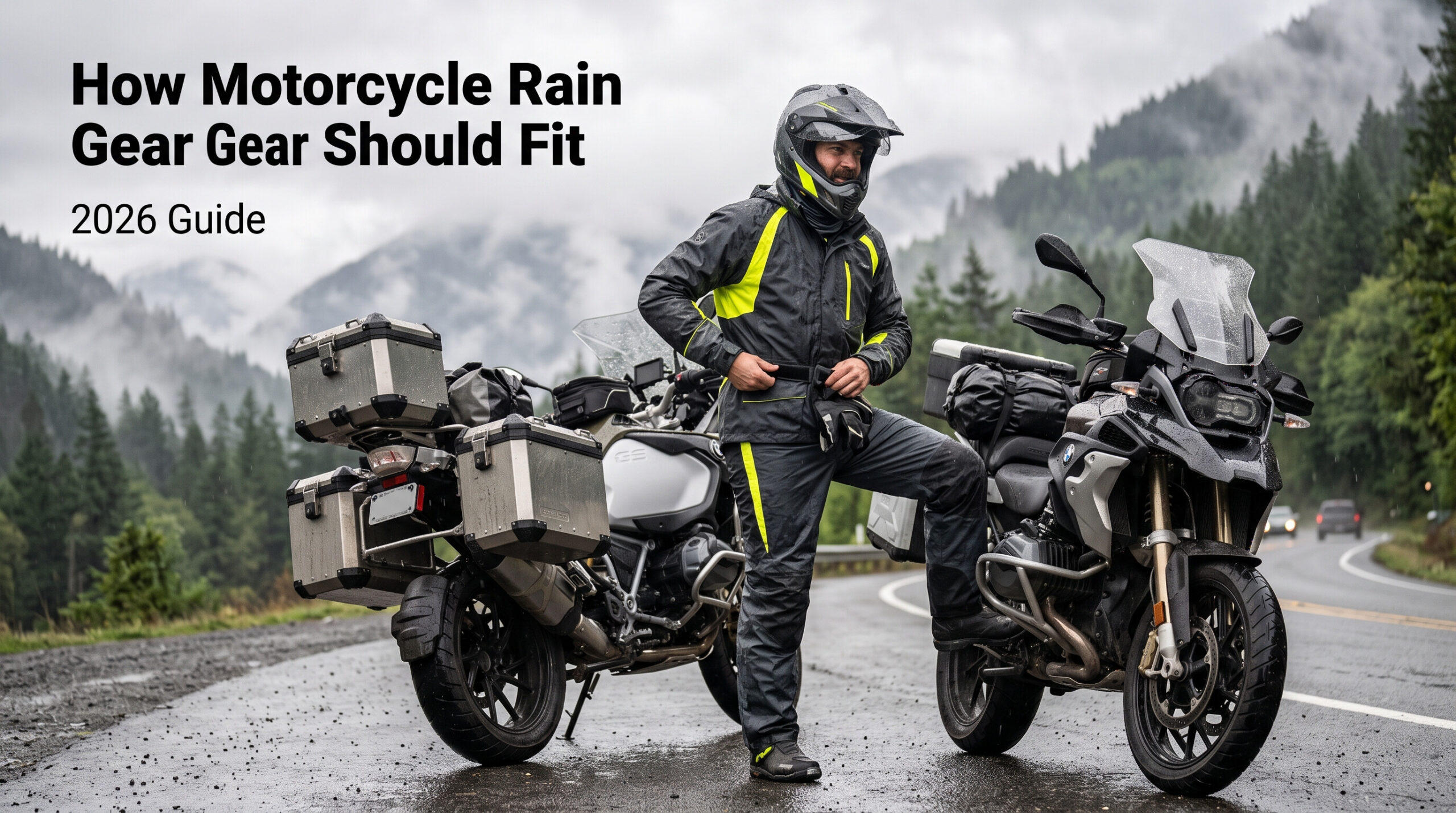
The best motorcycle rain gear can only protect you if it fits properly. Gear that’s too tight may restrict movement and be difficult to wear over your riding apparel, while gear that’s too loose can flap in the wind, reduce comfort, and allow water to enter where it shouldn’t.
Unlike your regular riding jacket and pants, rain gear is designed to be worn over your protective motorcycle gear. That means the fit should provide enough room for layering while still allowing you to move naturally on the motorcycle.
This guide explains how motorcycle rain gear should fit so you stay dry, comfortable, and focused when the weather changes.
Why Proper Fit Matters
Rain gear has one primary job: keeping you dry.
A proper fit also helps:
- Improve comfort
- Block wind
- Reduce fatigue
- Maintain freedom of movement
- Prevent water from entering through openings
A well-fitting rain suit is much easier to wear during long rides and changing weather.
It Should Fit Over Your Riding Gear
Always size rain gear with your normal riding equipment in mind.
A properly fitted rain suit should fit comfortably over:
- Your motorcycle jacket
- Riding pants
- Protective armor
- Base layers
Never size rain gear based only on the clothing you wear off the motorcycle.
Freedom of Movement
Once fully geared up, you should still be able to:
- Reach the handlebars comfortably
- Turn your head naturally
- Operate all motorcycle controls
- Mount and dismount the motorcycle easily
If the rain gear feels restrictive, try a larger size or a design intended for use over armored riding apparel.
Avoid Excessively Loose Gear
Extra room is important, but too much loose material can create problems.
Oversized rain gear may:
- Flap excessively at highway speeds
- Increase rider fatigue
- Catch wind
- Become distracting
Choose a fit that balances layering room with a streamlined profile.
Sleeve and Leg Length
Rain gear should continue to provide coverage while you’re in a riding position.
Look for:
- Sleeves that extend to your wrists with your arms forward
- Pant legs that cover the tops of your boots
- Adjustable cuffs to help seal out rain
Proper coverage reduces the chance of water reaching your riding gear.
Adjustable Closures
Many motorcycle rain garments include adjustments at the:
- Wrists
- Ankles
- Waist
- Collar
These adjustments help:
- Improve fit
- Reduce wind flap
- Keep rain out
- Increase comfort
Take a few moments to adjust them before continuing your ride.
One-Piece vs. Two-Piece Fit
One-Piece Rain Suits
Should fit comfortably from shoulders to ankles without pulling or restricting movement.
Two-Piece Rain Suits
Allow more flexibility because the jacket and pants can be adjusted independently.
Many touring riders appreciate the versatility of a two-piece setup.
Try It Before You Need It
Don’t wait until you’re standing beside the road in heavy rain.
Before your next trip:
- Put on your normal riding gear.
- Add your rain gear.
- Sit on your motorcycle.
- Reach for the controls.
- Walk around for a few minutes.
Testing the fit ahead of time helps avoid surprises when the weather changes.
Common Fit Mistakes
Buying the Same Size as Street Clothes
Rain gear should be sized to fit over your motorcycle apparel.
Ignoring Riding Position
Always evaluate the fit while seated on your motorcycle.
Leaving Closures Loose
Open cuffs and collars allow rain and wind to enter.
Waiting Until a Trip to Test the Fit
Practice putting your rain gear on at home so you’re prepared when you need it.
Signs Your Rain Gear Fits Correctly
Your rain gear likely fits well if it:
- Fits comfortably over your riding gear
- Allows unrestricted movement
- Covers your wrists and boots properly
- Doesn’t flap excessively at speed
- Keeps water from entering during wet rides
A proper fit should almost disappear from your attention once you’re back on the road.
What to Prioritize Before Buying
Focus on:
- Room for your riding gear
- Freedom of movement
- Adjustable closures
- Proper sleeve and leg length
- Comfortable fit in a riding position
The right fit makes your rain gear more effective and far more comfortable.
Related Guides
Continue exploring motorcycle rain gear guides:
- Motorcycle Rain Gear Guides: Stay Dry and Ride Comfortably
- Choosing the Right Motorcycle Rain Gear
- Best Motorcycle Rain Suits
- Waterproof vs Water-Resistant Motorcycle Gear
- Motorcycle Rain Riding Tips
- Best Budget Motorcycle Rain Gear
Final Thoughts
Motorcycle rain gear should fit comfortably over your protective riding gear while allowing full freedom of movement.
Choosing the proper size and taking time to adjust the fit will help keep you dry, reduce fatigue, and improve comfort whenever the weather turns against you.