
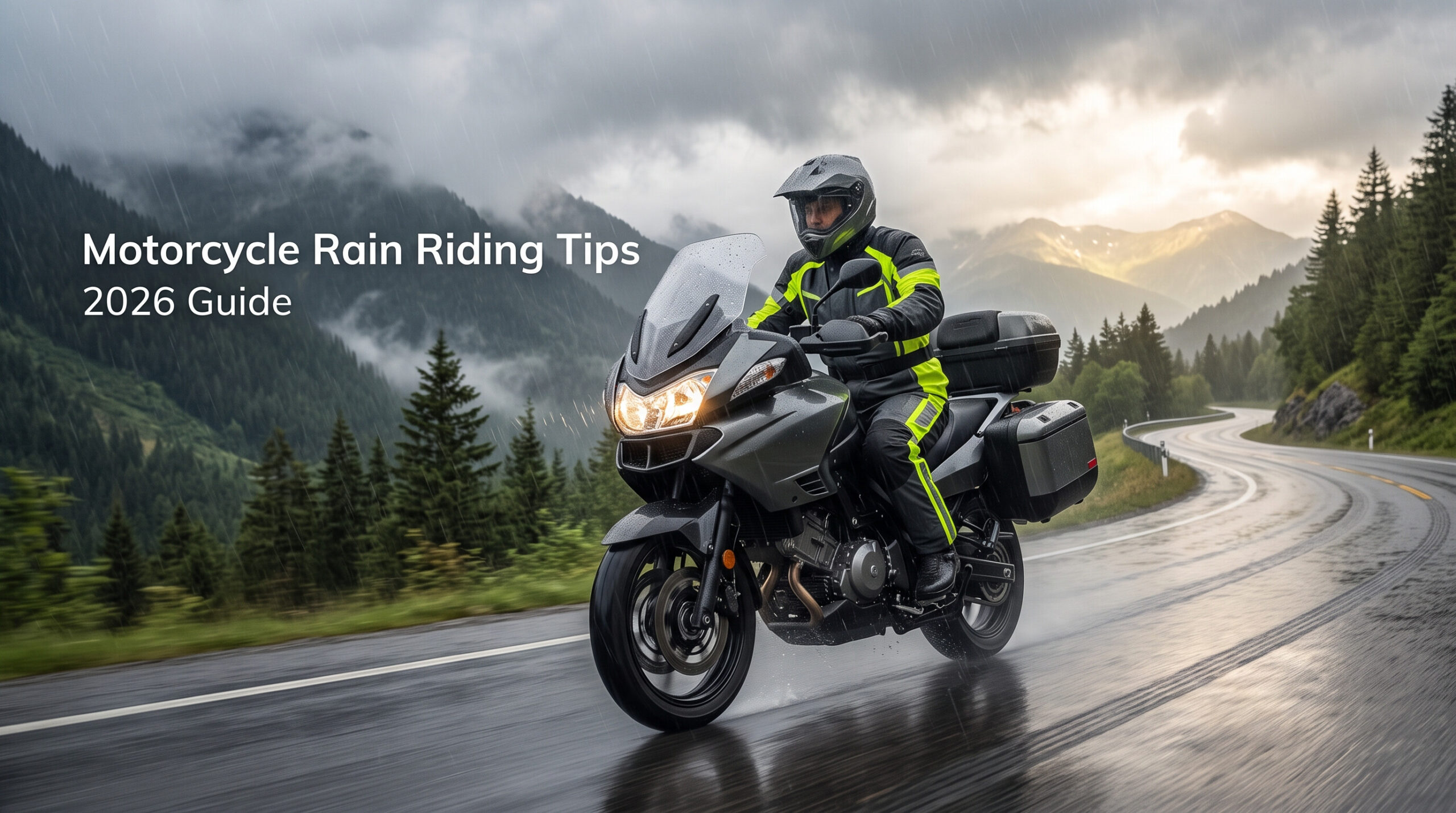
Rain doesn’t have to end your ride, but it does require a different approach. Wet pavement, reduced visibility, and changing road conditions demand smoother riding techniques and better preparation than dry-weather riding.
The good news is that riding in the rain can be both safe and enjoyable when you adjust your habits and equip yourself properly. By understanding how wet conditions affect your motorcycle and your visibility, you’ll be better prepared whenever the forecast changes.
This guide shares practical rain riding tips to help you stay comfortable, confident, and focused on the road.
Prepare Before You Ride
The safest time to think about rain is before the first drops begin to fall.
Before heading out:
- Check the weather forecast.
- Pack your rain gear.
- Verify your tires are properly inflated.
- Inspect your lights.
- Make sure your visor is clean.
A few minutes of preparation can prevent unnecessary stress later.
Wear the Right Gear
Quality riding gear makes a significant difference during wet weather.
Consider using:
- Motorcycle rain gear
- Waterproof gloves
- Waterproof boots
- Moisture-wicking base layers
- High-visibility clothing
Staying dry helps you stay comfortable and focused.
Ride Smoothly
Abrupt inputs become more noticeable on wet pavement.
Practice:
- Smooth throttle control
- Progressive braking
- Gentle steering inputs
- Gradual acceleration
Smooth riding improves traction and stability.
Increase Your Following Distance
Wet roads require longer stopping distances.
Leave extra space between you and the vehicle ahead to give yourself additional time to react.
Patience is one of the best safety tools you can use in the rain.
Watch the Road Surface
Some surfaces become especially slippery when wet.
Pay extra attention to:
- Painted lane markings
- Metal bridge grates
- Railroad tracks
- Manhole covers
- Oil accumulation at intersections
Cross these areas as upright and smoothly as possible whenever it’s safe to do so.
Be Visible
Rain reduces visibility for everyone.
Help other motorists see you by:
- Using your headlight
- Wearing reflective gear
- Choosing bright rain apparel
- Avoiding other vehicles’ blind spots
Never assume other drivers have already seen you.
Corner With Extra Care
Traction is reduced in wet conditions.
Approach curves by:
- Reducing speed before entering
- Looking through the turn
- Applying smooth throttle
- Avoiding sudden steering corrections
A calm, predictable approach improves stability.
Brake Earlier
Motorcycles generally require more stopping distance on wet pavement.
Whenever possible:
- Begin braking sooner.
- Apply both brakes smoothly.
- Avoid panic braking.
- Leave yourself an escape route.
Practice smooth braking techniques whenever conditions allow.
Manage Fog and Visor Visibility
Maintaining a clear view is essential.
Helpful strategies include:
- Using an anti-fog visor or insert
- Keeping your visor clean
- Slightly cracking the visor if appropriate
- Replacing worn visor seals when necessary
Clear vision helps you identify hazards sooner.
Know When to Take a Break
Heavy rain, strong winds, or poor visibility may make continuing unsafe.
Sometimes the smartest decision is to:
- Pull over safely.
- Wait for conditions to improve.
- Check the weather radar.
- Rest and stay dry.
Good judgment is just as important as riding skill.
Common Mistakes Riders Make
Riding Too Fast
Wet roads reduce available traction.
Adjust your speed to match the conditions.
Following Too Closely
Extra space gives you valuable reaction time.
Waiting Too Long to Put On Rain Gear
Stopping early usually keeps you much drier than waiting until you’re already soaked.
Ignoring Fatigue
Cold, wet conditions can be physically tiring.
Take breaks when needed and stay hydrated.
Related Guides
Continue exploring motorcycle rain gear guides:
- Motorcycle Rain Gear Guides: Stay Dry and Ride Comfortably
- Choosing the Right Motorcycle Rain Gear
- Best Motorcycle Rain Suits
- Waterproof vs Water-Resistant Motorcycle Gear
- How Motorcycle Rain Gear Should Fit
- Best Budget Motorcycle Rain Gear
Final Thoughts
Rain riding doesn’t have to be intimidating. With proper preparation, quality gear, and smooth riding techniques, you can continue enjoying your motorcycle even when the weather changes.
Ride at a pace that matches the conditions, stay visible, and remember that arriving safely is always more important than arriving quickly.