
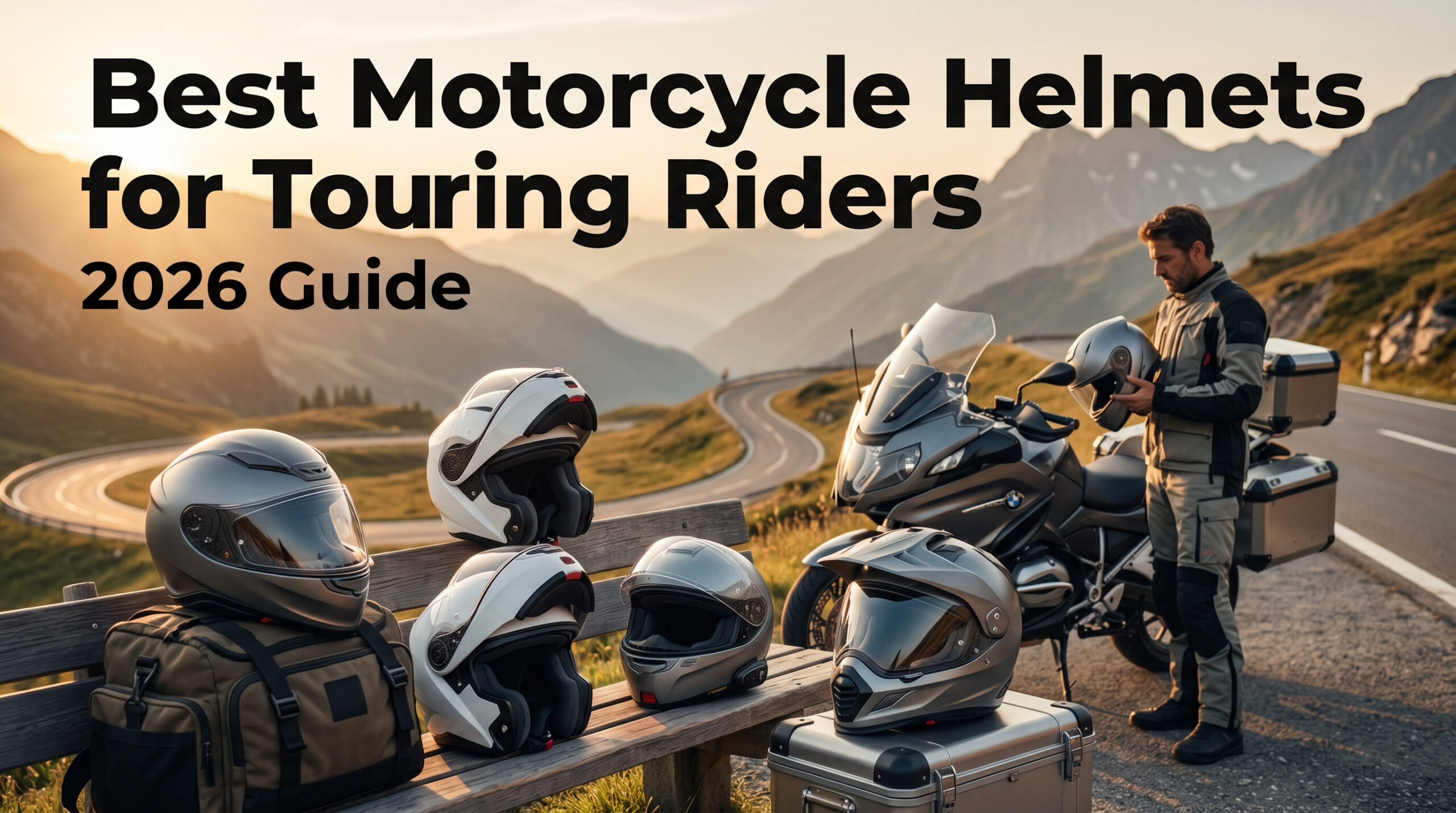
Choosing the right motorcycle helmet for touring is one of the most important gear decisions a rider can make.
When you’re spending hours or even days on the road, helmet comfort, noise reduction, ventilation, and fit become just as important as safety ratings.
A helmet that feels fine on short rides can become exhausting after several hours of highway travel. That’s why touring riders need to think beyond basic protection and focus on long-distance comfort and performance.
This guide highlights what matters most in a touring helmet and how to choose one that fits your riding style.
What Makes a Helmet Good for Touring?
Not all helmets are designed for extended riding.
A good touring helmet should balance:
- Safety
- Comfort over long hours
- Reduced wind noise
- Effective ventilation
- Compatibility with communication systems
Small improvements in each area add up to a much better riding experience.
Key Features Touring Riders Should Prioritize
1. Comfort Over Long Distances
Comfort becomes critical after several hours in the saddle.
Look for:
- High-quality interior padding
- Even pressure distribution
- Lightweight shell materials
- Ergonomic fit
A heavy or poorly balanced helmet significantly increases fatigue on long rides.
2. Noise Reduction
Wind noise is one of the biggest contributors to rider fatigue.
Helmets designed for touring often include:
- Aerodynamic shell shapes
- Improved neck roll sealing
- Padded cheek areas
- Reduced vent turbulence
Even small reductions in noise can make long rides noticeably more comfortable.
3. Ventilation and Airflow
Touring riders encounter changing temperatures and conditions.
Good ventilation helps:
- Prevent overheating
- Reduce visor fogging
- Improve overall comfort
Look for adjustable intake and exhaust vents that can be tuned based on conditions.
4. Weight Distribution
A lighter helmet isn’t always better, but balanced weight matters.
Poor balance causes:
- Neck strain
- Shoulder fatigue
- Discomfort during long rides
A well-designed helmet distributes weight evenly across the head.
5. Communication System Compatibility
Modern touring riders often use Bluetooth systems for:
- GPS navigation
- Phone calls
- Music
- Rider communication
A helmet designed for communication integration makes setup easier and more secure.
Helmet Types Best for Touring
Full-Face Helmets
Full-face helmets are a top choice for touring riders.
Advantages:
- Maximum protection
- Excellent wind noise reduction
- Better aerodynamics
Best for:
- Long-distance highway riding
- High-speed touring
- Cold or variable weather conditions
Modular Helmets
Modular helmets offer versatility and convenience.
Advantages:
- Flip-up chin bar for stops
- Easier communication access
- Flexible riding experience
Best for:
- Touring riders who stop frequently
- Adventure riders
- Mixed riding environments
Many touring riders prefer modular helmets for their balance of protection and convenience.
Comfort vs Price: What Matters More?
While budget is always a consideration, helmet quality should never be compromised.
Higher-quality helmets typically provide:
- Better materials
- Improved aerodynamics
- Superior noise reduction
- Longer-lasting comfort
A helmet is one of the most important investments a rider can make.
Common Mistakes Touring Riders Make
Choosing Based on Looks
A helmet’s appearance has no impact on long-distance comfort or safety.
Ignoring Fit
Even a high-end helmet will feel uncomfortable if the fit is wrong.
Overlooking Weight
A few ounces can become noticeable after several hours of riding.
Skipping Wind Noise Consideration
Wind fatigue builds gradually and is often underestimated.
How to Choose the Right Touring Helmet
Ask yourself:
- Will I be riding for long hours at a time?
- Do I need communication system integration?
- How important is noise reduction to me?
- What weather conditions will I ride in most often?
Your answers will guide your decision more than brand names or marketing claims.
Final Thoughts
The best motorcycle helmet for touring is the one that balances comfort, safety, and practicality for your specific riding style.
For most riders, a high-quality full-face or modular helmet offers the best combination of protection and long-distance comfort.
Investing in the right helmet improves every mile of your journey—reducing fatigue, improving focus, and making long rides more enjoyable.
Related Guides
Explore more motorcycle gear guides:
- Motorcycle Helmet Guides: How to Choose the Right Helmet for Every Ride
- Modular vs Full-Face Motorcycle Helmets
- Quietest Motorcycle Helmets for Highway Riding
- Best Motorcycle Jackets for Touring Riders
- Best Motorcycle Gloves for Touring Riders
- Motorcycle Touring Accessories That Make Long Rides More Comfortable