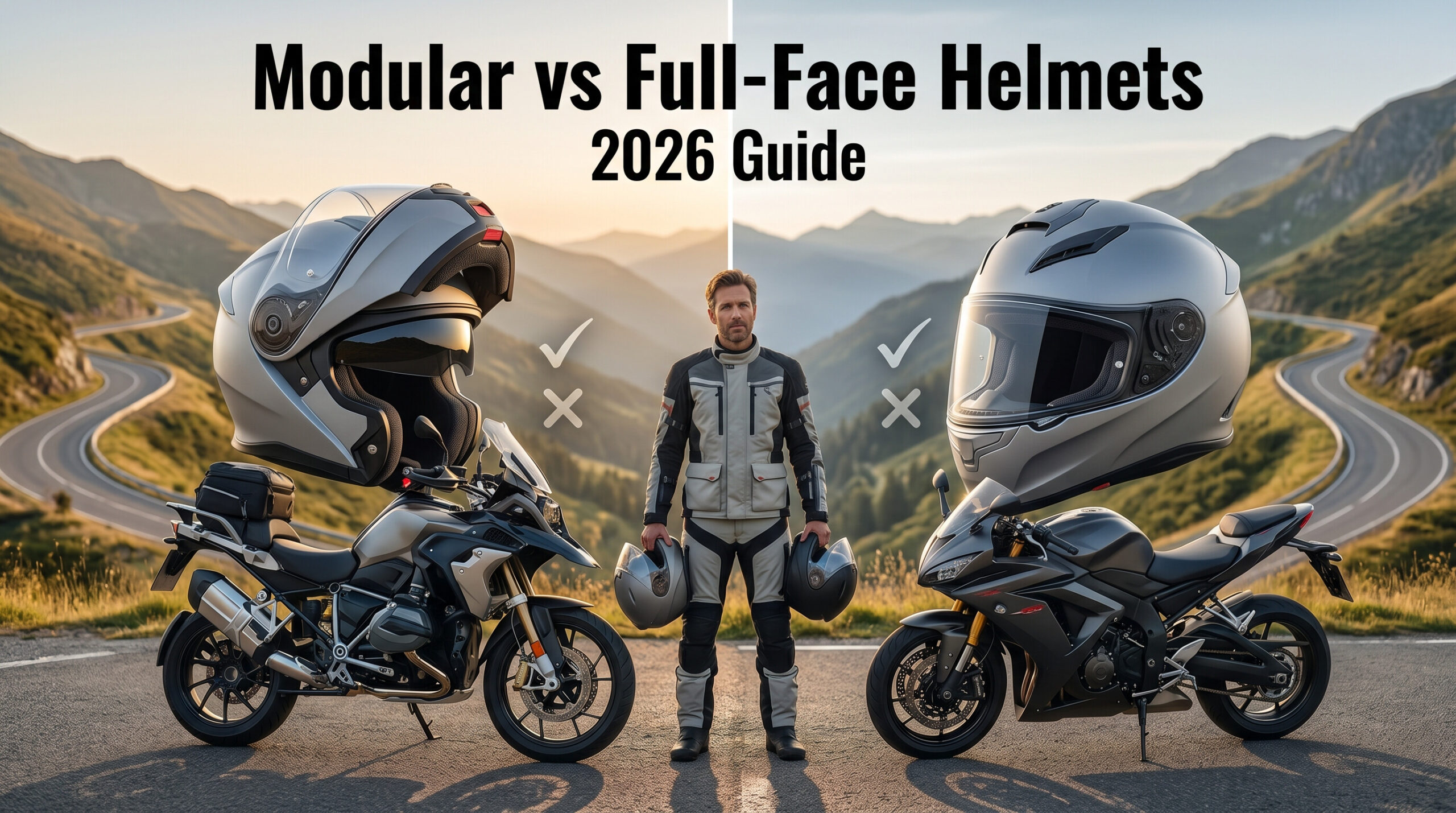
Choosing between a modular helmet and a full-face helmet is one of the most common decisions touring riders face.
Both helmet types offer strong protection and are widely used by long-distance riders, but they serve slightly different purposes and riding styles.
Understanding the strengths and trade-offs of each design will help you choose a helmet that matches your comfort needs, riding habits, and travel conditions.
Overview: The Core Difference
At a basic level:
- Full-face helmets are fully enclosed for maximum protection and aerodynamics.
- Modular helmets feature a flip-up chin bar for added convenience and flexibility.
Both are designed for street and touring use, but they prioritize different aspects of the riding experience.
Full-Face Helmets
Full-face helmets offer complete coverage of the head and face.
Advantages
1. Maximum Protection
The fixed chin bar provides consistent structural integrity in all riding conditions.
2. Better Aerodynamics
Full-face helmets typically produce less drag at highway speeds.
3. Reduced Wind Noise
A tighter, sealed design helps reduce fatigue from wind noise.
4. Improved Weather Protection
Rain, wind, and debris are better managed with a fully enclosed design.
Disadvantages
1. Less Convenience at Stops
You must remove the helmet for communication or breaks.
2. Reduced Accessibility
Not as easy for quick conversations or fueling stops.
Best For
- Long-distance touring
- Highway riding
- Sport touring
- Riders prioritizing protection and noise reduction
Modular Helmets
Modular helmets feature a chin bar that flips upward.
Advantages
1. Convenience at Stops
You can lift the front without removing the entire helmet.
2. Easier Communication
Helpful during fuel stops, conversations, or short breaks.
3. Versatility
Combines aspects of full-face and open-face designs.
4. Popular for Touring Riders
Especially useful on long trips with frequent stops.
Disadvantages
1. Slightly Heavier
The hinge mechanism adds weight compared to full-face helmets.
2. More Moving Parts
Additional components may introduce more potential wear points.
3. Slightly More Wind Noise
Some designs are less sealed than full-face helmets.
Safety Comparison
Both helmet types can meet high safety standards when properly certified.
Look for:
- DOT certification (U.S. standard)
- ECE certification (international standard)
- Snell certification (optional, higher testing standard)
Key Insight
A well-fitting, high-quality modular helmet can be very safe, but full-face helmets generally have a simpler, more rigid structure.
Comfort and Long-Distance Riding
For touring riders, comfort is just as important as protection.
Full-Face Comfort
- More stable at high speeds
- Less wind buffeting
- Typically quieter
Modular Comfort
- Easier breaks during long rides
- More flexible usage
- Slight trade-off in aerodynamics
Noise Levels
Wind noise is one of the biggest contributors to rider fatigue.
- Full-face helmets generally perform better in noise reduction
- Modular helmets vary more depending on hinge design and sealing quality
Ventilation Differences
Both helmet types can offer effective ventilation.
- Modular helmets may offer slightly more airflow when opened at stops
- Full-face helmets often provide more consistent airflow management while riding
Which Helmet Is Better for Touring?
There is no universal “best” option. It depends on how you ride.
Choose a Full-Face Helmet If You:
- Ride long highway distances
- Prioritize quietness and aerodynamics
- Want maximum protection and simplicity
- Rarely stop during rides
Choose a Modular Helmet If You:
- Stop frequently on long rides
- Value convenience during travel
- Want flexibility in helmet use
- Prefer easier communication access
Common Misconceptions
“Modular helmets are less safe.”
Not necessarily. Many modular helmets meet the same safety certifications as full-face helmets.
“Full-face helmets are always more comfortable.”
Comfort depends more on fit and design than helmet type.
“You must choose one forever.”
Many riders eventually own both types for different riding situations.
Final Thoughts
The choice between a modular and full-face motorcycle helmet comes down to balancing convenience and simplicity.
Full-face helmets offer a more streamlined, quiet, and aerodynamic experience, making them ideal for long-distance highway touring.
Modular helmets offer flexibility and convenience that many touring riders appreciate, especially during trips with frequent stops.
Both are excellent choices when properly fitted and certified—the best helmet is the one that fits your riding style and keeps you comfortable on every mile.
Related Guides
Explore more motorcycle gear guides: