
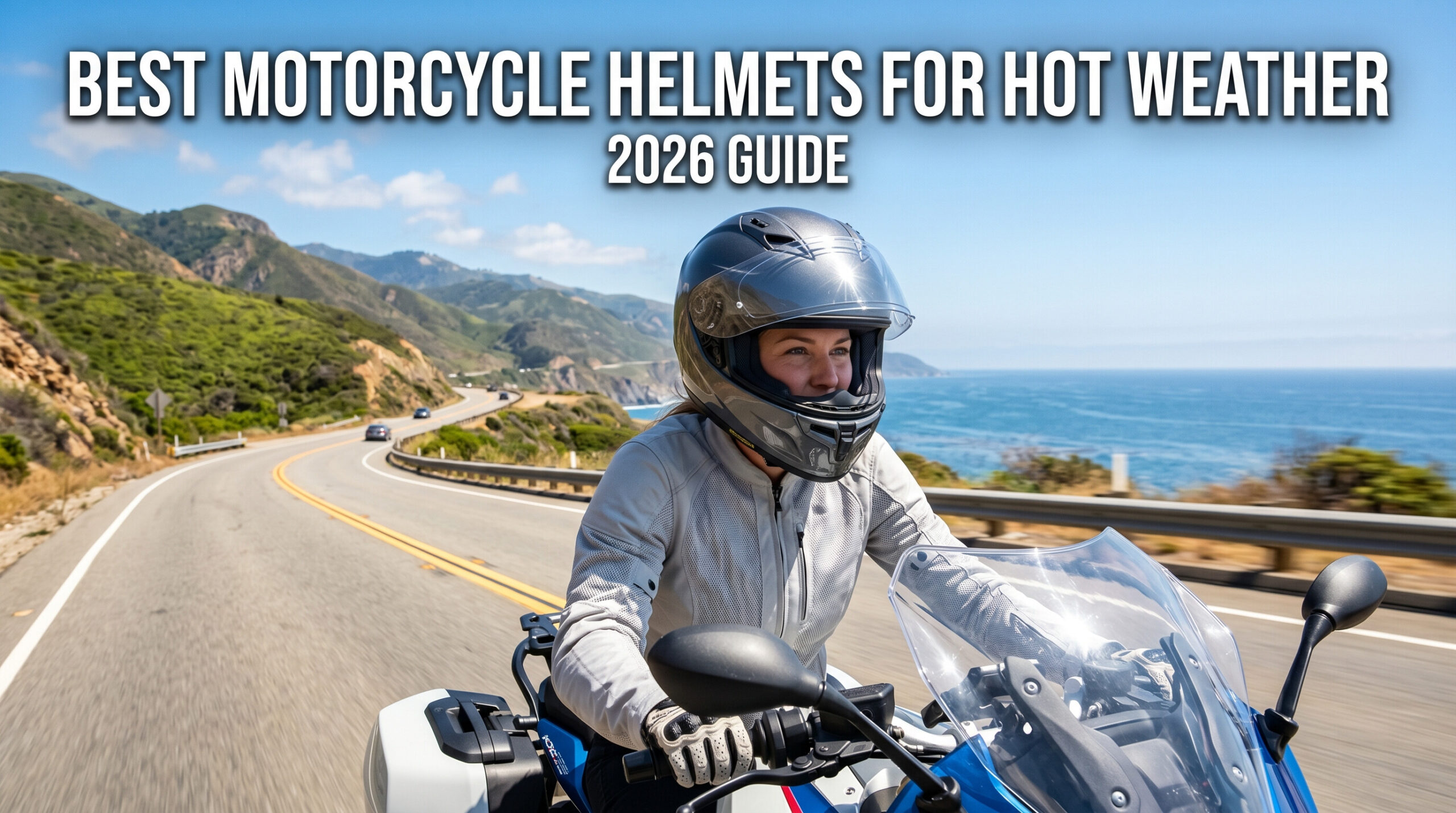
Few things can make a ride uncomfortable faster than excessive heat.
While riders often focus on jackets, gloves, and hydration, helmet ventilation plays a major role in overall comfort during warm-weather riding. A poorly ventilated helmet can trap heat, increase fatigue, and make long rides feel much longer than they should.
Fortunately, modern helmet designs offer significant improvements in airflow and cooling.
This guide explains what makes a motorcycle helmet suitable for hot weather riding and how to choose one that helps you stay comfortable when temperatures rise.
Why Helmet Ventilation Matters
As temperatures climb, your body works harder to regulate heat.
A well-ventilated helmet helps:
- Improve airflow around the head
- Reduce heat buildup
- Minimize visor fogging
- Increase comfort on long rides
- Reduce rider fatigue
Even small improvements in airflow can make a noticeable difference during a full day in the saddle.
Key Features of a Hot Weather Helmet
Not all ventilation systems perform equally.
When evaluating helmets for summer riding, pay attention to the following features.
Multiple Intake Vents
Intake vents allow fresh air to enter the helmet.
Look for:
- Adjustable forehead vents
- Chin vents
- Large intake openings
More airflow generally results in better cooling.
Effective Exhaust Vents
Air entering the helmet must have a way to exit.
Quality exhaust vents:
- Pull warm air out
- Improve circulation
- Prevent heat buildup
A helmet with strong intake vents but poor exhaust venting may still feel warm.
Internal Airflow Channels
Many modern helmets include internal channels molded into the liner.
These channels help:
- Distribute air evenly
- Improve cooling efficiency
- Reduce hot spots
Moisture-Wicking Liners
Cooling isn’t just about airflow.
Interior materials that wick moisture away from the skin help riders stay more comfortable in hot conditions.
Benefits include:
- Reduced sweat buildup
- Improved comfort
- Faster drying
Helmet Types and Hot Weather Performance
Different helmet styles manage heat differently.
Full-Face Helmets
Modern full-face helmets can provide excellent ventilation.
Advantages:
- Strong protection
- Improved aerodynamics
- Advanced vent systems
Many touring riders prefer well-ventilated full-face helmets even during the summer months.
Modular Helmets
Modular helmets offer flexibility during stops.
Advantages:
- Increased convenience
- Better airflow when opened off the bike
- Touring-friendly features
Some modular helmets may run slightly warmer than comparable full-face designs.
Open-Face Helmets
Open-face helmets provide significant airflow.
Advantages:
- Excellent ventilation
- Open riding experience
Disadvantages:
- Less protection
- Greater wind exposure
- Increased noise levels
Additional Ways to Stay Cool
Helmet choice is only one part of the equation.
Use Moisture-Wicking Base Layers
Technical fabrics help regulate body temperature more effectively than cotton.
Stay Hydrated
Dehydration increases fatigue and heat stress.
Drink water regularly throughout the ride.
Plan Rest Stops
Frequent breaks become increasingly important during extreme temperatures.
Choose Ventilated Riding Gear
A well-ventilated helmet works best when paired with appropriate riding apparel.
Common Mistakes Riders Make
Closing All Vents
Many riders forget to adjust vent settings as temperatures change.
Prioritizing Style Over Ventilation
A helmet’s appearance won’t matter much if you’re uncomfortable after an hour on the road.
Ignoring Helmet Fit
Proper airflow depends on proper fit.
A poorly fitting helmet may not circulate air effectively.
Neglecting Hydration
Even the best helmet cannot compensate for dehydration.
Who Benefits Most from a Hot Weather Helmet?
Hot-weather-focused helmets are especially valuable for:
- Southern U.S. riders
- Summer touring enthusiasts
- Daily commuters
- Adventure riders
- Long-distance travelers
What to Look for Before Buying
When comparing helmets, consider:
- Vent placement
- Exhaust design
- Moisture management
- Overall comfort
- Fit and sizing
- Noise levels
The best helmet balances cooling performance with safety and comfort.
Final Thoughts
Riding in hot weather presents unique challenges, but the right helmet can make a significant difference.
Look for helmets with effective ventilation systems, moisture-wicking interiors, and a comfortable fit. Combined with proper hydration and riding gear, a well-designed helmet can help keep you comfortable even during long summer rides.
The goal isn’t simply to stay cooler—it’s to stay focused, alert, and ready to enjoy every mile of the journey.
Related Guides
Explore more motorcycle gear guides:
- Motorcycle Helmet Guides: How to Choose the Right Helmet for Every Ride
- Best Motorcycle Helmets for Touring Riders (2026 Guide)
- Modular vs Full-Face Motorcycle Helmets
- Quietest Motorcycle Helmets for Highway Riding
- Best Motorcycle Jackets for Touring Riders
- Motorcycle Touring Accessories That Make Long Rides More Comfortable