
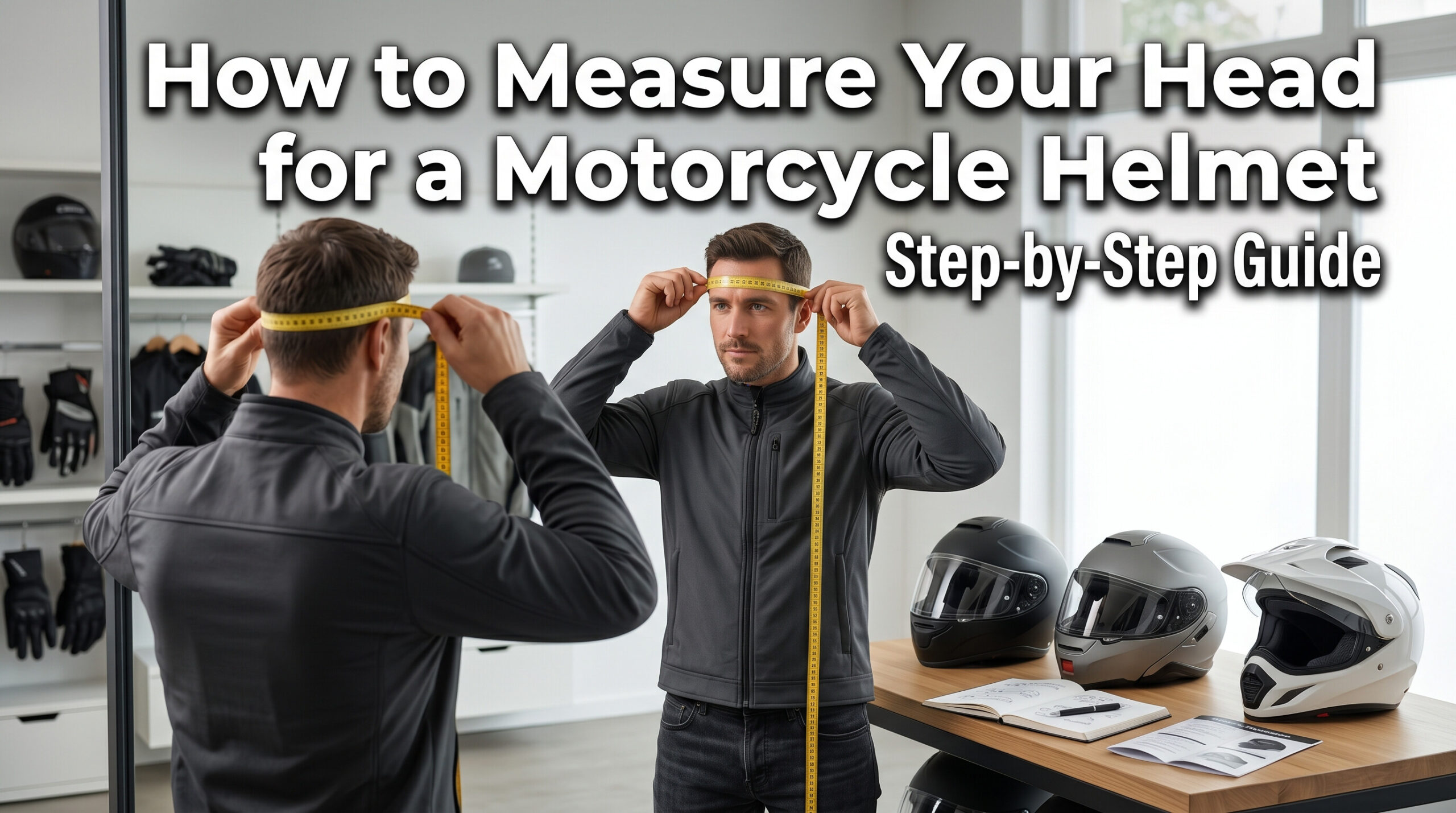
Finding the right motorcycle helmet starts with proper measurement.
Even the safest and most expensive helmet cannot perform as intended if it doesn’t fit correctly. A helmet that is too loose may move excessively while riding, while one that is too tight can become uncomfortable within minutes.
Fortunately, measuring your head is simple and only takes a few minutes.
This guide explains how to measure your head accurately and use those measurements to find a helmet that fits properly.
Read Motorcycle Helmet Guides: How to Choose the Right Helmet for Every Ride
Why Proper Helmet Fit Matters
Helmet fit affects more than comfort.
A properly fitted helmet helps provide:
- Better protection during an impact
- Improved stability at highway speeds
- Reduced wind noise
- Greater long-distance comfort
- Less rider fatigue
An incorrect fit can compromise both comfort and safety.
See Quietest Motorcycle Helmets for Highway Riding
What You’ll Need
Before you begin, gather:
- A flexible measuring tape
- A mirror
- A friend (optional but helpful)
- A notepad or phone for recording measurements
If you don’t have a cloth measuring tape, a piece of string and a ruler can serve as alternatives.
Step 1: Locate the Widest Part of Your Head
The goal is to measure the circumference of your head at its widest point.
Place the measuring tape:
- About one inch above your eyebrows
- Just above your ears
- Around the back of your head at the widest point
The tape should remain level all the way around.
Step 2: Measure the Circumference
Wrap the tape snugly around your head.
The tape should:
- Be firm but not tight
- Remain level
- Stay against your skin or hair
Record the measurement in both inches and centimeters if possible.
Helmet manufacturers often use metric sizing charts.
Step 3: Repeat the Measurement
Take the measurement two or three times.
Small differences are common.
Use the most consistent measurement when comparing helmet sizes.
Step 4: Compare to Manufacturer Sizing Charts
Helmet sizing is not universal.
A medium in one brand may fit differently than a medium in another.
Always compare your measurement to the manufacturer’s specific sizing chart before ordering.
See Modular vs Full-Face Motorcycle Helmets
Understanding Head Shapes
Head circumference is only part of the equation.
Helmet manufacturers often design helmets for different head shapes.
The three most common categories are:
Round Oval
Nearly equal front-to-back and side-to-side dimensions.
Intermediate Oval
Slightly longer front-to-back than side-to-side.
This is the most common head shape among riders.
Long Oval
Noticeably longer front-to-back than side-to-side.
Some helmet brands accommodate this shape better than others.
How a Properly Fitted Helmet Should Feel
A new helmet should feel snug.
You should notice:
- Even pressure around the head
- Firm cheek pad contact
- Minimal movement when shaking your head
The helmet should not:
- Create painful pressure points
- Shift excessively
- Slide over your eyes
A slight break-in period is normal.
Simple Fit Tests
After putting on the helmet, try the following checks.
Roll-Off Test
Attempt to roll the helmet forward off your head.
A properly fitted helmet should remain secure.
Side-to-Side Test
Move the helmet gently from side to side.
Your skin should move with the helmet.
Up-and-Down Test
The helmet should remain stable without excessive movement.
Common Helmet Sizing Mistakes
Choosing a Helmet That Feels Too Comfortable Immediately
New helmets typically loosen slightly as interior padding compresses.
Ignoring Head Shape
Correct circumference alone does not guarantee proper fit.
Buying Based on Size Labels
Small, medium, and large labels vary between manufacturers.
Skipping Fit Verification
Always evaluate fit before committing to long rides.
When to Try a Different Size
Consider a different size if:
- The helmet causes painful pressure points
- It moves excessively while riding
- It feels loose around the cheeks
- It shifts when you turn your head
Comfort should improve as the helmet breaks in, but obvious fit problems usually remain.
Related Guides
Explore more motorcycle gear guides:
- Motorcycle Helmet Guides: How to Choose the Right Helmet for Every Ride
- Best Motorcycle Helmets for Touring Riders (2026 Guide)
- Modular vs Full-Face Motorcycle Helmets
- Quietest Motorcycle Helmets for Highway Riding
- Best Motorcycle Helmets for Hot Weather Riding
Final Thoughts
Measuring your head is the first step toward finding a motorcycle helmet that provides both comfort and protection.
Take your time, follow the measurement process carefully, and always compare your results to the manufacturer’s sizing chart.
The best helmet isn’t simply the one with the most features—it’s the one that fits properly and allows you to ride comfortably and confidently mile after mile.